In this episode of Myth Busting at Red Resort, several gameplay mechanics and myths are put to the test. The first major experiment focuses on weapon effectiveness, particularly comparing sledge mass drivers and deadbolt guns on larger ships. It was found that sledge mass drivers, with their superior penetration distance, can effectively damage the power plants of bigger ships like the Perseus, whereas size three deadbolts fail to penetrate the armor and only damage the hull. Although deadbolts have higher alpha damage, sledges excel in scenarios where penetrating armor to hit internal components matters, making them more viable on certain ship sizes despite being trickier to use.
Next, the video explores the new physics mechanics introduced with physics wheels, demonstrating that hanger football can indeed be played using these wheels, but only on servers with high FPS to avoid lag issues. This opens up fun and creative possibilities for in-hangar activities. Alongside this, the impact of damaged ship components on performance was tested, revealing that damage to shields or power plants does not degrade their functional performance such as shield regeneration time or power pip availability, which may be seen as a positive or negative depending on player expectations.
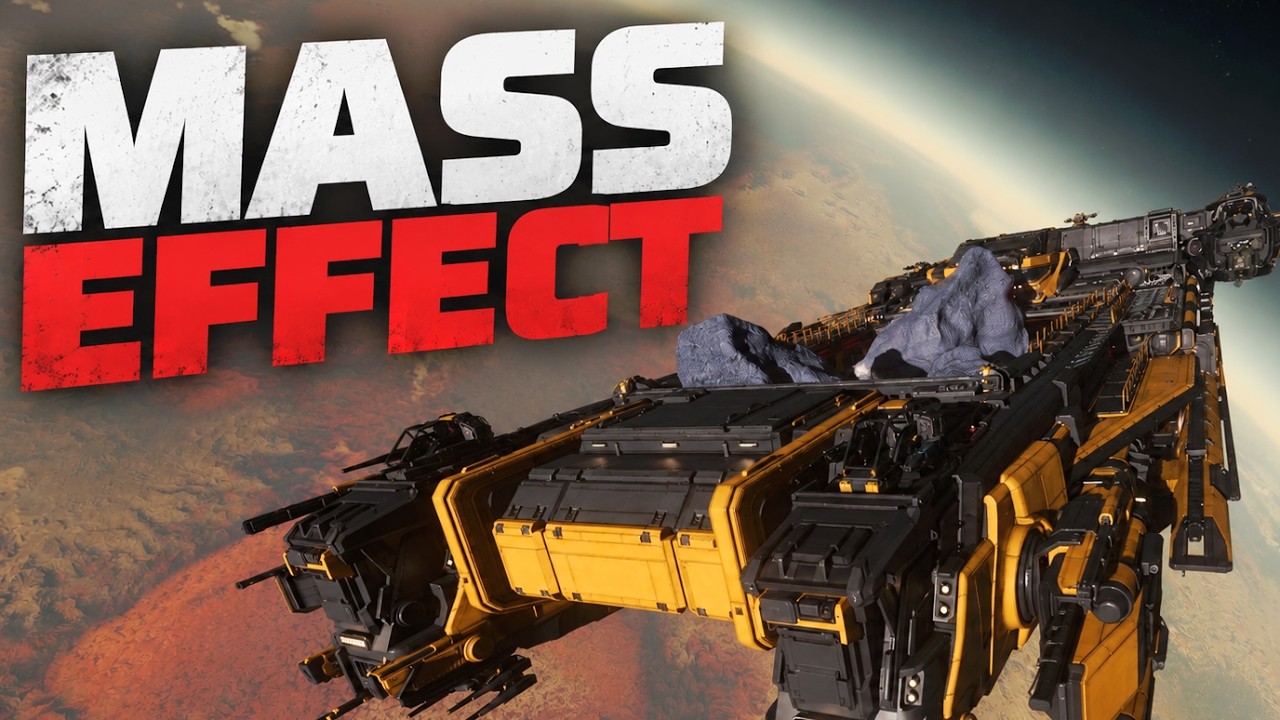
A particularly interesting test involved attempting to store and transport asteroids inside an Ironclad ship. While it is possible to load mined asteroid chunks into the ship’s cargo hold and jump between locations, removing and mining these asteroids outside the ship remains problematic due to their size and weight. Various methods, including tractor beams and breaking the rocks into smaller pieces, were tried with limited success. Detonating the ship to release the asteroids proved unsuccessful, indicating that while the concept of asteroid smuggling is feasible, practical implementation is currently challenging.
The video also verified that zeroing and rangefinding mechanics in the game do function as intended. Using different weapon scopes and zeroing settings, the presenter demonstrated that adjusting zeroing affects where shots land at various distances, confirming that players can use this feature to improve accuracy at long ranges. This insight provides valuable information for players looking to optimize their shooting performance, especially in PvP or precision shooting scenarios.
Finally, the episode tested the effect of cargo mass on ship inertia and maneuverability. Using an Ironclad, it was shown that adding cargo and components significantly increases the time it takes to decelerate, whereas removing weapons and modules reduces it. Interestingly, loading the ship with vehicles made it slow down faster, an unexpected result. Other experiments included attempting to EVA through wormholes, which resulted in the player being pulled toward the walls and ultimately killed, and testing the durability of super heavy armor, which proved highly resilient to damage. The episode concludes with a call for more myth suggestions and support for funding future tests.