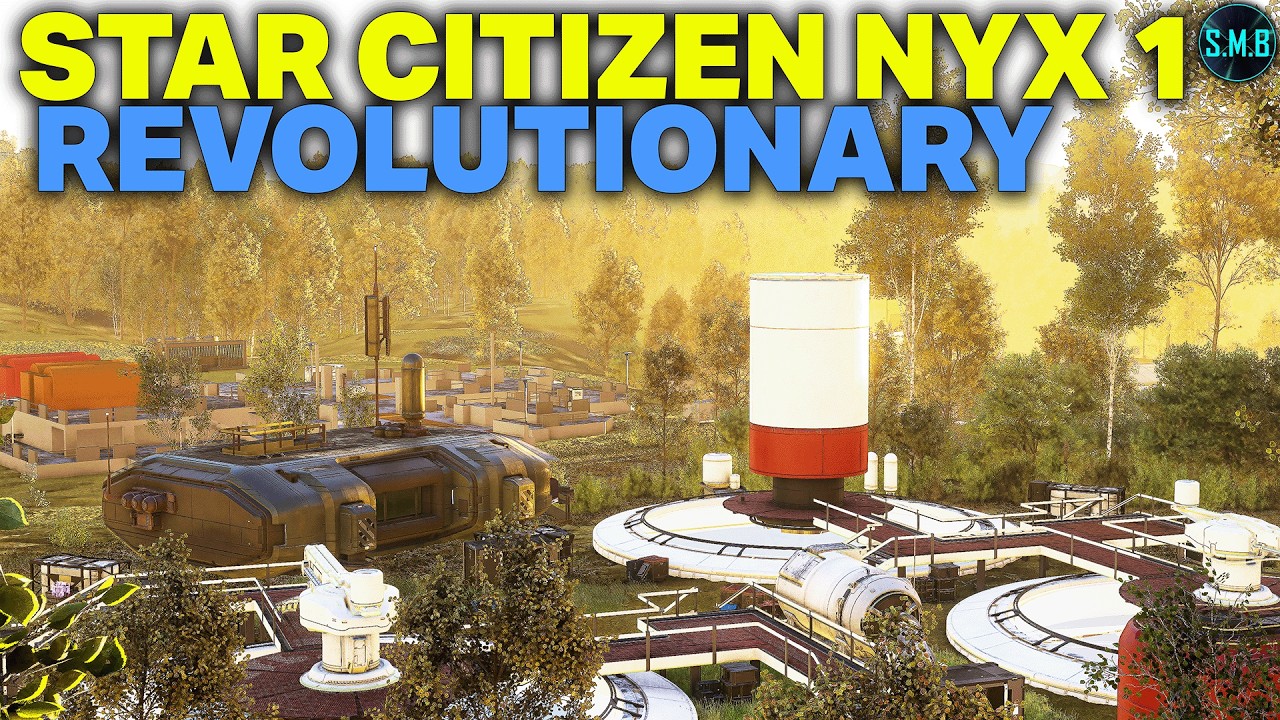
In this video, Ryan, also known as Mac, shares his hands-on experience with Star Citizen’s new planet Nyx 1, focusing on the Staritect tool used to populate the planet with points of interest. He expresses great enthusiasm for the groundbreaking technology and content being developed, highlighting the impressive visuals, performance, and dynamic gameplay elements introduced in the third tech preview test for the Genesis update. While acknowledging existing bugs and performance issues, Ryan believes these will be resolved over time, and the overall experience already feels like a living MMO with active player hubs and dynamic missions.
Ryan explains the hierarchical structure created by the Staritect tool, which organizes the planet into sectors, clusters, locations, and tiles, each with distinct identities and functions. Different sectors offer various activities such as farming, extraction, and surveillance, with locations assigned factions that influence their appearance, loot, NPCs, and contracts. Although some faction assignments and mission logic still need refinement, the system allows for diverse and immersive gameplay. He also describes the large procedural compounds made of stitched tiles and the interactive elements like terminals and salvage points found within these locations.
The video covers the new contract system, where players accept missions from guild halls and local contract boards scattered across the planet. These boards offer a range of mission types, including hauling, mercenary work, and science-based tasks, with contracts categorized by proximity—local, regional, or global. Ryan appreciates this setup for creating a hub-and-spoke gameplay loop, where players gather at central locations to pick up missions that may involve multiple objectives and destinations, enhancing the depth and engagement of the gameplay.
Ryan also discusses the technical advancements in server meshing, which currently distributes Nyx 1’s sectors across three servers, allowing for greater content density and dynamic interactions. Future updates aim to introduce more granular, quasi-dynamic meshing to improve performance and scalability. He shares his observations on performance, noting generally good frame rates with some drops near busy hubs due to player and ship density. He highlights the impressive environmental detail, especially in woodland biomes, and the potential for large-scale tactical gameplay using natural terrain for cover and strategy.
In conclusion, Ryan emphasizes that despite being an early test, the new planetary tech and gameplay systems in Star Citizen are incredibly promising and poised to revolutionize how players experience the game. He plans to release more focused videos exploring specific missions, locations, and gameplay elements in greater detail. He invites viewers to subscribe and join his streams for ongoing coverage, expressing gratitude to his supporters and excitement for the future of Star Citizen’s evolving universe.