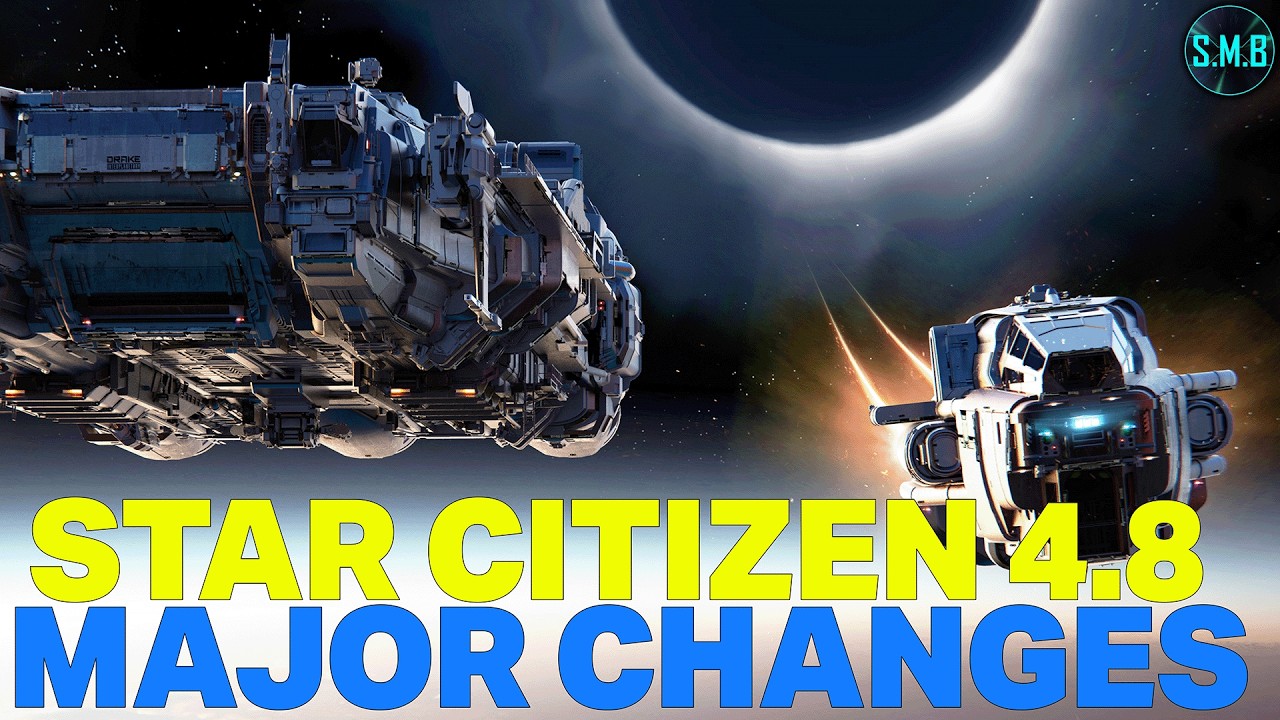
In this update, Ryan (aka Mac) discusses the recent developments in Star Citizen’s 4.8 patches, focusing on the newly introduced item recovery technology and the Drake Command Module. Despite two new patches being released, they have not yet reached wave 1 testing, indicating ongoing stability issues. Ryan expresses optimism that wave 1 deployment will happen soon, possibly early in the week. He also shares his experience with the Drake Command Module in Arena Commander and VR, praising its design, especially the exposed Drake engines and the spacious living quarters, envisioning its use as a large off-grid base alongside the Ironclad ship.
The major highlight of the latest patch is the implementation of the item recovery vehicle loadout system. This update includes a significant backend overhaul of the entitlement service and item imprint system to improve the persistence of player-owned ships and vehicles across patches. Players can now save a custom ship loadout snapshot at the ASOP terminal, which can be claimed later at a higher cost than the default base loadout. However, modifications, crafted items, ammo, and missiles do not persist fully yet, with crafted items reverting to default stats and consumables needing to be restocked after claims.
The update introduces new mechanics regarding bricked ships and vehicle storage. Ships that are “bricked” (non-functional) will remain in hangers without automatic removal, allowing players to retrieve cargo or scrap them. There is a limit to how many ships can be stored, and the Vehicle Manager App no longer saves loadouts for claims, requiring snapshots at the ASOP terminal instead. Interestingly, players can now see all vehicles stored at their current location, including those they do not own, which could enhance salvage gameplay by allowing towing and storing of other ships for later scavenging or repair.
A significant temporary limitation is the “brick state” applied to claimed vehicles and items, which renders them nonfunctional after a short grace period (five minutes in testing). This means players cannot currently unbrick or use claimed items until the anticipated item recovery tier 2 update, which will enable repairs and sales of salvaged components. While this limits scavenging and trading of ship parts for now, it is a necessary step to prevent item duplication exploits and to stabilize the backend system. Ryan hopes future updates will allow swapping out bricked components to restore functionality.
Overall, Ryan views these changes as a major step forward for Star Citizen’s item persistence and recovery systems, despite some temporary downsides. The backend improvements and new item recovery mechanics promise a more robust and realistic gameplay experience, especially for salvage and vehicle management. He encourages feedback from Evocati testers and remains hopeful that wave 1 testing will begin soon, allowing more detailed coverage and gameplay footage. Ryan also thanks his supporters and invites viewers to follow his channels and streams for ongoing updates.