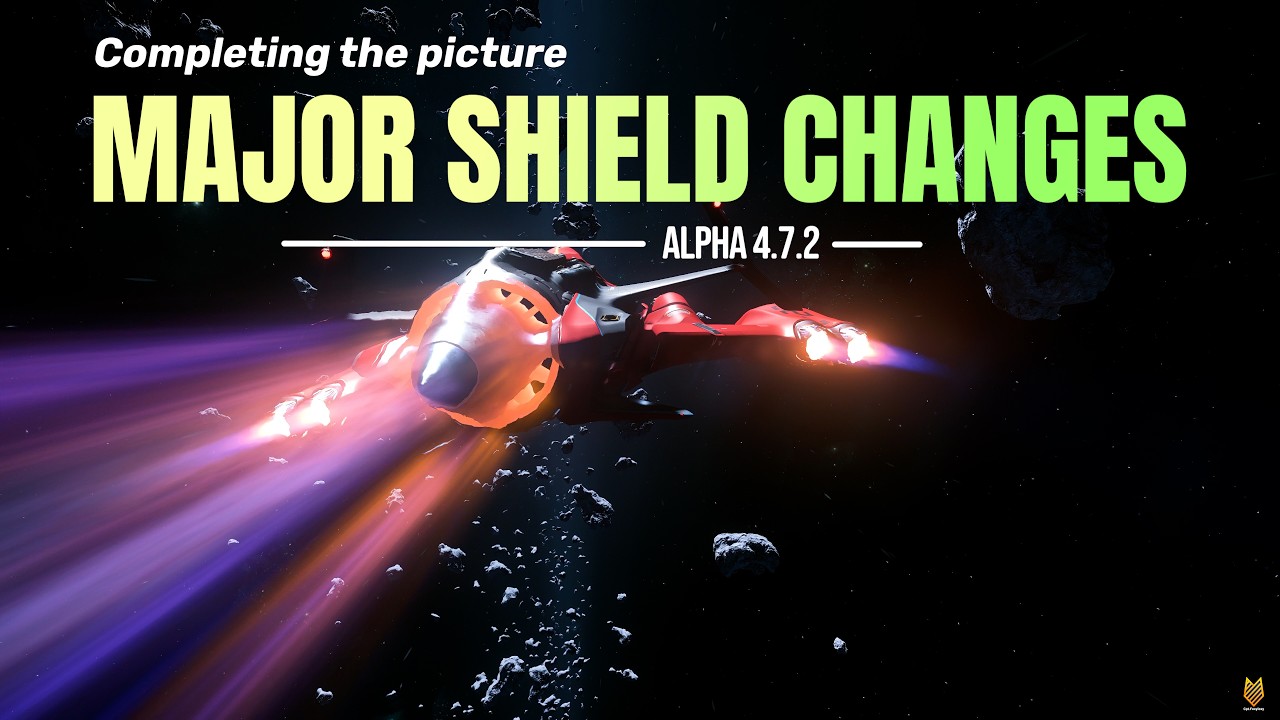
In this video, the creator revisits the significant shield changes introduced in Star Citizen patch alpha 4.7, emphasizing the importance of understanding shield mechanics alongside armor updates to get a complete picture of ship durability and combat effectiveness. Initially, the focus was on armor and weapon testing, but the realization that shield resistance and absorption play a crucial role in damage mitigation led to a deeper exploration using the Prowler ship and a mixed Wolf 21 weapon loadout for practical demonstrations.
The video details the substantial increases in shield strength (referred to as shield “house”) and regeneration rates across all shield sizes, from zero to four. These increases vary by shield class—military, industrial, civilian, stealth, and competition—with stealth and competition shields receiving notably higher boosts in both health and regeneration compared to military and civilian types. For example, size one stealth shields see a 66% increase in strength and 82% in regeneration, while size three shields have their strength doubled and regeneration increased by over 120%. These changes make shields more resilient and regenerative, affecting combat dynamics significantly.
A key part of the explanation centers on the two-layer shield system: shield resistance and shield absorption. Shield resistance determines how much incoming damage is blocked outright, while shield absorption acts like a sponge, soaking up a percentage of the damage that passes through the resistance layer. Using the Prowler and Wolf 21 as examples, the video shows how ballistic damage is heavily mitigated by these layers, often preventing damage from reaching the ship’s armor or hull unless shields are fully depleted. Energy weapons, in contrast, can sometimes bypass these defenses more effectively due to negative resistance values.
The creator also highlights the importance of understanding armor deflection thresholds and hull resistances, which come into play after shields are broken. Damage must surpass these thresholds to affect the ship’s armor and hull. The dynamic nature of shield absorption means that as shields weaken, their ability to absorb damage decreases, allowing more damage to penetrate through to the armor. This layered defense system demands strategic weapon choices and sustained pressure during combat, especially when facing ships with strong shields like the Prowler.
In conclusion, the video underscores the complexity and depth added to Star Citizen’s combat mechanics with the new shield changes. Players need to consider shield strength, regeneration, resistance, absorption, and armor thresholds to effectively damage enemy ships. The creator acknowledges the game’s increasing complexity but hopes that this detailed breakdown helps players better understand and enjoy the game. He encourages using tools like the armor deflection calculator to plan attacks and adapt tactics accordingly, making the combat experience more strategic and rewarding.