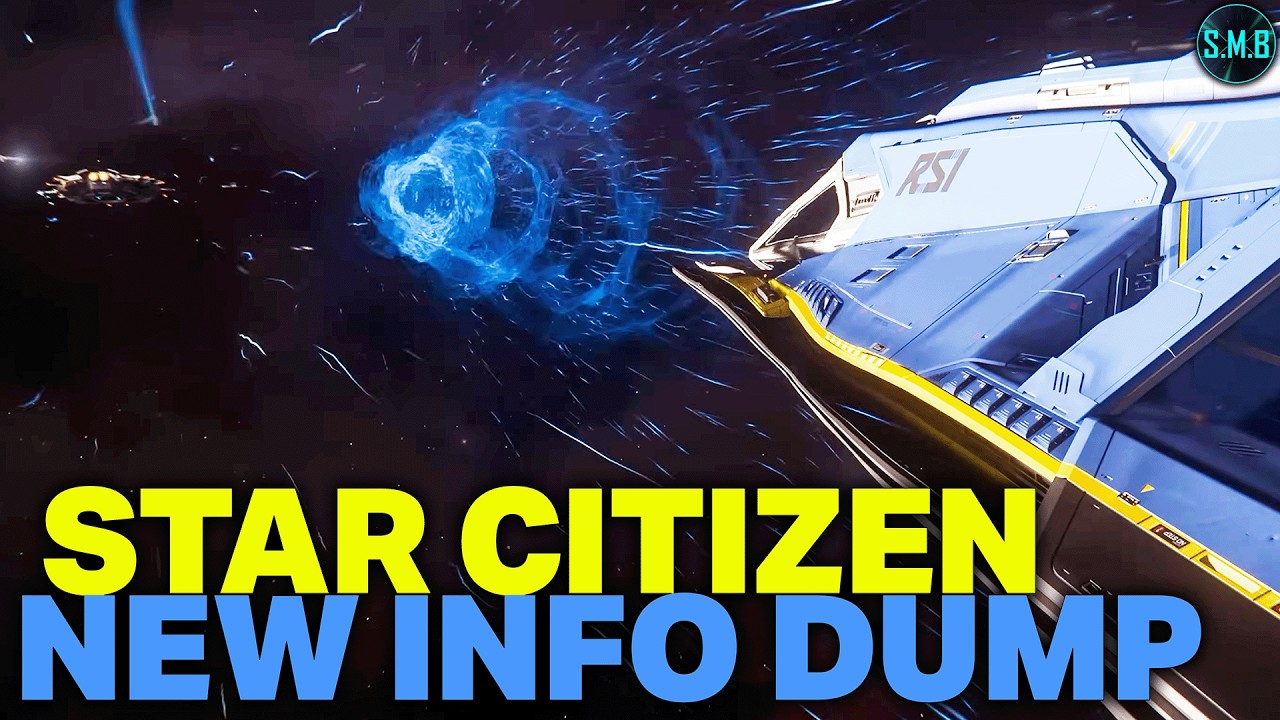
In the latest “10 from the Community” episode, Cloud Imperium Games (CIG) provided several important updates on Star Citizen’s development, focusing on the new flight model, mission 2.0, and engineering improvements. The new flight model, now complete and functioning in Squadron 42, removes master power modes, allowing players to distribute power freely among ship systems like weapons, shields, and quantum drives. Additionally, the quantum boost feature enables players to accelerate quickly in any direction without mode switching, offering more tactical freedom in both space and atmosphere. This system is being integrated into the persistent universe (PU) with an emphasis on intuitive control and varied playstyles.
Mission 2.0 promises to significantly enhance gameplay by enabling dynamic, story-driven scenarios that can influence NPCs and game world objects. It introduces quest chains and persistent mission tracking across sessions, allowing players to pause and resume missions without losing progress. The new system will also improve mission sharing and reward distribution based on participation, reduce bugs, and offer cleaner mission presentation with filtering options. Missions will be accessible through various means, including in-person interactions and job boards, providing more context and clarity about mission requirements and rewards.
Engineering, while still a work in progress, aims to extend ship longevity and offer meaningful gameplay depth. Current firefighting features are underwhelming, but ongoing balancing and tuning efforts are addressing these issues, including soft death mechanics and PvE balance. Future missions will incentivize dynamic content, such as disabling NPC ships to board and scavenge them. Development pace remains a concern, but mission 2.0 and iterative testing are expected to accelerate improvements. AI blades for large ships remain planned but without a confirmed timeline.
The video also covered updates on storing armor and customization through starwear, suit lockers, and FPS armor 2.0, which are intended to launch together. Suit lockers will allow quick outfit changes on ships or in personal spaces and will be part of tier three insurance, preserving stored items and decorations upon ship loss. The Maelstrom physical damage system, complete in Squadron 42, is set to replace traditional health pools in Star Citizen’s PU, offering granular damage feedback based on projectile physics. Its rollout is expected in the first half of next year, alongside Squadron 42’s release.
Additional updates include a medical respawn rework allowing players to choose respawn locations and temporary respawn beds, improvements to looting and storage in missions like Siege of Orison, and crafting enhancements enabling material refinement based on player effort. The developers also confirmed plans to allow players to log out and back into the same location, even without a respawn bed nearby. Overall, these updates highlight CIG’s focus on long-term iterative development, aiming to deliver deeper, more immersive gameplay experiences while addressing current issues and player feedback.