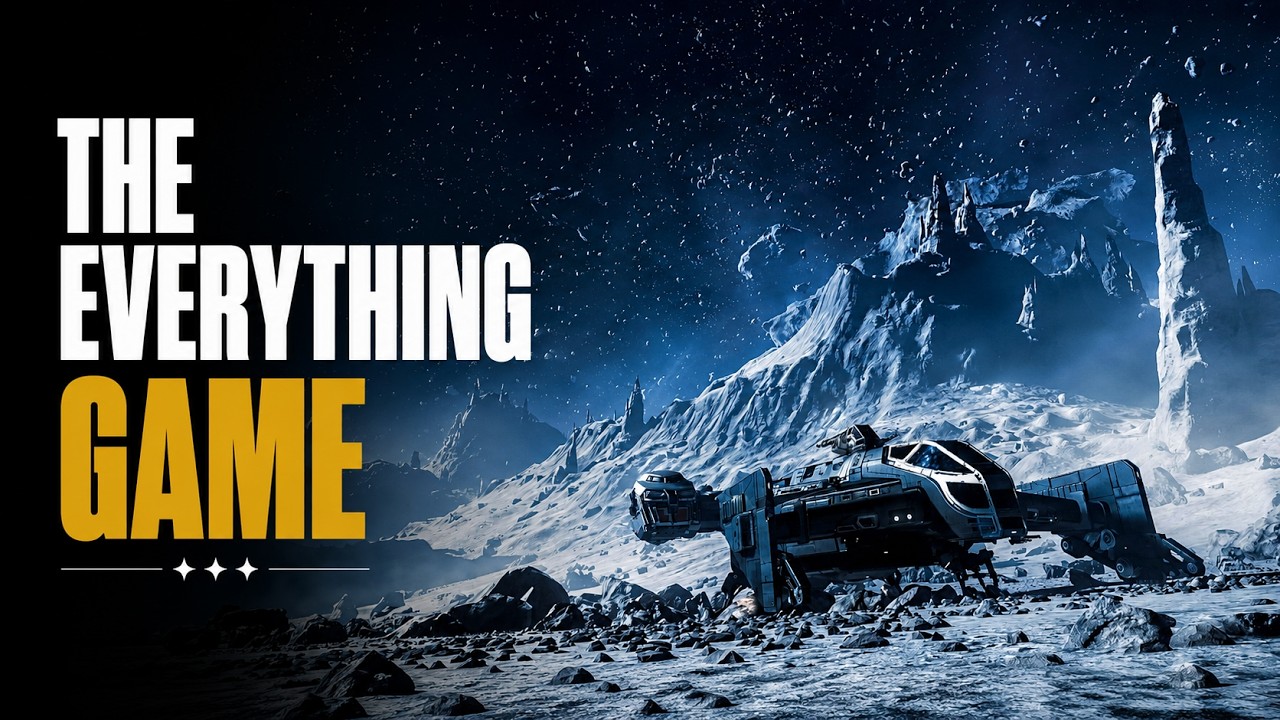
The video explores the long-held dream of creating the ultimate “everything game,” a fully immersive space game where players can live, work, play, and fight within a vast universe. The narrator reflects on how this dream has persisted since the early days of 3D space games in the '80s and '90s and how many studios have pursued it with varying approaches and outcomes. Two of the most ambitious attempts are highlighted: Star Citizen and No Man’s Sky, each offering a distinct vision of what an immersive space game can be.
Star Citizen prioritizes realism and immersion, creating a detailed, believable universe where players can physically interact with their environment, walk through ships, and experience a world that feels lived-in and utilitarian. Despite its high budget and long development time, the game remains unfinished and fraught with bugs, illustrating the immense challenges of realizing this vision. Nevertheless, it offers a unique experience where players can feel like they truly inhabit a second life within a complex and dynamic world.
In contrast, No Man’s Sky embraces a more fantastical and awe-inspiring approach. Its vibrant, surreal worlds evoke the optimistic and psychedelic sci-fi art of the 1970s, focusing on exploration and wonder rather than strict realism. The game’s universe is vast and endlessly varied, encouraging players to marvel at the beauty and strangeness of each new planet. This approach appeals to those who seek a sense of scale and discovery rather than a grounded simulation.
The video also discusses how different players are drawn to different aspects of the “everything game” dream. Some want deep immersion and meaningful interactions within a believable world, while others are captivated by the sheer wonder and aesthetic experience of a vast, colorful universe. This diversity in player desires makes it challenging for developers to create a one-size-fits-all ultimate space game, leading to multiple interpretations and styles within the genre.
Finally, the narrator touches on the ongoing development and community aspects of these games. Star Citizen’s development is funded and shaped by its passionate community, who actively participate in building the game’s universe, while No Man’s Sky continuously evolves through free updates that keep its world alive and surprising. Despite significant technological advances, the ultimate vision of a fully realized, holodeck-like immersive game remains elusive, suggesting that while great progress has been made, the dream of the perfect everything game is still a work in progress.