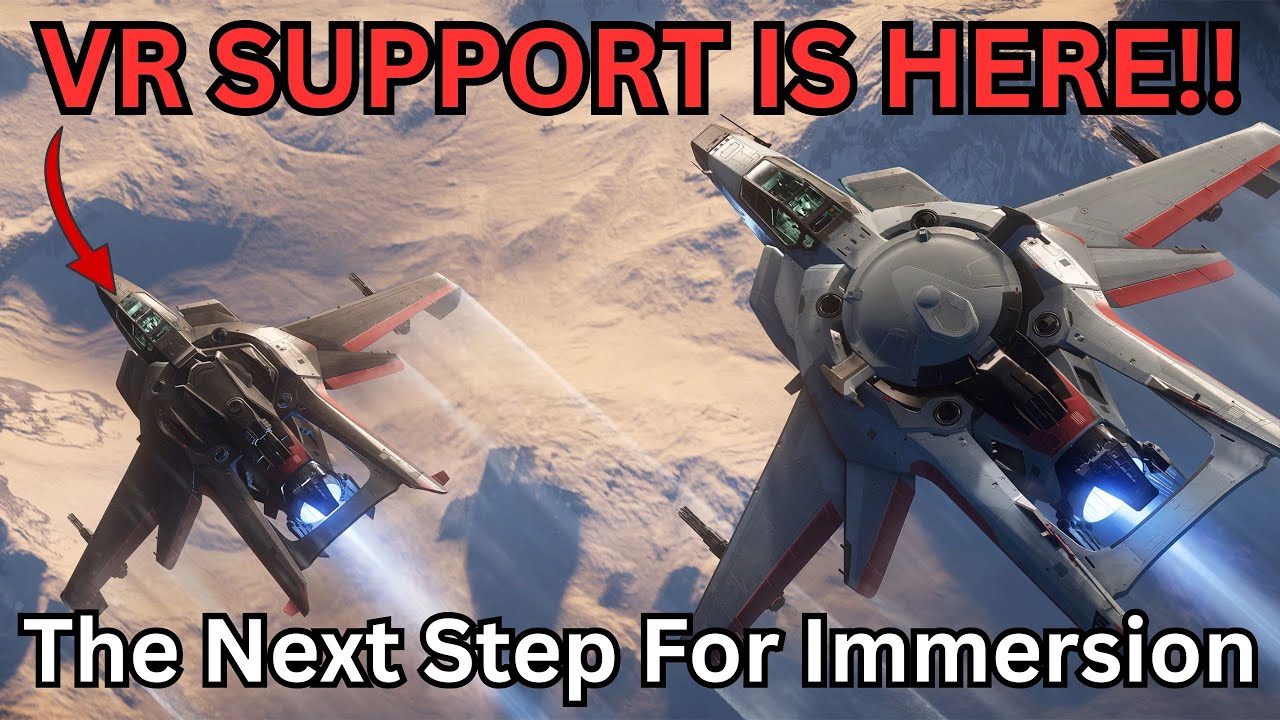
The video announces the official introduction of native VR support in Star Citizen with the upcoming Alpha 4.5 update. This long-awaited feature was confirmed by Cloud Imperium Games (CIG) after rumors had circulated, and it represents an exciting step forward in enhancing the game’s immersion. The VR support is currently in an early experimental phase, allowing players to test and provide feedback, but it is not yet a full launch. The developers emphasize that players should expect some bugs, missing functionalities, and imperfect interactions as part of this initial rollout.
Key features of the VR implementation include the ability to experience the entire Star Citizen universe in VR, from the main menu through FPS gameplay and spaceflight. Players can toggle between full VR immersion and a theater mode, which projects a virtual screen inside the headset that mirrors the desktop experience. This theater mode supports ultra-wide resolutions and head tracking, allowing players to switch seamlessly between traditional gameplay and VR. Additionally, a dynamic switch feature enables automatic toggling between VR and desktop modes based on whether the headset is worn, although this is not supported by all headsets yet.
To get started with VR in Star Citizen, players need to run the game using the Vulkan renderer, as DirectX11 is not supported for VR. Once a VR headset is connected and the appropriate OpenXR runtime is active, the game will detect the device and reveal VR-specific settings in the options menu. Controls include key bindings for toggling VR on and off, switching theater mode, and recentering the view, with options to customize these bindings. There are also advanced console commands for tweaking head tracking and other VR-related effects, though these are recommended only for experienced users.
The video also discusses performance considerations, noting that VR support will demand more from players’ hardware, particularly GPU, CPU, and VRAM. To mitigate performance drops, the developers recommend enabling upscaling technologies like TSR, FSR, or DLSS and monitoring VRAM usage closely. The team is actively seeking bug reports through a dedicated VR category on the issue council and plans to continue refining the experience with bug fixes and feature additions such as motion controller support, full-body tracking, and face and eye tracking in future updates.
Overall, the introduction of VR support marks a significant milestone for Star Citizen, promising a more immersive and customizable gameplay experience. The presenter expresses personal excitement about trying VR, especially with the Meta Quest 3 headset, and invites viewers to share their thoughts and plans regarding VR gameplay. The update is expected to go live soon, likely before the holiday break, and the channel aims to provide ongoing coverage and testing insights as the feature evolves.