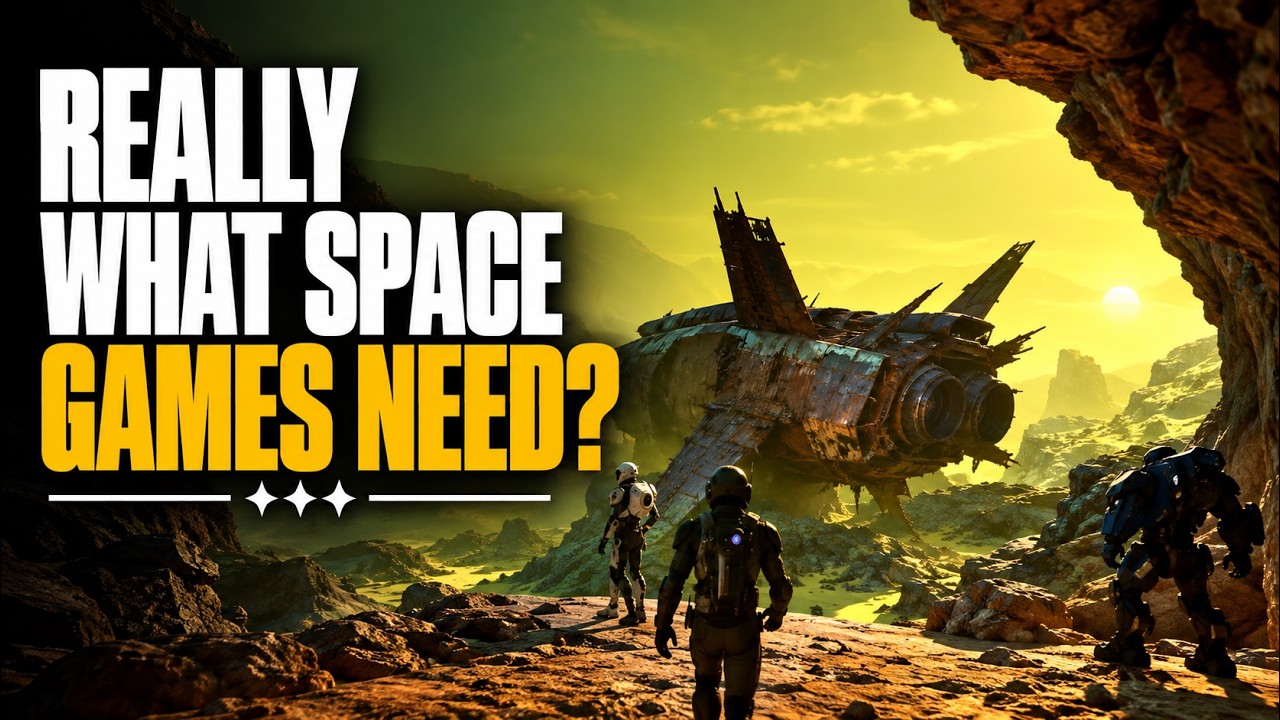
The video discusses a noticeable gap in many space games—the immersive experience of truly living and interacting within space. While some games succeed in this, many fall short. Two upcoming titles, Exodus and The Expanse: Osiris Reborn, set to release around the same time next year, aim to address this by offering a fresh approach. These games emphasize space not just as a backdrop but as a core element of gameplay, featuring crew management, established space societies to interact with, missions, and deep narratives. The presenter highlights that these games are reminiscent of the Mass Effect series in their focus on story and exploration rather than pure space simulation.
Exodus is set tens of thousands of years in the future, exploring a universe where humanity has genetically engineered various Earth species into intelligent life forms, creating a unique take on alien life. The game incorporates time dilation effects during travel, impacting gameplay significantly. The Expanse: Osiris Reborn, based on the well-known franchise, is set in a nearer future within our solar system, featuring familiar locations like Mars and the Moon, each with distinct cultures and political systems. Both games emphasize exploration through richly detailed, authored environments and meaningful interactions with diverse societies.
A key aspect shared by both titles is the lack of direct ship control or traditional space combat, which marks a departure from classic space sims. Exodus has explicitly ruled out standalone ship combat, and neither game offers the kind of freeform spaceflight seen in titles like Elite Dangerous. This design choice reflects a broader trend in space games around 2027, where big-budget AAA space sims are becoming increasingly rare. Instead, many developers are focusing on narrative-driven experiences that use space as a setting rather than a simulation.
The video also touches on concerns about the future of the space game genre, particularly the decline of AAA space sims from major studios. While indie developers continue to produce quality space-themed games, the absence of large-scale, high-budget space simulators is notable. The presenter expresses cautious optimism about Exodus and The Expanse, appreciating their contributions but worried about the genre’s direction and the diminishing presence of traditional space sim experiences.
In conclusion, the video invites viewers to reflect on what they expect from space games and whether titles like Exodus and The Expanse meet those expectations. It acknowledges that while these games may not fit the classic space sim mold, they offer rich narratives and immersive exploration that could revitalize interest in space gaming. The presenter encourages discussion on whether these new approaches satisfy the community or leave something lacking, highlighting an ongoing evolution in how space games are designed and experienced.