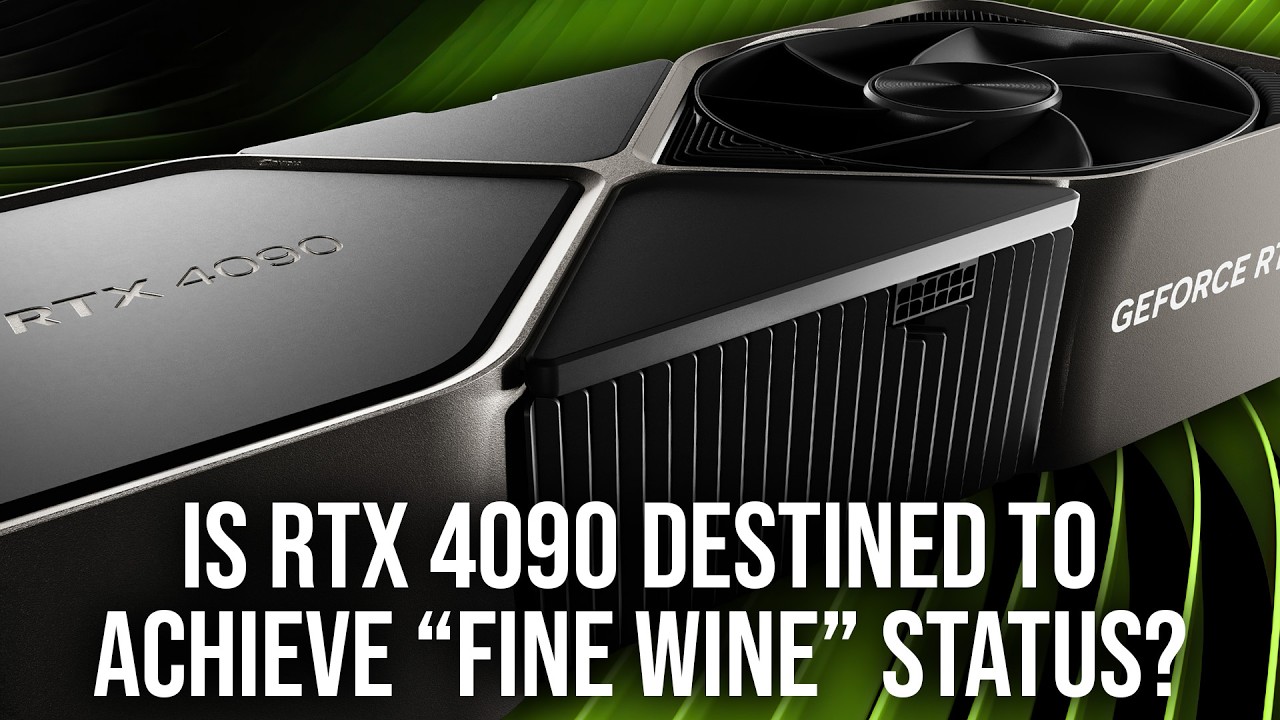
The RTX 4090 is praised for its enduring performance and value, potentially becoming a “fine wine” GPU legend due to its sustained dominance despite high initial cost and limited competition from newer models. However, concerns are raised about the future focus of GPU development shifting towards AI and data center applications, which may impact the evolution and prioritization of high-end gaming hardware.
The discussion opens with reflections on the RTX 4090 graphics card and whether it might become a “fine wine” GPU legend, much like the 1080 Ti. Despite its hefty $1,600 launch price, the RTX 4090 remains remarkably powerful years later, still ranking as the second most powerful gaming GPU, likely to maintain this position for up to five years due to delays in new GPU releases. This longevity and sustained performance make a compelling case for its value over time, even if initially it seemed overpriced.
The hosts note the RTX 4090’s continued dominance, especially compared to the newer 5080 and 5090 models. The card’s ability to handle rasterized rendering effortlessly makes it a reliable choice for gamers, despite its high cost and some early hardware issues like the 12VHPWR power connector problem. While it’s too soon to definitively label the 4090 as a “fine wine,” its staying power and performance edge over subsequent models are unusual and noteworthy in the competitive GPU market.
A significant point raised is Nvidia’s strategy of producing large GPU dies for the 4090 and 5090 on the same process node, while AMD has not followed with similarly massive GPUs. This lack of competition at the high end has allowed Nvidia to position the 5080 as a modest upgrade over the 4080 without surpassing the 4090’s performance, creating an “invisible barrier” in GPU performance tiers. The conversation also touches on the potential future of Nvidia’s product lineup, speculating about the role of machine learning and AI capabilities in shaping upcoming mainstream cards, possibly at the expense of traditional rasterization performance.
Concerns about the future of the PC gaming market and GPU development are also discussed. There is a sense that the industry may be shifting focus toward AI and data center applications, potentially deprioritizing gaming hardware. Despite Nvidia’s dominance and the massive market for gaming GPUs, the hosts worry that investments might increasingly favor AI workloads over gaming, which could impact the development and availability of high-end gaming GPUs in the future.
Ultimately, the hosts agree that as long as there is a demand for gaming, companies will continue to produce gaming GPUs, though the nature and priorities of these devices may evolve. The PC market remains large and vibrant, with millions of GPUs sold and significant user bases on platforms like Steam. However, the GPU gold rush may be winding down, with potential opportunities for other players like AMD or Chinese manufacturers to step in. The conversation closes with a mix of optimism and caution about the future trajectory of GPU technology and gaming hardware.