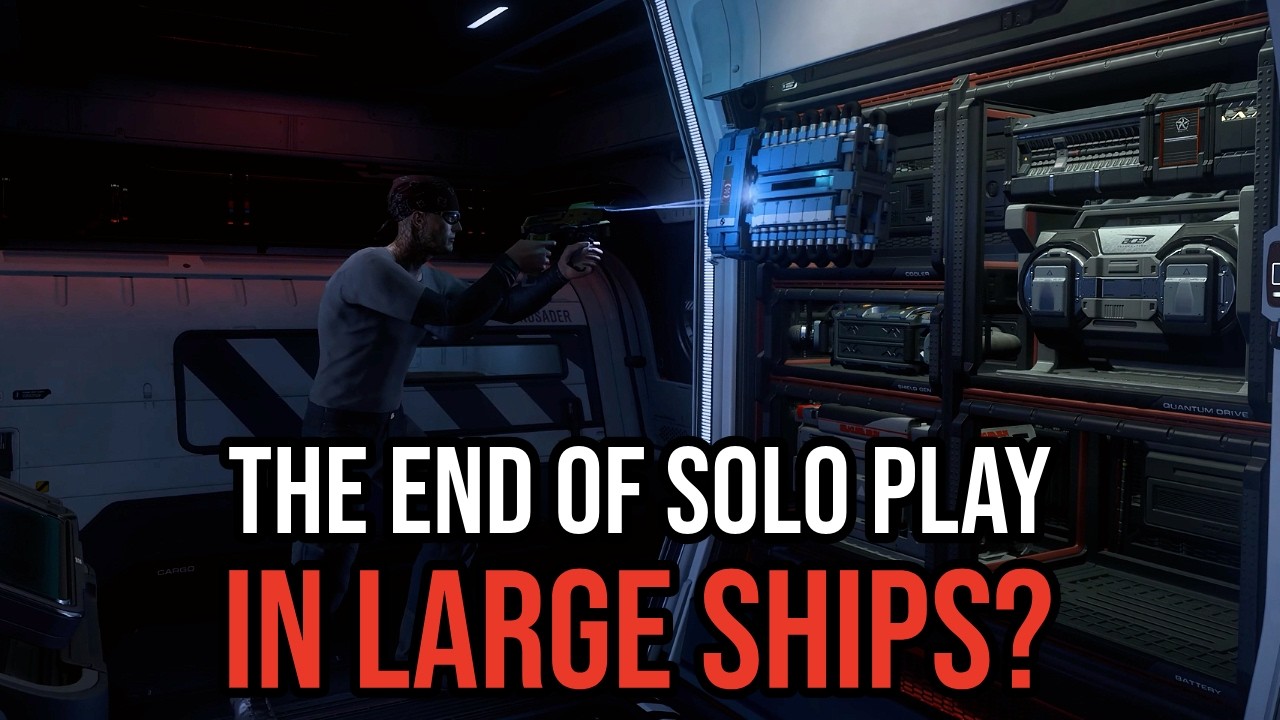
The video discusses whether the introduction of engineering mechanics in Star Citizen Alpha 4.5 is detrimental to players who want to solo larger ships. Engineering adds complexity and realism to ship management, emphasizing a true multi-crew experience where roles like pilot, gunner, co-pilot, and engineer are important. While some players welcome the challenge of managing larger ships with a crew, others worry that solo play will become too difficult or even nonviable, especially in combat scenarios involving capital ships. However, the developer, Cloud Imperium Games (CIG), has designed the system so that solo play is still possible, though more challenging.
To support solo players, CIG has implemented features like pilot-controlled weapons, AI blades for turret automation, and the option to hire NPC crew members. These elements aim to make managing larger ships solo or with minimal crew more feasible, though not as effective as a full human crew. Additionally, solo players can join organizations to crew ships cooperatively or opt for smaller, more solo-friendly ships like the Drake Clipper or medium-sized vessels that offer more pilot control. The game is expected to introduce more solo-focused ships and components over time.
Engineering in 4.5 includes mechanics like component wear and tear, fires, power management through fuses and relays, and the need for repairs, which add depth but also complexity. Fires and overheating are particularly dangerous for solo pilots since they may be unable to address issues immediately during combat. However, armor and shield systems provide resilience, especially against smaller fighters. The update also improves gameplay by balancing weapon ranges, increasing shield regeneration, and enhancing repair tools, making engineering less punishing and more engaging without overwhelming players.
The video highlights that engineering is designed to extend ship longevity in combat without becoming tedious or excessively punishing. It encourages players to prepare by stocking spare parts, fuses, and repair materials, and to use fire extinguishers and venting to manage fires. While solo players may need to perform repairs before or after combat, larger ships benefit from multiple engineers to speed up repairs. The system scales with ship size and crew, and relays no longer cause total system shutdowns, making solo management more manageable.
In conclusion, the video argues that engineering is not the death of solo play for larger ships but rather an evolution that encourages teamwork while still allowing solo players to participate meaningfully. Future updates will provide more AI assistance and NPC crew options, and the gameplay will continue to evolve. Solo pilots may face challenges, especially if boarded or overwhelmed, but the game offers multiple strategies to mitigate these risks. The video invites viewers to share their opinions and experiences with engineering in the current 4.5 PTU and emphasizes that the system aims to balance realism, fun, and accessibility for all playstyles.