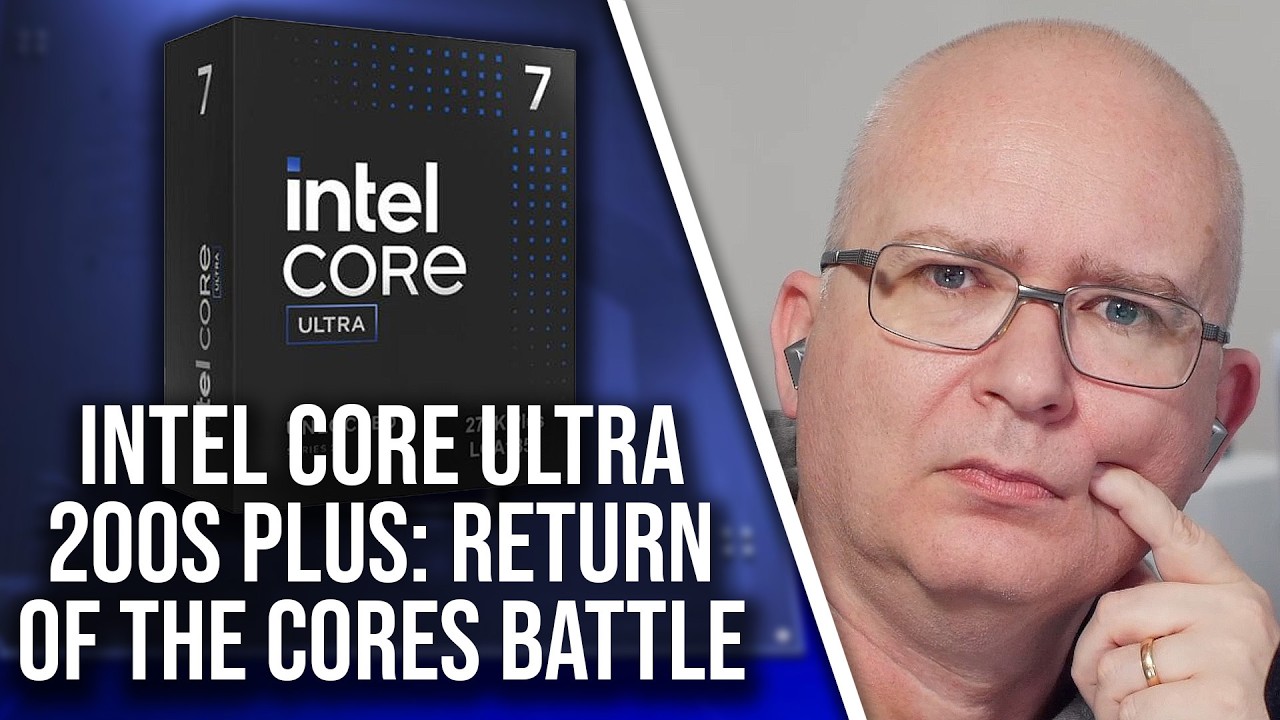
Intel’s refreshed Core Ultra 7 270K Plus and Core Ultra 5 250K Plus add a few efficiency cores, slightly better clocks, faster DDR5 support, and sharper pricing, making them appealing for productivity and multitasking. However, they still lag AMD’s X3D chips in gaming, Intel’s optimization tool has limited coverage, and the short-lived LGA 1851 platform hurts their long-term value.
Intel has refreshed its Arrow Lake-S lineup with two new processors: the Core Ultra 7 270K Plus and Core Ultra 5 250K Plus. Hardware-wise, both look very similar to the previous generation, but each gets extra efficiency cores, slightly improved clocks, and a revised memory controller that supports faster DDR5. There are also hints of improved internal interconnects, which could help overall performance and possibly gaming.
The pricing is one of the most notable changes. Intel has set the Ultra 7 270K Plus at $299 and the Ultra 5 250K Plus at $199, which makes them look quite competitive on paper. However, the discussion pointed out that current street prices for existing Arrow Lake chips are already close to these levels, so the value upgrade may not be as dramatic as the announcement suggests.
A major theme was gaming performance, where Intel still trails AMD’s X3D chips. Intel is trying to close that gap with its Application Optimization tool, which can apply binary-level optimizations in selected games and potentially boost performance significantly in certain cases. But support is limited and depends on game coverage, so it remains uncertain how impactful this will be in practice.
The panel agreed that these chips make more sense as productivity-focused processors than as pure gaming parts. With more cores and strong multi-threaded performance, they should be attractive for workloads like video editing, encoding, and heavy multitasking. In that sense, they could compete well against mid-range Ryzen chips, though not necessarily against AMD’s gaming-focused X3D models.
The biggest downside is platform longevity. LGA 1851 is expected to be short-lived, with Intel’s next Nova Lake generation moving to a new socket, so buyers won’t have much upgrade room later. The consensus was that these CPUs are solid, especially for users upgrading from older systems, but they are unlikely to be the best choice for gamers prioritizing long-term platform support or best-in-class gaming performance.