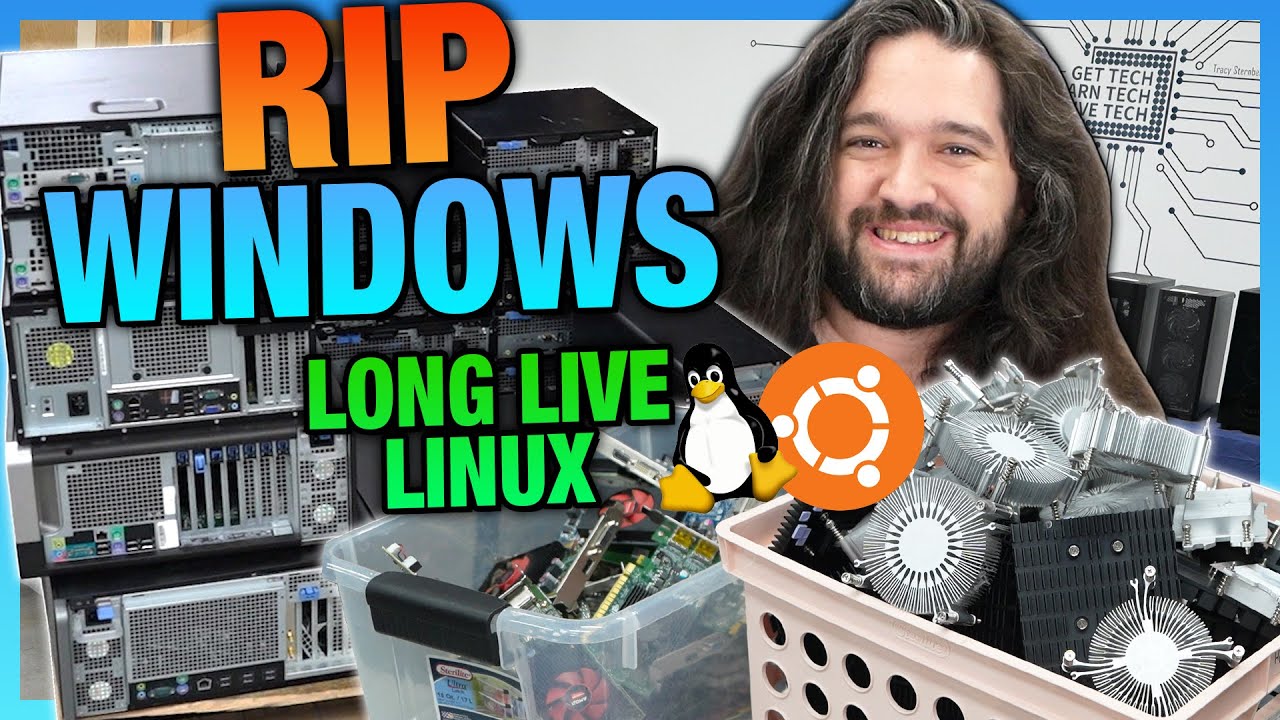
The video highlights an initiative to refurbish and repurpose hundreds of “obsolete” computers, especially in light of Microsoft ending support for Windows 10. Many devices unable to upgrade to Windows 11 remain functional but stranded by compatibility issues. To address this, the team collaborated with the Craden Institute and their community through a “geekathon” event, where volunteers helped repair, dismantle, and install Linux operating systems on these computers, breathing new life into hardware that might otherwise end up as e-waste.
At the event, participants worked together to sort laptops and desktops, separating those beyond repair for parts reclamation or recycling, while salvaging functional components like CPUs, RAM, and GPUs from others. These parts were then used to repair machines that could be refurbished and redistributed to the local community. The process included thorough testing of hardware, secure data destruction, and installing Linux distributions such as Ubuntu to provide a free and lightweight alternative to Windows. The teamwork and community involvement were key highlights, with many volunteers eager to contribute.
In addition to hardware refurbishment, the event featured a sale where discounted parts and computers were offered to the public, with proceeds supporting Craden’s tech education programs. Donations from companies like AMD, Cooler Master, and EyeBuyPower, as well as hardware from the Gamers Nexus team, helped stock the inventory. The sale not only helped clear out surplus tech but also made affordable computers available to those who might not otherwise have access, promoting digital equity and education.
The video also delves into the technical side of the refurbishment process, showing volunteers dismantling machines, identifying valuable components, and running tests like GPU benchmarks and BIOS checks. They discussed the challenges of working with older hardware, including sorting plastics for recycling and reclaiming metals. The team emphasized that many older CPUs and GPUs still have value, either for reuse or metal reclamation, and explained some industry practices such as using cheaper configurations in motherboard designs to save costs.
Overall, the project underscores the importance of sustainable tech practices and community-driven solutions to the problem of electronic waste. With millions of devices becoming unsupported by Windows 10, Linux offers a viable alternative to keep older hardware useful and connected. The collaboration between volunteers, nonprofits, and industry partners showcased a successful model for refurbishing, educating, and redistributing technology, ensuring that perfectly good computers don’t go to waste but instead help bridge the digital divide.