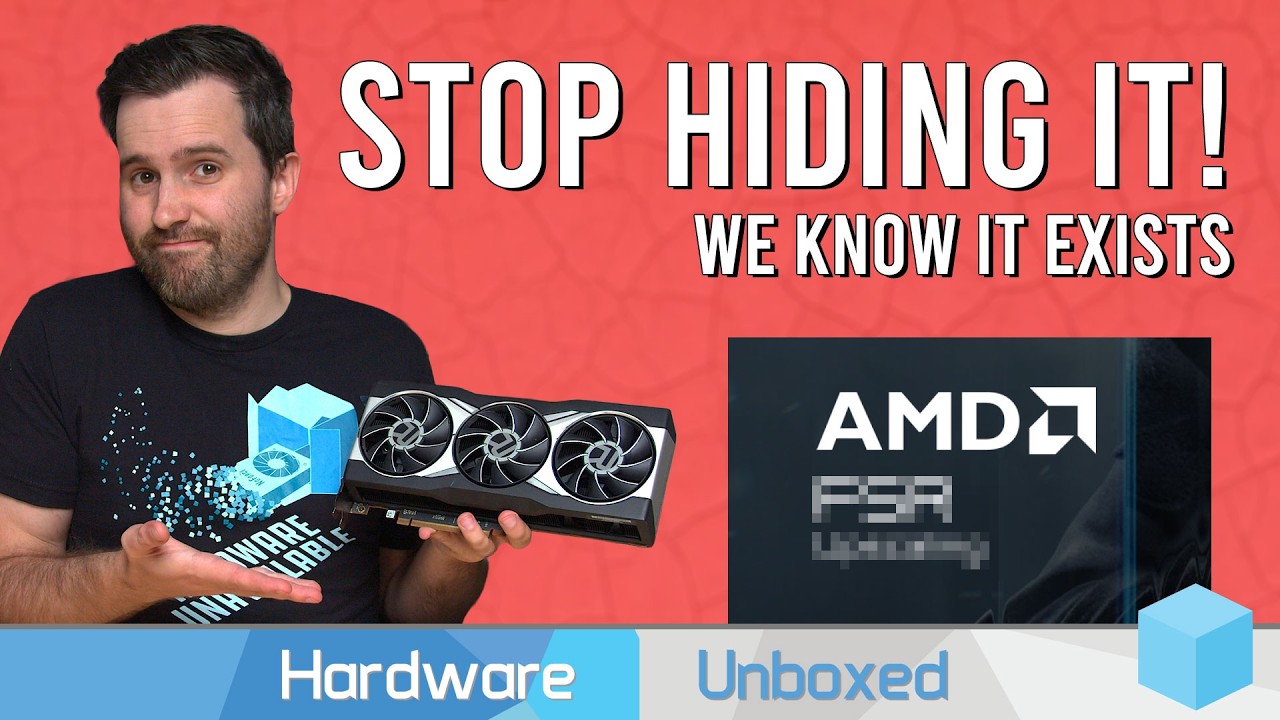
The video criticizes AMD for not officially releasing FSR4 INT8 support for older RDNA2 and RDNA3 GPUs despite leaked code proving its feasibility, arguing this neglect harms customer loyalty and contrasts unfavorably with Nvidia’s longer-term software support. It urges AMD to provide this low-cost feature update to improve upscaling options, extend hardware lifespan, and enhance their reputation in the competitive GPU market.
The video expresses frustration over AMD’s failure to release FSR4 (FidelityFX Super Resolution 4) support for older Radeon GPUs, specifically those based on RDNA2 and RDNA3 architectures. Currently, FSR4 is only officially supported on AMD’s latest RDNA4-based RX 9000 series GPUs, released nearly a year ago. This limitation is attributed to FSR4’s reliance on FB8 instructions, which only RDNA4 hardware supports natively. While this hardware restriction is similar to Nvidia’s approach with DLSS requiring Tensor cores, many expected AMD to backport FSR4 or a compatible version to older GPUs to benefit a wider user base.
An accidental leak of AMD’s source code revealed an in-development version of FSR4 using INT8 instructions instead of FB8, which could theoretically work on RDNA2 and RDNA3 GPUs, as these architectures support INT8 acceleration. Enthusiasts quickly compiled a DLL from this code, enabling FSR4 INT8 on older GPUs unofficially. Testing showed that FSR4 INT8 offers significant image quality improvements over FSR3.1 and works well in real-world scenarios, albeit with slightly higher performance overhead than the FB8 version. Despite this clear potential, AMD has not officially released or supported this version, even after a major FSR update in December 2025.
The video criticizes AMD for ignoring an obvious opportunity to support loyal customers and improve community goodwill, especially as GPU prices rise and hardware shortages persist. AMD’s refusal to release FSR4 INT8 contrasts sharply with Nvidia’s approach, which continues to support DLSS updates on GPUs up to seven years old. This lack of long-term feature support from AMD risks reinforcing the perception that Nvidia offers superior driver and software support, a factor that influences many gamers’ purchasing decisions. AMD’s recent driver support blunders, including attempts to end RDNA1 and RDNA2 support, further damage their reputation.
The video suggests that AMD’s reluctance to release FSR4 INT8 may be a deliberate strategy to push users towards upgrading to RDNA4 GPUs. However, this approach is criticized as short-sighted, as many users who wanted to upgrade have already done so, and rising prices make new purchases less appealing. Supporting older GPUs with new features would be a low-cost, high-impact way to maintain customer loyalty and compete more effectively with Nvidia. The video calls on AMD to prioritize broad feature support and avoid artificial restrictions unless there is a genuine technical barrier.
In conclusion, the video urges AMD to officially release FSR4 INT8 support for RDNA2 and RDNA3 GPUs to provide gamers with better upscaling options and extend the lifespan of their hardware. It highlights that the feature is already functional and tested, requiring minimal additional development. Until AMD acts, users can unofficially enable FSR4 INT8 through community-compiled DLLs. The video ends with a call to AMD to do the right thing for their customers and improve their software support reputation, which is crucial for regaining market share and trust in the competitive GPU landscape.