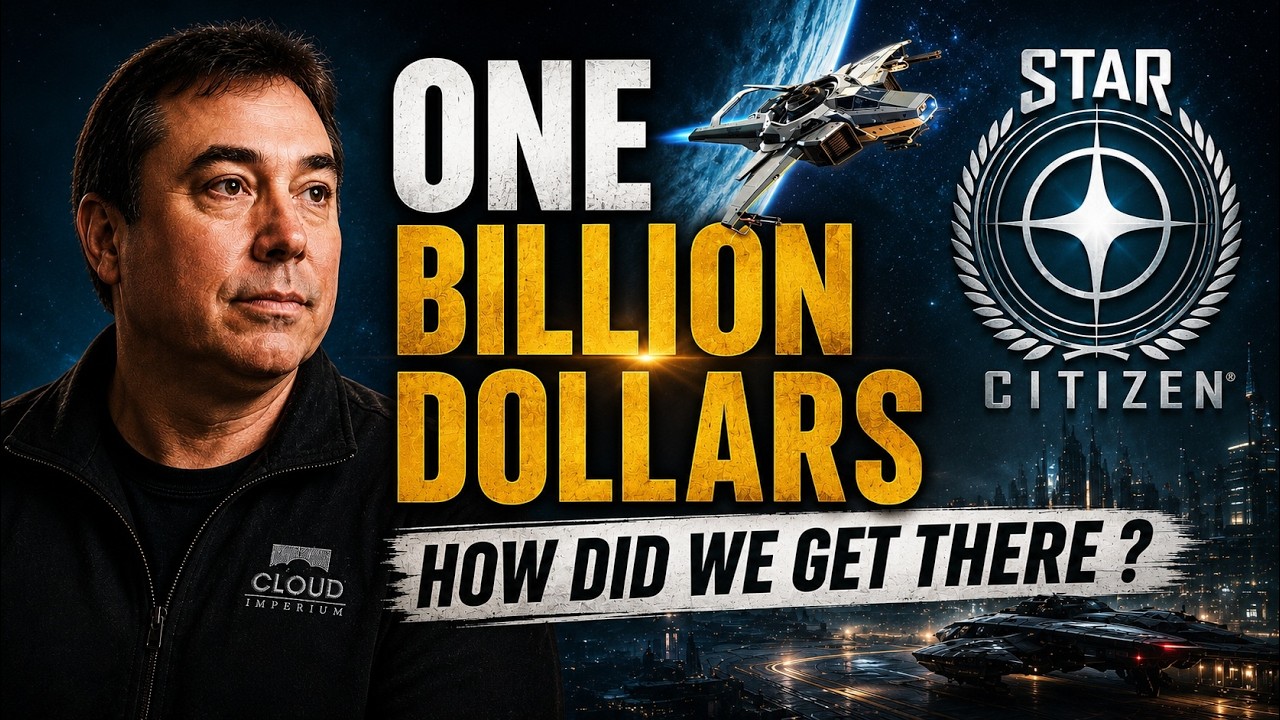
Star Citizen, a space simulation game led by developer Chris Roberts, has reached an unprecedented milestone of $1 billion in funding after more than a decade of development. Originally launched in 2012 as a modest crowdfunding campaign with a goal of $500,000, the project quickly exceeded expectations, raising $6 million by the end of its Kickstarter campaign. This early success demonstrated a strong demand for a modern space sim, especially from fans of classic titles like Wing Commander and Freelancer. Over time, the project evolved far beyond its initial scope, becoming the largest crowdfunding entertainment project ever.
The game’s funding journey is marked by numerous milestones and expansions in scope that fueled continuous financial support. Early on, Cloud Imperium Games realized the community’s willingness to fund far beyond the original goals, leading to promises of new ships, gameplay mechanics, seamless planetary exploration, and large-scale multiplayer battles. Despite skepticism and accusations of feature creep, funding surged, reaching $50 million by 2014 and $100 million by 2016. Key technological reveals, such as the seamless procedural planets demo at CitizenCon 2016, helped convince both supporters and skeptics of the project’s ambitious vision.
Star Citizen’s funding model heavily relied on the sale of virtual ships, including concept ships that were often little more than digital images or design documents. While this strategy attracted criticism and spawned memes, it proved highly effective in maintaining a passionate and invested community. Over time, the focus shifted toward selling flyable ships that players could use immediately, helping to ease concerns about the project’s long development timeline. This emotional investment from players, who bought into the promise of future gameplay experiences, has been a critical factor in sustaining the project’s growth.
Technological advancements such as the introduction of server meshing and other systems have continued to drive excitement and funding. As the game expanded with new gameplay features like mining, trading, and persistent universe elements, the community became more divided between optimism and frustration over delays and bugs. Nevertheless, the project’s funding kept growing, culminating in the sale of the $5,000 Anvil Odin capital ship, which helped push the total funding past the $1 billion mark. This milestone reflects the unique relationship between Cloud Imperium Games and its dedicated backers.
Ultimately, Star Citizen’s $1 billion funding milestone highlights a shift in how games can be developed and funded through strong community engagement. Despite its unfinished state and ongoing controversies, the project has demonstrated the power of crowdfunding and emotional investment in game development. It has created an ecosystem where players continuously support the project because they believe in its vision, making Star Citizen a historic and unprecedented case in the gaming industry. Whether viewed as revolutionary or overly ambitious, its journey remains one of the most remarkable stories in modern gaming.