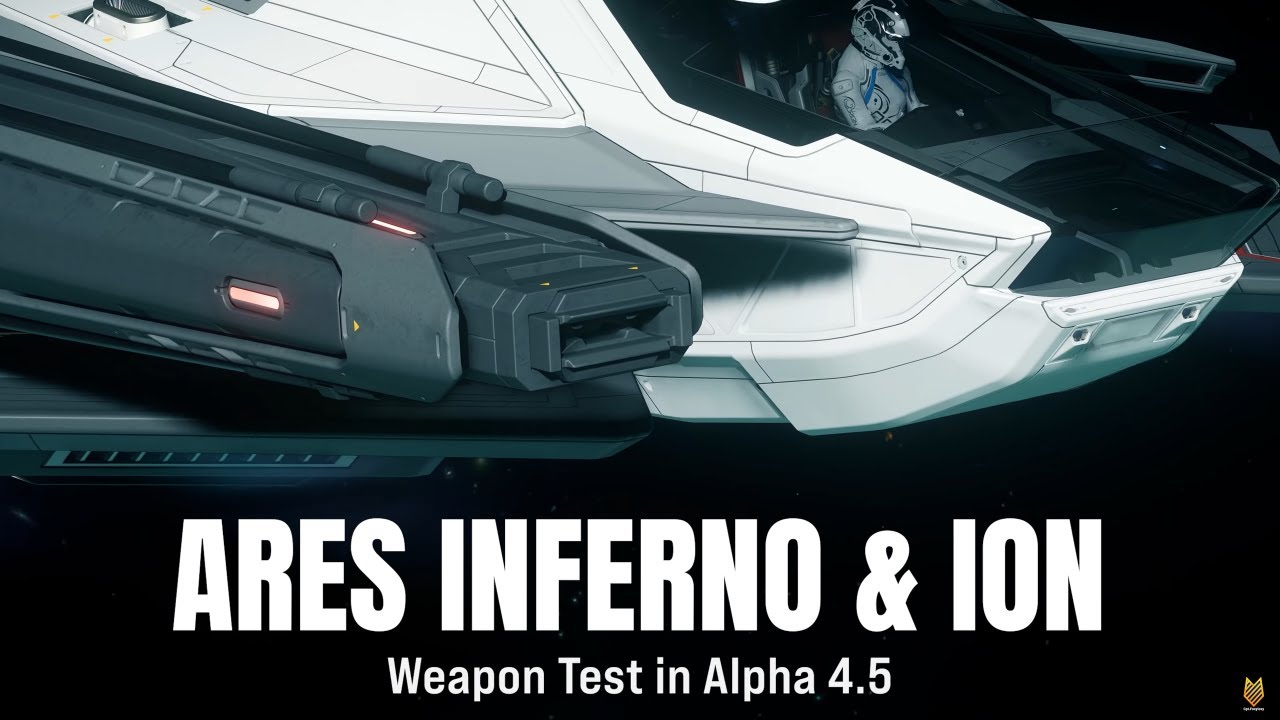
In this video, the creator conducts a detailed weapon test of the size seven weapons equipped on the Aries Inferno and Aries Ion ships in Star Citizen Alpha 4.5. The Aries Inferno features the SF7B Ballista Galling gun, a ballistic weapon with reduced ammo capacity compared to previous patches, while the Aries Ion is equipped with the SF7E laser cannon. The video explains the key stats such as alpha damage, rounds per minute, ammo speed, and penetration distances, noting that the Aries Ion’s laser cannon has better penetration distance but cannot penetrate shields, unlike the ballistic weapon on the Inferno which can damage components even with shields active.
The testing begins with player ships, specifically targeting a Gladius fighter. The Ballista Galling gun on the Inferno proves highly effective, causing significant power plant damage even with the Gladius’s shields up, quickly disabling the ship. In contrast, the Ion’s laser cannon requires shields to be depleted before it can damage the hull or components, demonstrating the limitation of laser weapons against shielded targets. Further tests on the Perseus ship reveal that the Inferno can inflict component damage more reliably, especially once armor is reduced, while the Ion struggles to damage components unless shields are down.
When testing on larger ships like the Polaris, the Inferno’s ballistic weapon shows slow but steady armor degradation and eventually component damage, particularly to the power plant once armor drops below a threshold. The Ion, on the other hand, cannot penetrate shields, so the user must first deplete shields before targeting components, where it then proves very effective with rapid component damage. This highlights the tactical differences: the Inferno can chip away at components even with shields active, while the Ion requires a shield break but then excels in component destruction.
The video also tests both weapons against NPC ships, where the Ion’s laser cannon is shown to be highly effective at quickly destroying smaller ships and depleting shields, though it struggles with sustained damage on larger targets. The Inferno’s ballistic gun demonstrates faster kill times overall and is easier to use against smaller targets, but its limited ammo capacity is a significant drawback in prolonged combat. Both ships are capable of sniping larger targets like the Hammerhead at ranges of 3 to 4 kilometers, with the Inferno being slightly easier to use in this role.
In conclusion, the video finds that both the Aries Ion and Aries Inferno weapons are powerful and viable choices in combat, each with unique strengths and situational advantages. The Ion excels in high-damage component strikes after shields are down, while the Inferno’s ballistic weapons offer consistent damage and shield penetration. The choice between them depends on player preference and tactical needs, with the current patch restoring the Aries Ion’s former glory and making the Aries Inferno’s ballistic weapons highly effective in both small and large ship engagements.