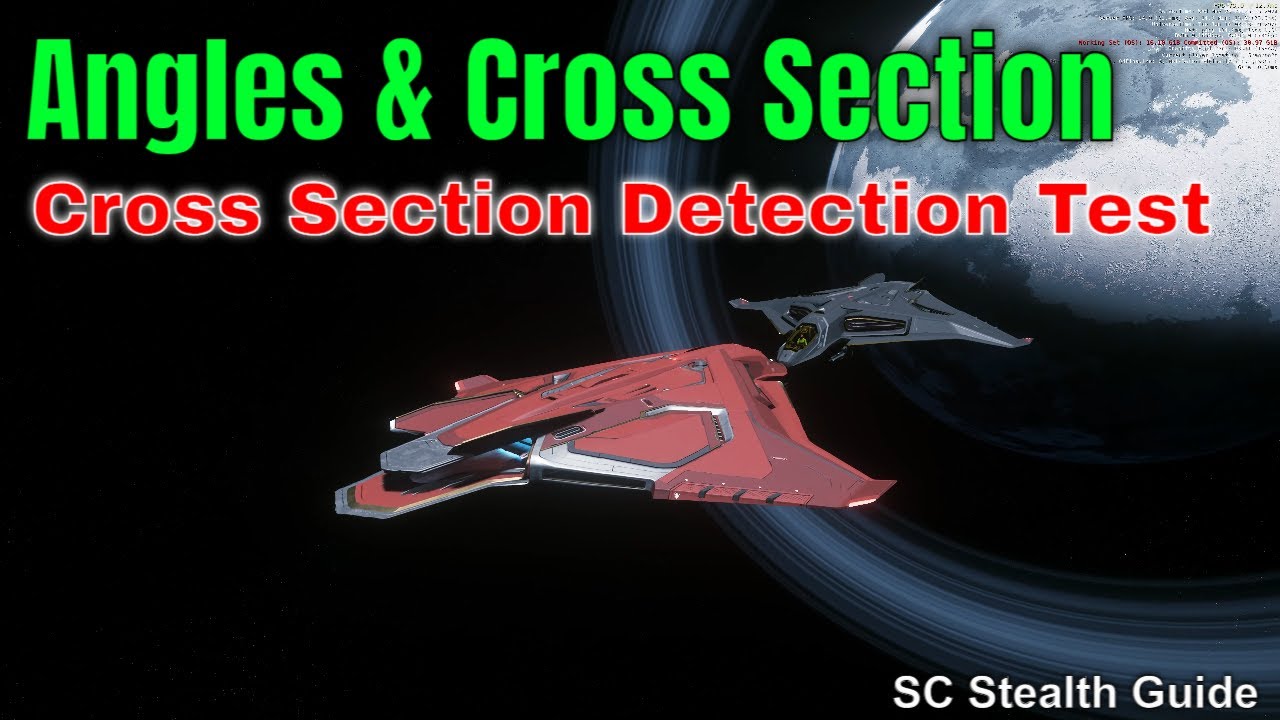
The video explores how the detection range of ships in Star Citizen is influenced by radar type, emission signatures, and the angle at which the target ship is faced. Through experiments involving different angles of approach, discrepancies are found between expected cross-section values and actual detection ranges, highlighting the complexity and unpredictability of ship detection mechanics in the game.
The video discusses how the range of detection of ships and vehicles in Star Citizen depends on radar type and the target ship’s emission signatures. Specifically, it focuses on the cross-section emission signature, which is influenced by the physical size of the ship and the angle at which the target ship is faced. The experiment involves two ships, a red bird and a black bird, to test the theory that the cross-section varies based on the angle of approach. The Star Citizen Viewer website is referenced to understand the cross-section values for different angles, such as front, side, and top. However, discrepancies are noted between the expected cross-section values and the actual detection ranges observed in the experiments.
In the experiment, when facing the target ship nose to nose, the cross-section value does not align with the highest emission signature, indicating a potential discrepancy in the stealth reduction calculation. Similarly, when testing at a 90-degree angle, the expected cross-section value does not correspond to the detection range observed in practice. The results suggest that the cross-section values provided on the website may not accurately reflect the ship’s detectability at different angles, raising questions about the reliability of the data.
Further tests are conducted to explore the impact of suppressing the overall IR signature on detection range. However, the experiments show that suppressing the IR signature does not significantly affect the detection range, indicating that the practical application of this feature may not align with theoretical expectations. Additionally, the discrepancy between the expected and observed cross-section values highlights the complexity of ship detection mechanics in Star Citizen, with real-world results deviating from predicted outcomes.
Despite attempts to align the cross-section values with detection ranges, the experiments consistently show discrepancies between the expected and actual outcomes. The video concludes with a humorous reference to being hit by missiles, highlighting the challenges and unpredictability of ship detection mechanics in the game. Overall, the experiments shed light on the complexities of ship detection in Star Citizen and the need for further exploration and understanding of the game’s mechanics to optimize gameplay strategies.