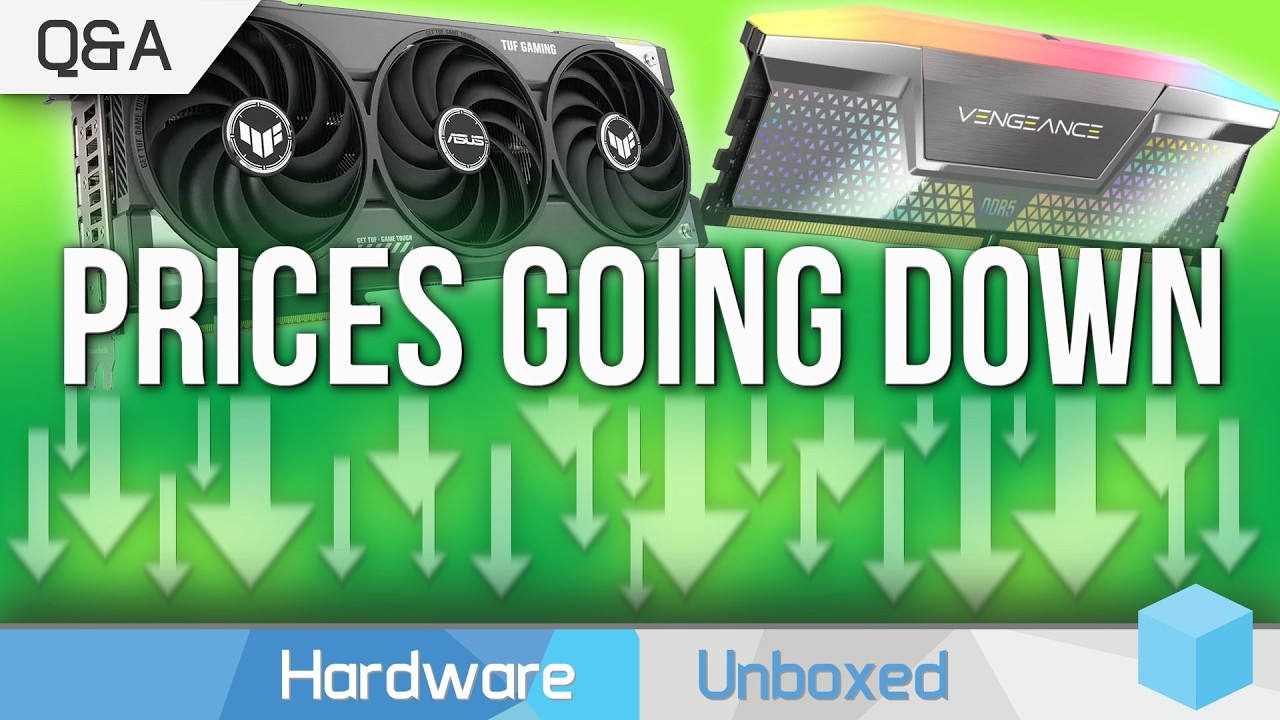
In this Harbor Unboxed Q&A, the hosts discuss how DDR5 RAM and RTX 50 series GPU prices have peaked and slightly declined due to a significant drop in demand, causing retailers to bundle products and face challenges clearing inventory amid a broader PC component sales slowdown. They also touch on technical issues with the AM5 platform, speculate on future hardware improvements, and critique AMD’s FSR Redstone technology, recommending NVIDIA’s DLSS for better performance and quality.
In this Q&A episode of Harbor Unboxed, the hosts discuss the recent trends in RAM and GPU prices, noting that prices for DDR5 RAM and RTX 50 series GPUs appeared to peak around late January and have slightly decreased since, though they remain higher than in previous months. The primary reason for this price stabilization is a significant drop in demand, as consumers are reluctant to purchase these components at current high prices. This decline in sales is evident across the board, with motherboard shipments down by 50% and CPU sales dropping by around 60% compared to the previous year. Retailers are cautious about restocking due to uncertainty in demand and rising component costs.
The hosts highlight that the current market situation is a result of a broader slowdown in PC component sales, not just isolated to GPUs or RAM. The high prices across various components, including SSDs and motherboards, have collectively discouraged upgrades and new builds. This has led to retailers bundling products like RAM with CPUs and motherboards at discounted prices to move inventory, a strategy reminiscent of the cryptocurrency mining boom era. However, this bundling often restricts consumer choice and is a sign of the challenges retailers face in clearing excess stock.
Looking ahead, the discussion touches on the sustainability of current pricing and market conditions. While prices may remain stable or even drop slightly due to low demand, the high production costs for memory chips and other components could force manufacturers to raise prices again in the future, potentially shrinking demand further. The hosts also speculate that motherboard prices might drop if manufacturers struggle to maintain revenue with reduced sales volumes, whereas GPU prices might stay relatively high due to their substantial profit margins, though some price adjustments could occur depending on market pressure.
The conversation shifts briefly to technical topics, including issues experienced with the AM5 platform, such as early memory training challenges and rare CPU failures linked to specific motherboard brands. The hosts suggest that future platforms like AM6 could benefit from improvements like quad-channel memory support and increased PCIe lanes to better accommodate higher core counts and enhanced I/O capabilities, which would also improve the viability of desktop APUs and support more extensive storage options.
Finally, the hosts address questions about AMD’s FSR Redstone technology, concluding that it brought limited improvements and failed to meet the high expectations set by previous versions or competing technologies like NVIDIA’s DLSS 4.5. They recommend DLSS performance mode over frame generation features for a better balance of frame rate, latency, and visual quality. The episode wraps up with a lighthearted mention of the team’s gaming and streaming activities and appreciation for viewer questions amid a relatively quiet product release period.