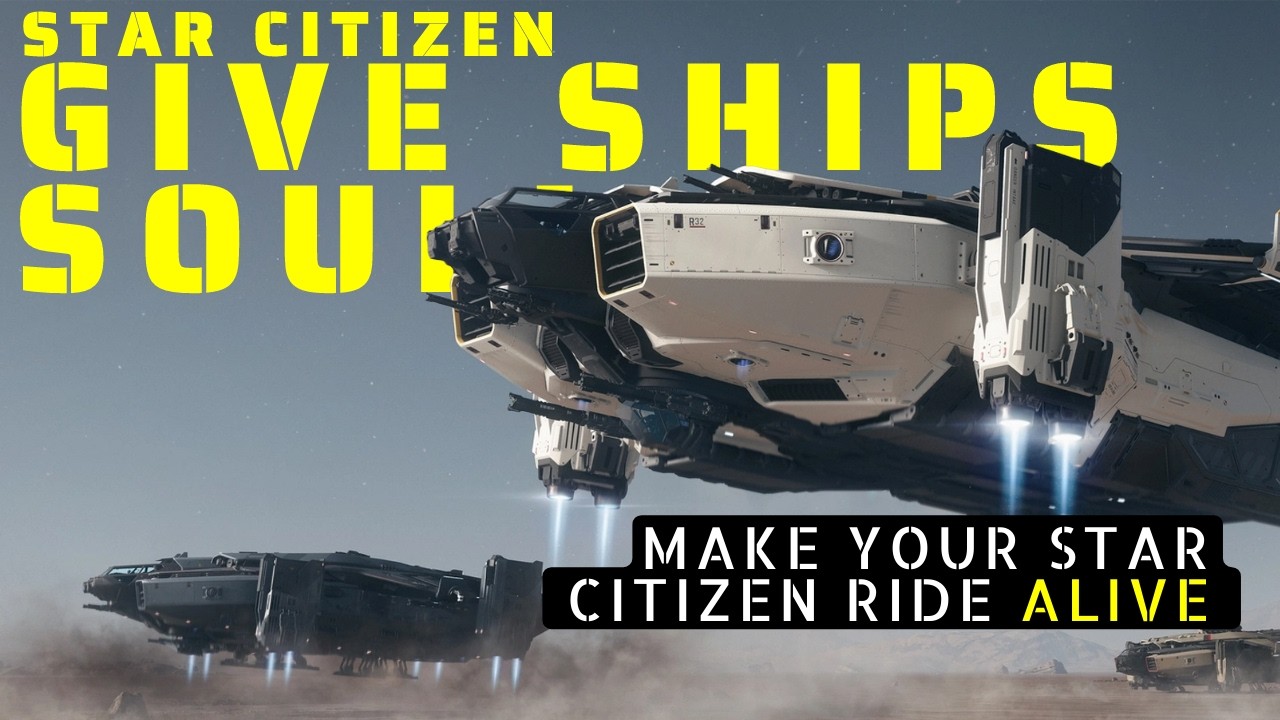
The video discusses a critical immersion issue in Star Citizen’s spacecraft design: the lack of mechanical personality and environmental feedback when ships power down. Despite the game’s visually impressive and technically complex vessels, they instantly transition from dynamic, living machines during flight to silent, lifeless objects upon landing. This absence of post-flight thermodynamics, such as cooling fans, engine heat, and mechanical sounds, creates an emotional disconnect for players. Unlike real-world aircraft or other space games that use sound and visual cues to convey a ship’s operational history and status, Star Citizen’s ships go silent, making them feel like expensive but emotionally hollow digital sculptures.
Recent ship reveals at Citizen Con 2025, including the Anvil Paladin, VanDuel Stinger, and Gray’s Market Shiv, highlight both the problem and potential solutions. Each ship showcases impressive design elements: the Paladin’s atmospheric lighting and crew quarters, the Stinger’s alien UI and heartbeat sound during boost, and the Shiv’s cobbled-together mechanical character. However, all suffer from the same issue of losing their personality the moment they power down. This silence undermines the emotional connection players have with their ships, which are meant to be more than just vehicles—they are homes, workshops, and lifelines in the game’s universe.
The video contrasts Star Citizen’s approach with Elite Dangerous, which has long incorporated environmental storytelling through thermal effects, dynamic cooling systems, and audio feedback that reflect a ship’s status and stress levels. Star Citizen has the technical capabilities to implement similar features, such as advanced particle effects, dynamic lighting, and layered audio, yet these elements remain underutilized in post-flight scenarios. The developers’ current focus on an ambitious, systemic overhaul of ship audio and thermal management may delay simpler improvements that could immediately enhance immersion and emotional engagement.
As a workaround, players can use existing in-game systems like the power management interface to create a more gradual and realistic shutdown sequence, cycling down thrusters and subsystems methodically rather than flipping a single switch. This approach fosters a deeper sense of being a pilot managing complex machinery rather than just turning off a machine. Upcoming ships like the RSI Perseus and Salvager, as well as the updated Gold Standard ships, present opportunities for the developers to prioritize mechanical personality and immersive feedback, potentially setting a new standard for the entire fleet.
Ultimately, the video calls on the Star Citizen community and developers to recognize that mechanical personality is not mere cosmetic polish but essential emotional infrastructure that transforms ships into believable, living partners. The Citizen Con ships demonstrate that the developer, Cloud Imperium Games, can create ships with compelling audio and environmental storytelling during flight, but extending this personality to shutdown and idle states is crucial. The community’s ongoing discussions and feedback will be vital in pushing for these improvements, ensuring ships feel truly alive and emotionally engaging throughout all phases of operation.