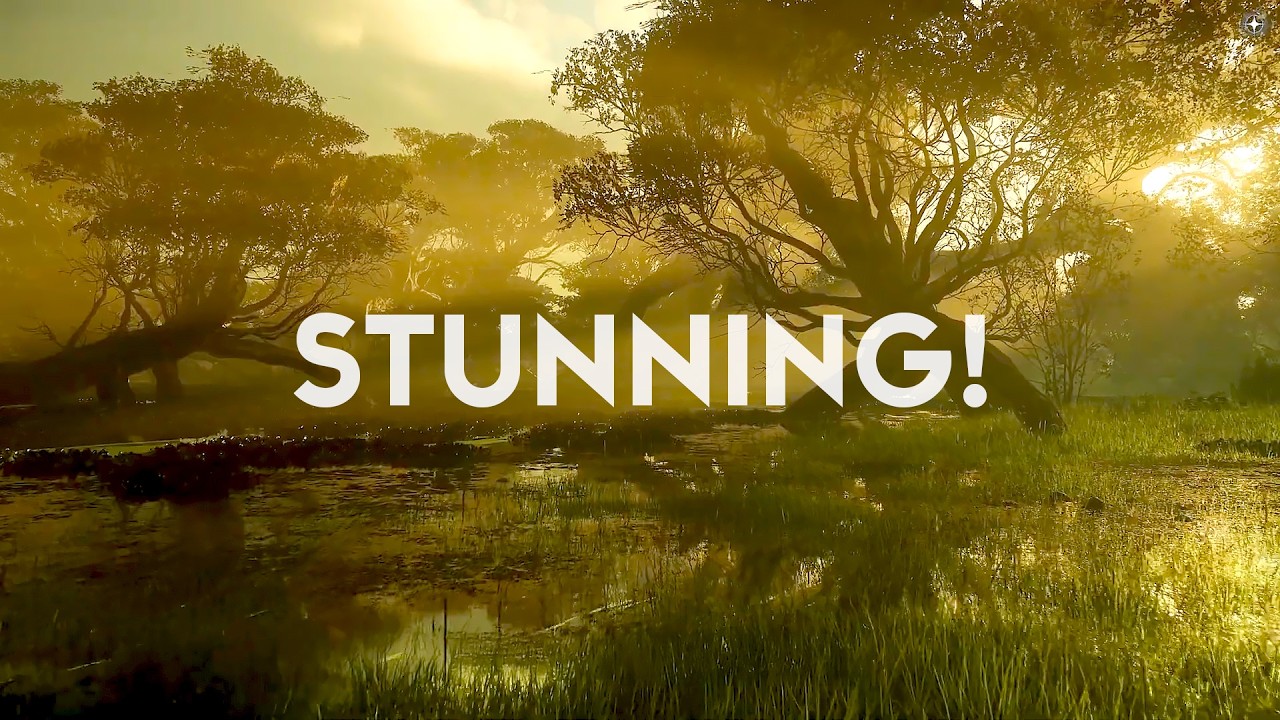
The video showcases Genesis, a groundbreaking planetary technology set to be introduced in Star Citizen next year. This system revolutionizes the way planets are generated by emulating nature at an unprecedented scale, creating diverse biomes such as deserts, grasslands, and swamplands that rival the best seen in gaming. Unlike previous methods that relied on hand-placed elements, Genesis uses physical data sets like height maps, humidity, temperature, soil type, and erosion to generate biomes organically. This approach eliminates visible tiling and unnatural biome blending, making the planets feel more realistic and immersive.
One of the standout features of Genesis is its impact on gameplay, particularly exploration and resource gathering. Because biomes and geological features are generated based on natural criteria, players can intuitively search for resources by observing the environment, such as looking for specific rock formations or terrain types. This method enhances the sense of realism and discovery, encouraging players to explore planets in a natural, unforced way rather than relying on menus or arbitrary placement.
The technology also improves the visual fidelity and scale of planets. Clouds now behave more realistically, staying within the atmosphere and casting accurate shadows on the terrain below, which helps convey a better sense of scale both from orbit and on the surface. Terrain details like cliffs and rock scattering are more accurately placed according to geological data. A new layer called medium tiles adds local erosion and height variation, increasing the complexity and uniqueness of planetary surfaces. This integration means that orbital views of planets closely match what players see on the ground, allowing for better identification of features from space.
On the surface, the biomes are richly detailed with varied flora and terrain features that transition smoothly between different environments such as forests, meadows, and wetlands. Lighting improvements, like grass being shaded similarly to fur or hair, enhance the visual quality and realism of the environment. The overall focus at Cloud Imperium Games (CIG) appears to be on creating a compelling exploration experience that inspires awe and curiosity, fulfilling a long-standing vision for space games that has yet to be fully realized by other titles.
While the presenter praises the technological advancements and the potential for exploration within Star Citizen, they express some reservations about the current gameplay, which they find less compelling. They emphasize that the planetary tech itself is a remarkable achievement and arguably unmatched in the space game genre. The video ends by inviting viewers to share their opinions on the tech both as part of Star Citizen and as a standalone demonstration, highlighting the significance of this development in planetary generation technology.