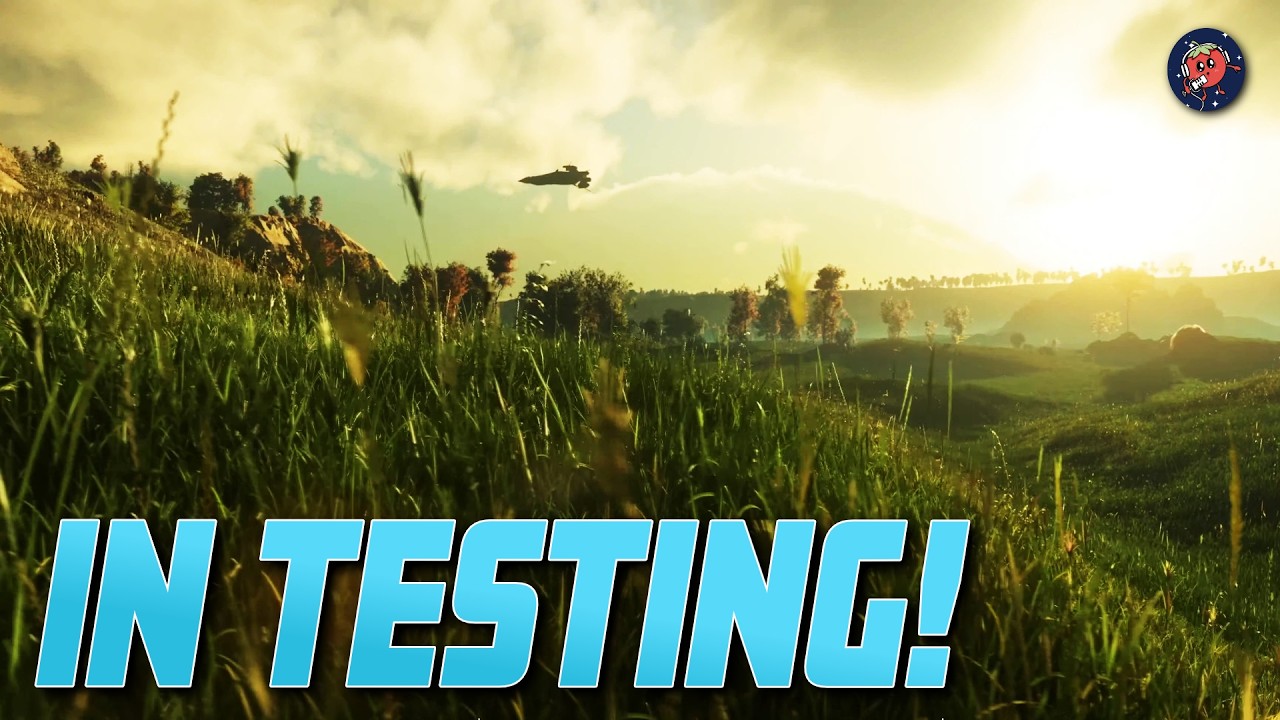
The video provides an update on the current state of Star Citizen’s development, focusing on the tech preview for Planet Tech V5 and the ongoing alpha 4.10.2 patch. The tech preview has been released, showcasing early glimpses of the new planetary tech, though detailed gameplay footage is not yet available. Meanwhile, alpha 4.10.2 2 is in the PTU (Public Test Universe) with several updates, including a notable enhancement to distribution centers where external sections now have harvestable slots, allowing for more diverse loot opportunities both inside and outside the facilities. Other updates include increased refinery capacities that are now data-driven for easier balancing, contract reward adjustments, rental contract tweaks, and numerous bug fixes addressing issues such as storage problems, vehicle claims, item dropping glitches, and event-related contract bugs.
The core highlight of the video is the explanation of Planet Tech V5, which represents a significant technological shift in how planetary biomes and terrain are generated and rendered. Instead of artists manually crafting each biome, the system now uses physical data sets and runtime spawning logic to create natural environments dynamically. This approach results in more organic and varied landscapes, such as forests, meadows, swamps, and wetlands, that appear naturally wherever the environmental conditions are met. This system also allows for seamless viewing of complex planetary regions from vast distances without the traditional limitations on visibility or pop-in effects.
A key technical advancement discussed is the introduction of “medium tiles,” a new data layer added on top of the existing terrain to increase feature complexity and detail at ground level. These tiles use slope, soil type, and erosion data to create more realistic height changes and surface variations, improving the overall uniqueness of planetary locations. Additionally, the virtual terrain (VT) system caches and represents terrain at varying scales, enabling efficient evaluation and rendering of vegetation and terrain features from far away. This system supports consistent shading and detail whether viewed up close or from a distance, enhancing immersion and visual fidelity.
Performance improvements are another major focus of Planet Tech V5. The terrain system has been redesigned to run efficiently on both CPU and GPU, with the ability to switch between them seamlessly. Offloading terrain processing to the GPU has led to significant performance gains, allowing for higher resolution terrain generation, better blending of surface types, and reduced pop-in of terrain features. The system also supports more intelligent culling of vegetation and terrain groups at different distances, optimizing rendering workloads and enabling denser, more detailed environments without sacrificing performance.
Finally, the video touches on the current state of graphics API support, noting that the tech preview and recent patches have moved away from DirectX 11 in favor of Vulkan, which is necessary to support Planet Tech V5. The tech preview is still based on the alpha 4.10.2 2 codebase rather than the upcoming 4.11, so some features and optimizations are still pending. With the tech preview now active and Squadron 42 gameplay expected soon, the community is entering a hype period where more updates and deeper insights into the new planetary tech and game features will be revealed. The presenter commits to keeping viewers informed as development progresses.