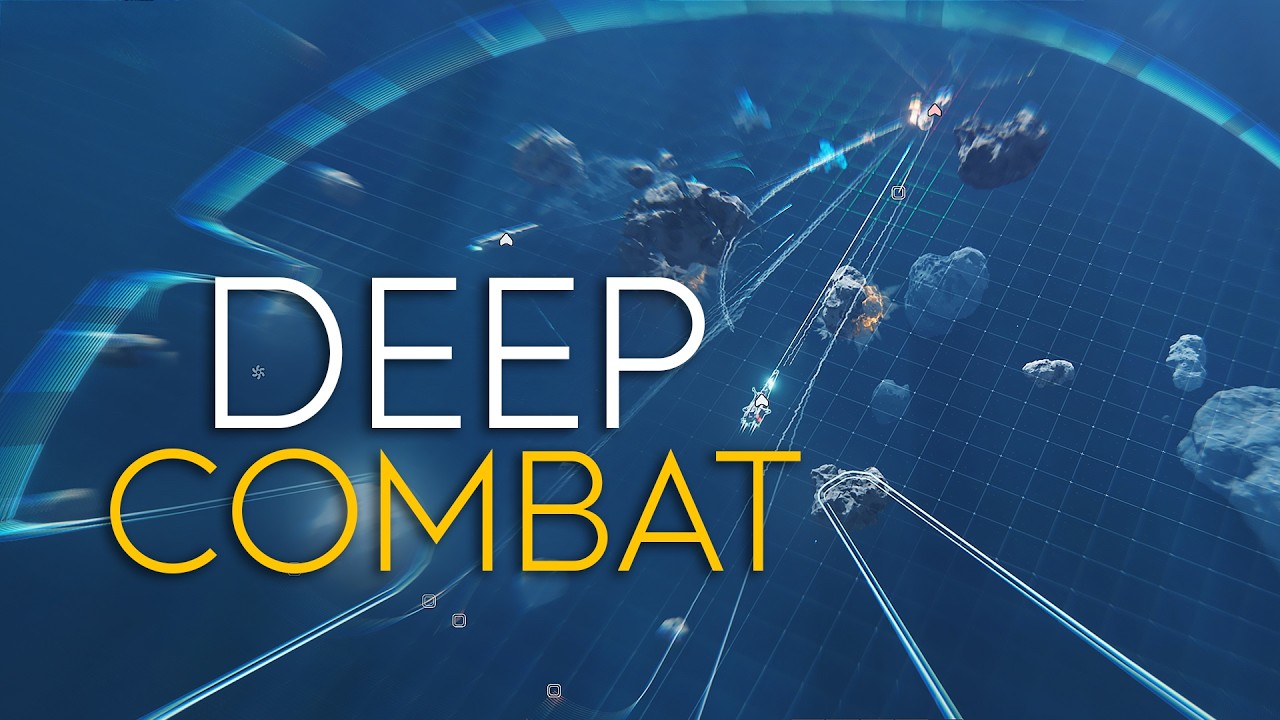
The recent combat update for Falling Frontier addresses a common issue seen in many modern space strategy games, where the complexity and scale of fleets and sensors often boil down to simple, numbers-driven battles once combat begins. Instead of straightforward exchanges of damage, Falling Frontier introduces an element of uncertainty and partial information at the start of engagements. Players initially encounter ambiguous contacts on their sensors rather than clear enemy ships, requiring interpretation and recognition before fully understanding the battle space. This approach adds depth and tension to combat, making the early phase about gathering intelligence rather than immediate firing.
Combat in Falling Frontier unfolds in four distinct real-time phases, each influencing the next and creating an evolving battle rather than a static exchange. The first phase focuses on information acquisition, where players detect enemy presence through incomplete signals that gradually become clearer. This mechanic shifts combat from a reactionary process to one of strategic interpretation, setting the tone for the encounter and distinguishing Falling Frontier from more conventional strategy games.
The second phase centers on missile warfare, where players use missiles, rockets, and vertical launch systems to degrade enemy capabilities before they close in. This phase is less about dealing maximum damage and more about crippling vital enemy systems to shape the course of the battle. Environmental factors like asteroid fields and decoys play a significant role here, adding tactical layers to missile engagements and emphasizing the importance of positioning and timing.
Mid-range combat is the third phase, where players have a clearer understanding of enemy composition and tactics. Maneuvering becomes crucial as ships respond to the developing tactical picture, and main battle guns come into play alongside possible secondary weapons. This phase introduces more dynamic and dangerous engagements, with cover, electronic warfare, and support systems all influencing outcomes. It moves combat beyond missile exchanges into a complex interplay of tactics and positioning.
The final phase is close-range combat, described as “looking at death in the eye,” where ships attempt to outmaneuver opponents for broadsides and blind-spot attacks. Even here, complexity is maintained as other vessels may block attack angles, and the broader fleet context continues to affect individual engagements. The developers have clearly invested significant effort into creating a layered, realistic combat system where tactical choices, ship modules, and environmental factors all contribute to the evolving battle, promising a fresh and engaging experience for strategy enthusiasts.