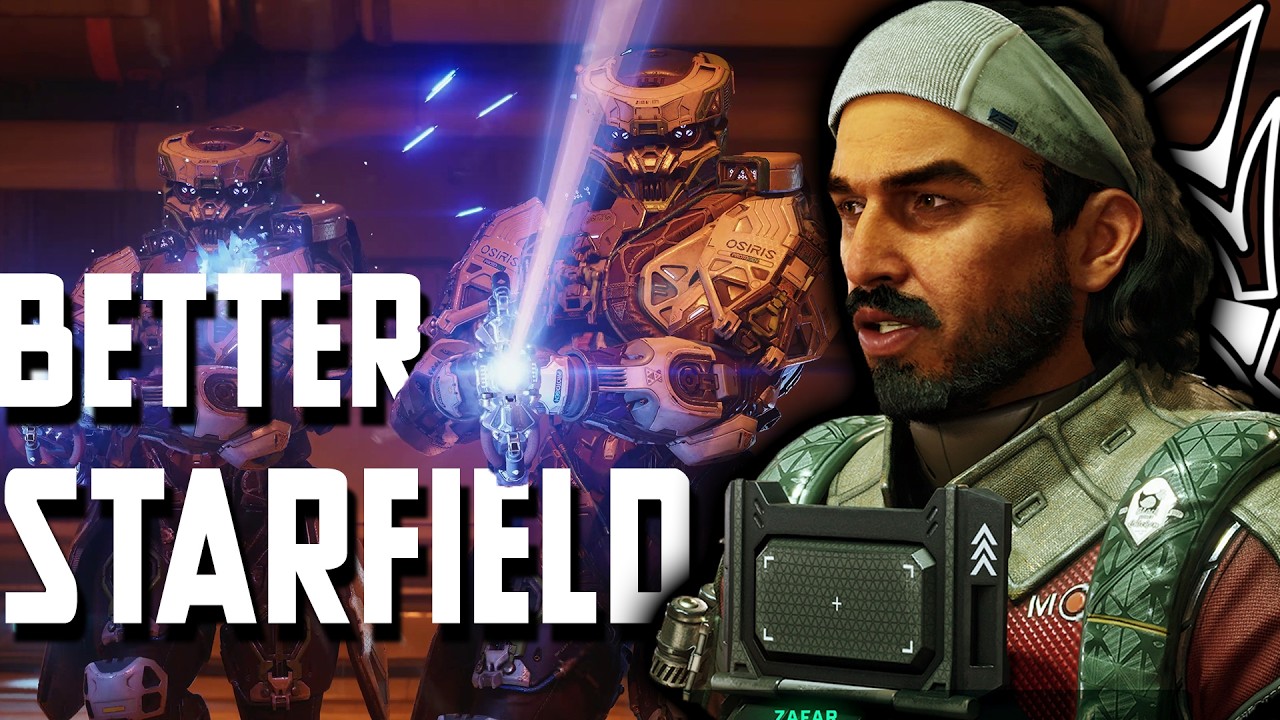
The video provides first impressions of the closed beta demo for Alcat Games’ new Expanse game, comparing it favorably against Bethesda’s Starfield, which the presenter criticizes heavily. Despite the demo being short and having typical Unreal Engine 5 performance issues like low FPS and blurry temporal anti-aliasing, the game shows promise with its third-person shooter visuals and animations. However, performance optimization and clearer settings information are lacking, which detracts from the overall experience. The presenter acknowledges Alcat Games as a relatively unknown but capable studio with a solid background in RPGs and a sizable team based in Cyprus.
A key highlight is the game’s writing and narrative, which contrasts sharply with Starfield’s blandness. The dialogue in the Expanse game demo feels more natural and engaging, though still somewhat sanitized and lacking the gritty tone of the TV show. The characters come off as kinder and less complex, which may disappoint fans expecting the show’s darker, more nuanced storytelling. The game is set in the same universe as the TV series, but the writing misses some of the belter accents and rough edges that made the show’s characters memorable, resulting in a more “kidlike” tone.
Gameplay-wise, the demo features typical cover shooter mechanics with crafting elements reminiscent of Mass Effect, though the skill tree and some mechanics feel uninspired. Combat is visually appealing with particle effects, but lacks meaningful physics interactions, which is a missed opportunity given modern hardware capabilities. The cover system is clunky and unresponsive at times, and the game lacks features like shoulder switching and free movement in zero gravity. EVA (extra-vehicular activity) sequences are simplified and on rails, limiting player freedom and realism, which diminishes the immersion expected from a space game.
The game’s handling of space mechanics and realism is another weak point. Despite consulting a former NASA astronaut, the game opts for a balance between realism and sci-fi that leans heavily toward simplicity and accessibility rather than authentic space simulation. Audio design, which could enhance immersion by simulating the silence and vibrations inside a spacesuit, feels underdeveloped in the demo. The presenter points out that these missing or simplified space features and the lack of spaceship gameplay make the experience less compelling compared to other space-themed games like Dead Space or Mass Effect.
In conclusion, while the Expanse game shows potential with solid visuals, better animations, and promising combat compared to Starfield, it suffers from writing that feels too sanitized, limited gameplay mechanics, and a lack of true space immersion. The presenter emphasizes that the success of the game will hinge largely on improving the story and better incorporating the unique aspects of the Expanse IP, especially its space-based mechanics. Without these improvements, the game risks disappointing fans of the show and space RPG enthusiasts, despite its glimmers of hope as a better Mass Effect-style experience.