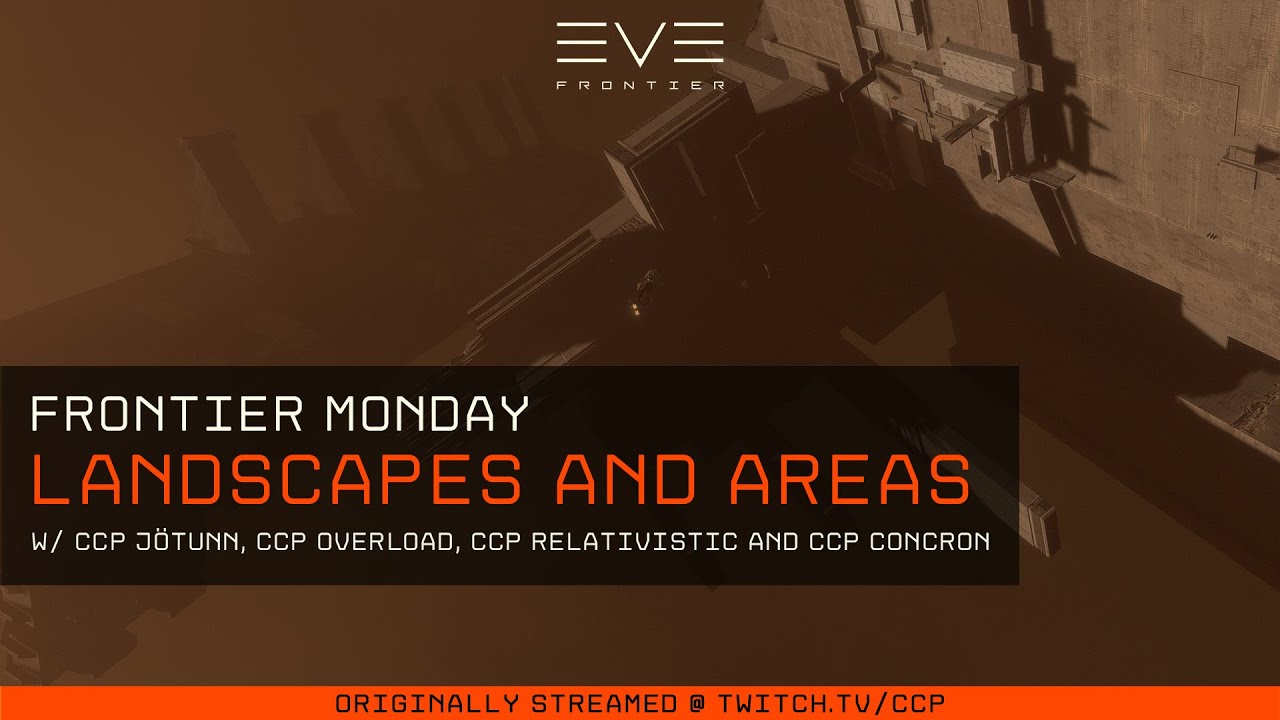
The Frontier Monday episode introduces an exciting new development in EVE Frontier: the implementation of “landscapes,” a new form of persistent, dynamic content within the game’s universe. The hosts, including CCP Overload, CCP Relativistic, and CCP Concrron, discuss how landscapes differ from traditional sites by providing consistent, recognizable areas within solar systems that maintain their terrain and structures over time. Unlike previous dynamically spawning sites that disappeared after use, these landscapes offer players a stable environment that evolves with dynamic content such as events, NPC patrols, and potential transformations influenced by player actions.
The team explains the scientific and gameplay foundations behind this feature, highlighting how their universe simulation models real astrophysical phenomena like asteroid belts, Trojan asteroids, and planetary orbits to create believable and intuitive spatial layouts. This simulation allows for the procedural generation of unique solar system landscapes, each with distinct characteristics that players can learn to navigate and exploit. The goal is to create a universe where players can develop spatial intuition, much like recognizing forests or rivers in open-world RPGs, enhancing immersion and strategic gameplay.
A significant focus is on the balance between permanence and dynamism. While the terrain and major structures in landscapes remain static, the content within them—such as resources, NPCs, and events—can change dynamically, ensuring that each visit offers new challenges and opportunities. This approach also addresses player frustrations with disappearing structures and repetitive site layouts, fostering a sense of continuity and discovery. The developers envision these landscapes becoming hubs for player interaction, from cooperative mining to battles, with future possibilities including player-built bases and large-scale system transformations.
The episode also showcases a technical demonstration of the landscapes in-game, revealing vast, detailed areas with points of interest, dynamic environmental effects like space clouds, and the introduction of new travel mechanics such as the “Leap” module to navigate the large spaces efficiently. Despite being an early build with some performance and collision detection issues, the team emphasizes ongoing optimization efforts and invites player feedback. They also discuss how landscapes will initially appear in select starter systems before expanding throughout the universe, marking a foundational step toward a richer, more persistent game world.
In conclusion, the Frontier Monday session highlights the team’s commitment to evolving EVE Frontier’s content delivery by blending scientific realism with engaging gameplay mechanics. The introduction of landscapes represents a major shift towards persistent, meaningful space environments that encourage exploration, player interaction, and emergent narratives. With the upcoming patch rolling out these features, players are encouraged to participate in testing and shaping the future of the game, as the developers continue to build upon this innovative framework to enhance the Frontier experience.