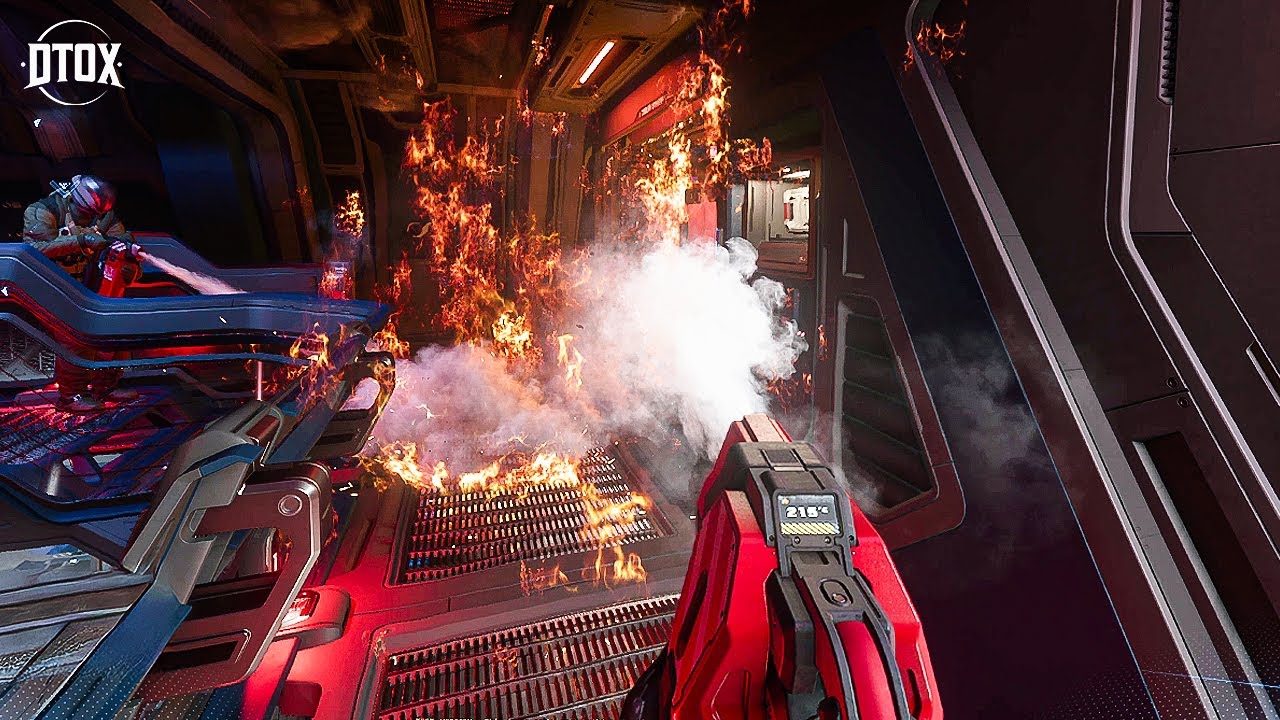
The recent introduction of engineering gameplay in Star Citizen’s 4.5 PTU marks a significant evolution in how ships operate within the game. Engineering now directly influences every ship’s functionality, with internal components capable of overheating, wearing down, shutting off, or even catching fire. This new system demands active management from players, especially in multi-crew ships where dedicated engineers must maintain power, manage cooling, and repair damage during combat to prevent catastrophic failures. The gameplay shift transforms ships from mere transport vehicles into complex systems requiring strategic teamwork and real-time problem-solving, fundamentally changing both combat and everyday flying experiences.
During a test combat scenario in the Nyx system, the crew faced intense pressure managing the ship’s deteriorating systems under fire from enemy ships. Hull integrity proved fragile, depleting rapidly once armor was destroyed, and constant repairs were necessary to keep the ship alive. Components such as power plants, coolers, relays, and life support systems frequently failed or caught fire, requiring immediate attention to prevent further damage or ship destruction. The crew used multitools and emergency repair functions to stabilize critical systems, highlighting the stressful yet engaging nature of the new engineering mechanics.
The video also delves into the mechanics behind damage application, explaining how armor health and thickness interact with weapon penetration stats to determine damage to internal components. Currently, the system is unbalanced, with some weapons like the Aries ion gun causing disproportionate damage to ship internals. The presenter envisions a future where armor effectively protects components until depleted, requiring coordinated fire from various weapon types to breach a ship’s defenses. This would add depth and realism to combat, emphasizing armor strategy and weapon choice, although the current implementation still needs significant tuning.
A notable demonstration involved the Inferno weapon system, which showed different damage characteristics compared to the ion gun, emphasizing the importance of penetration distance and radius. Additionally, a laser shot from an Idris ship was able to instantly disable all components on the target ship, forcing a crippled state and showcasing how critical hits can dramatically impact combat flow. These moments underscore the potential for engineering gameplay to create intense, high-stakes encounters that require players to prioritize repairs and system management under fire.
Overall, while the engineering system introduces exciting complexity and realism to Star Citizen, it is currently marred by unclear mechanics, inconsistent balance, and unintuitive interfaces. The presenter appreciates the ambitious direction but acknowledges that it will take months or even years of iteration to refine the system into a cohesive and enjoyable gameplay element. Despite its flaws, engineering gameplay promises to deepen player engagement and transform ship combat into a more strategic, immersive experience in the long term.