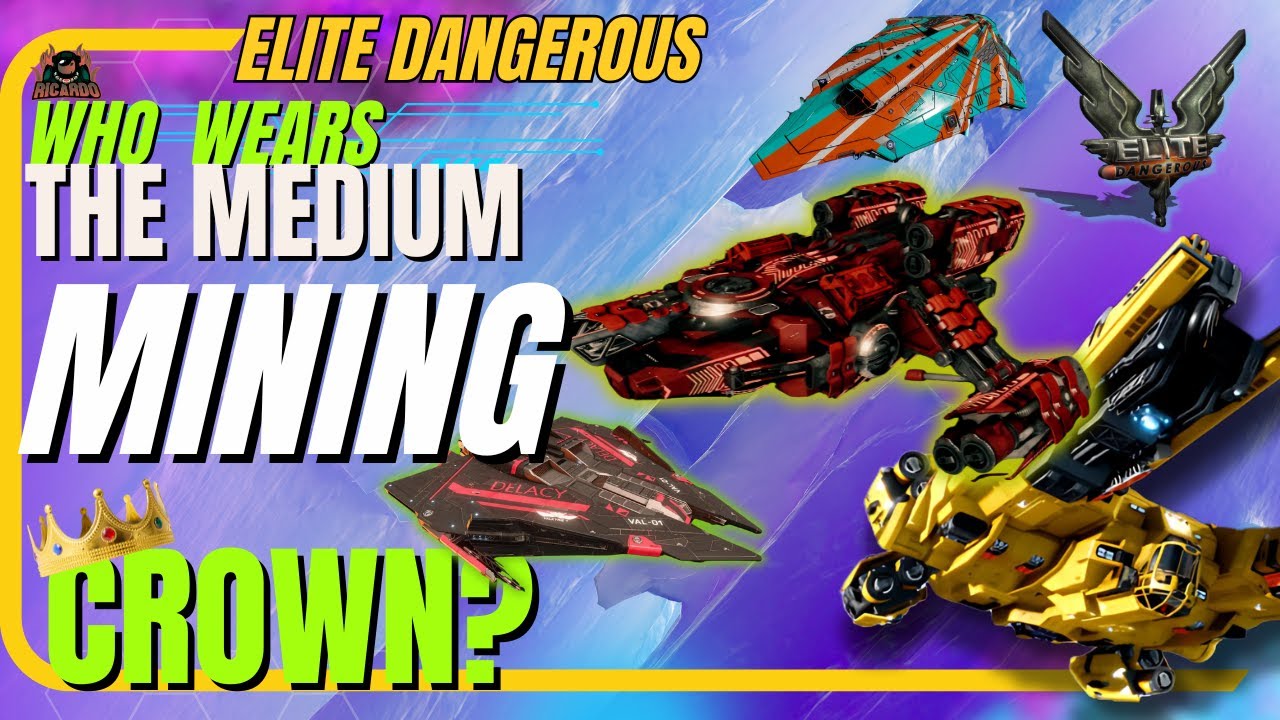
Mining has always been a unique and rewarding profession in Elite Dangerous, evolving significantly from its early days of manual scooping to advanced techniques involving seismic charges and abrasion blasters. Historically, miners have relied on adapted multi-role ships like the Python, Crate M2, and ASP Explorer, which, while capable, were not purpose-built for mining and involved compromises. The recent release of the Lakeon Type 11 Prospector marks a milestone as the first ship designed exclusively for mining, featuring dedicated mining hardpoints, a hybrid mining tool, and optimized cargo space, making it a highly focused and efficient medium mining vessel.
The Type 11 Prospector stands out with its industrial design, excellent cockpit visibility, and specialized features such as restricted hardpoints for mining gear and a hybrid mining laser that combines laser and abrasion functions, simplifying the mining process. It offers a cargo capacity of up to 288 tons, competitive with traditional medium miners, and includes three crew seats with fighter support, although the fighter bay has been a point of contention among players. While the Prospector excels in mining efficiency, yielding high profits in relatively short sessions, it lacks versatility, with limited combat capability and moderate speed and handling.
In contrast, the Python remains the quintessential multi-role medium ship, capable of trading, fighting, exploring, and mining. It offers slightly more cargo capacity than the Type 11 and flexible hardpoints, allowing commanders to tailor their loadouts according to their needs. The Python requires players to make trade-offs between cargo, combat, and mining equipment but remains highly valuable for those who want a versatile ship that can handle various roles without owning multiple vessels. Its multi-role nature ensures it remains relevant despite the introduction of specialized ships like the Type 11.
The Crate M2 and ASP Explorer cater to different niches within the mining community. The Crate M2 is favored for its combat prowess combined with mining capabilities, making it ideal for players who enjoy a more dynamic and defensive mining experience. It excels in deep core mining and offers good maneuverability in asteroid fields. On the other hand, the ASP Explorer serves as an excellent entry-level mining ship for new commanders due to its affordability, versatility, and decent jump range, though it lacks the cargo capacity and hardpoint flexibility of more advanced miners. Both ships offer unique advantages depending on the player’s priorities and experience level.
Finally, the Type 8 Transporter is highlighted as a budget bulk miner with an impressive cargo capacity of up to 400 tons, making it excellent for large-scale mining runs despite its weaker handling and power distributor. The overall conclusion emphasizes the choice between specialization and versatility: the Type 11 Prospector is the new specialist mining ship, streamlining the mining process but sacrificing flexibility, while ships like the Python and Crate M2 remain valuable for multi-role pilots. New players might find the ASP Explorer or Type 8 more accessible. Ultimately, the Type 11 has earned its place in the game, expanding options for miners without replacing the established favorites.