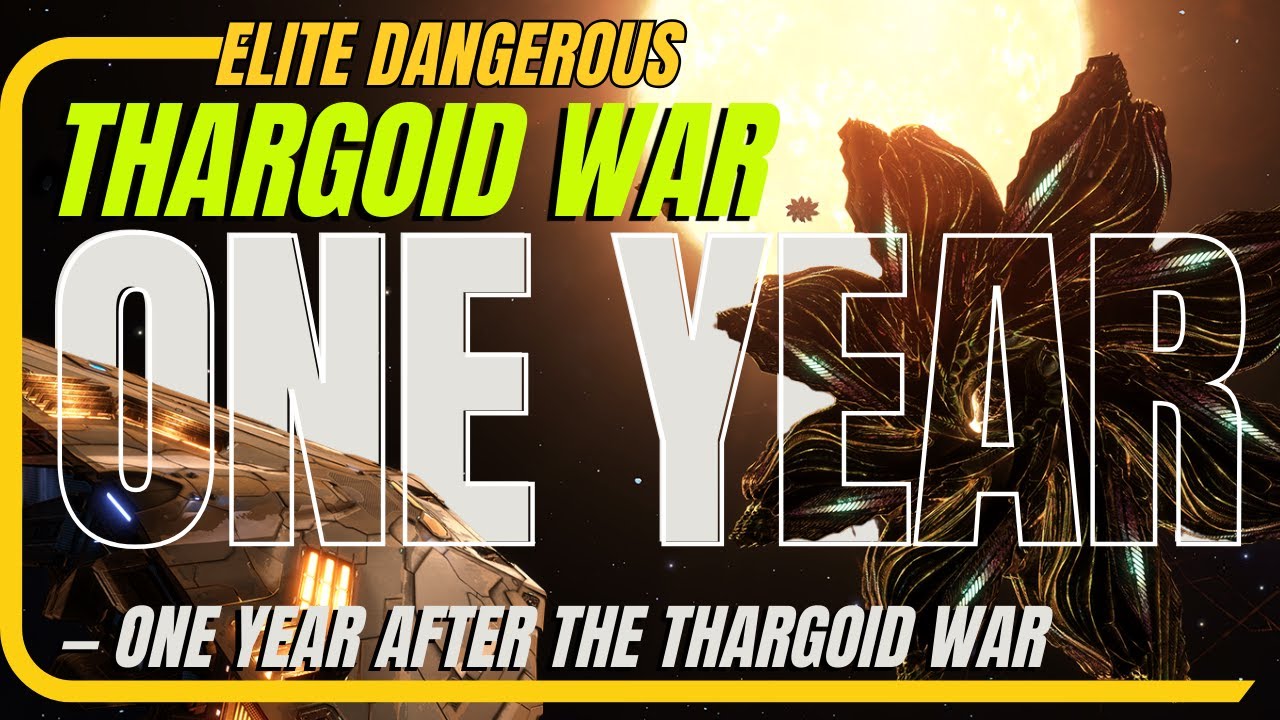
The video reflects on the state of Elite Dangerous one year after the climactic end of the human-Thargoid conflict, marked by the destruction of the last Thargoid Titan, Kio. While the war was a galaxywide event that dominated gameplay and narrative for years, its conclusion did not slow down the game. Instead, Elite Dangerous evolved, shifting focus from the chaos of war to recovery and rebuilding. The game’s narrative and mechanics adapted to a post-war galaxy where emergency broadcasts gave way to reports of restoration and renewal, signaling a long-term effort to stabilize and grow rather than merely survive.
Post-conflict, the game world recalibrated rather than resetting. Players can still visit remnants of the war, such as Thargoid spires and crashed alien ships, but these threats are now dormant. The background simulation has returned to normalcy, with economies stabilizing, stations reopening, and mission boards offering more diverse activities beyond combat and evacuation. This has made the game more approachable for new players and offered veterans a more balanced experience where trading, exploration, and other playstyles can flourish without the constant pressure of war.
The emotional tone of Elite Dangerous has shifted significantly. While some players miss the intense conflict and the unified focus on fighting a common enemy, the game now offers a more deliberate and structured pace. Player-driven narratives, inter-power dynamics, and meaningful exploration have taken center stage. The community’s sentiment reflects this change, with less burnout and more long-term planning focused on expansion and shaping the galaxy rather than merely defending it. This marks a move towards a gameplay experience that rewards commitment and strategic thinking over reactive combat.
Looking ahead, the video highlights Frontier Developments’ roadmap for 2026, which includes expanding colonization and enhancing the Odyssey gameplay through new operations. This direction signals a fundamental shift from survival to active galaxy-building, encouraging players to invest in and improve the game world. The Thargoid War served as a stress test for both the game and its community, pushing boundaries and reinvigorating player engagement. Now, the game is in a phase of resilience and growth, quietly strengthening its foundation rather than relying on flashy conflict.
In conclusion, the video poses thoughtful questions to the community about whether Elite Dangerous is better now than during the war and whether players are ready for the next big crisis or prefer this era of relative peace and expansion. The presenter, Ricardo, suggests that peace in Elite Dangerous has historically been temporary, and future events will continue to shape the game’s evolution. Ultimately, the post-war era has brought direction and depth to the game, making it a stronger and more intentional experience as it moves towards 2026 and beyond.