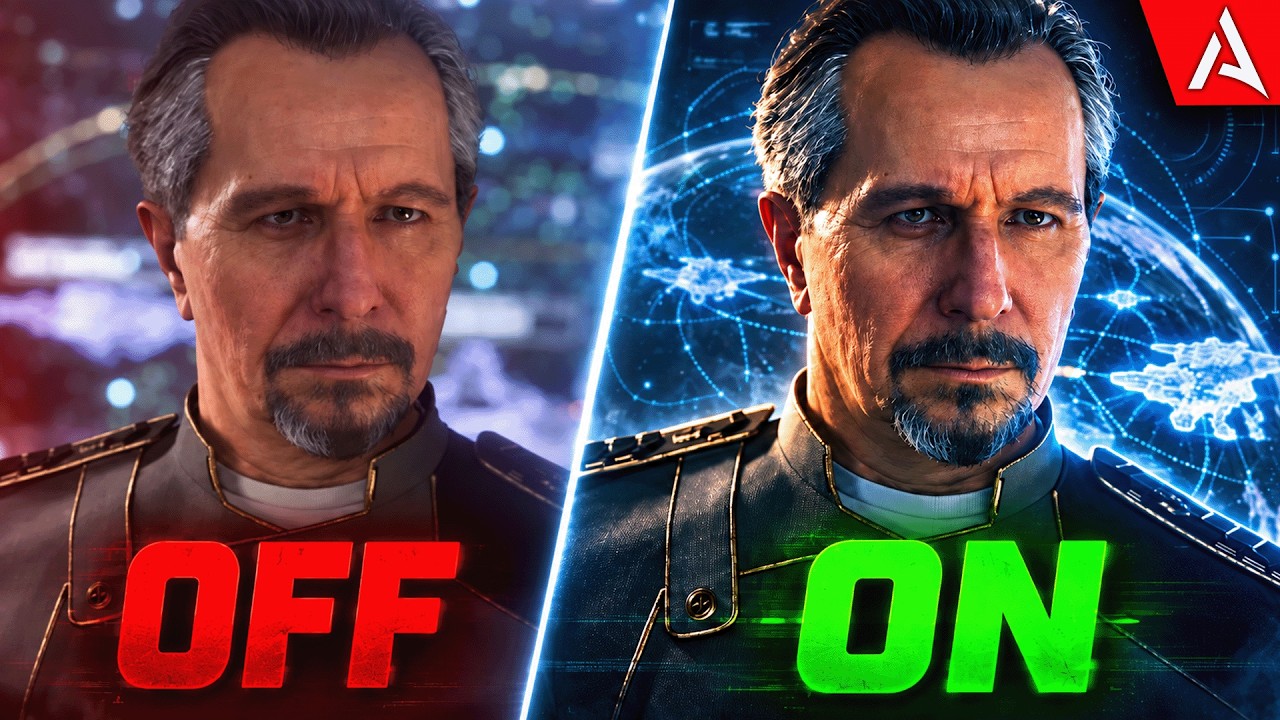
The video examines the potential benefits and challenges of implementing NVIDIA’s DLSS 5 technology in Star Citizen, highlighting its ability to enhance visual quality and lighting but noting significant performance drawbacks and compatibility issues that limit practical use. While DLSS 5 shows promise for future gaming visuals, its current application in Star Citizen remains experimental and constrained by technical and artistic considerations.
The video from 10pound42 explores the question of whether DLSS 5 (Deep Learning Super Sampling) technology is beneficial for Star Citizen and Squadron 42. DLSS 5 is a new NVIDIA technology designed to enhance game visuals and performance using AI-driven upscaling. Due to anti-cheat restrictions and compatibility issues with reshade, testing DLSS 5 directly in Star Citizen is challenging, but the presenter uses a utility called Magpie to apply it and observe its effects. While this method is not ideal and causes a significant performance hit, it allows for an initial look at how DLSS 5 impacts the game’s graphics.
Visually, DLSS 5 appears to improve lighting and overall image quality, particularly on character faces. It enhances details such as skin texture and lighting nuances without drastically altering the game’s original art style. The presenter notes that DLSS 5 does not add new details but rather refines existing ones, making scenes look more natural and cinematic. However, reactions to the changes are mixed, with some viewers appreciating the improved lighting and others feeling that it makes characters look somewhat artificial or “wax-like.” The technology seems to handle shadows and reflections better in some areas but is limited by the current absence of global illumination in the game.
Performance-wise, DLSS 5 currently causes a substantial drop in frame rates, from about 100 FPS down to around 30 FPS in some test scenarios. This performance hit makes it impractical for everyday gameplay in Star Citizen, a game already known for its demanding hardware requirements. The presenter emphasizes that while DLSS 5 looks promising visually, the significant cost to performance means it is unlikely to be widely adopted until hardware and software optimizations improve. The current implementation through Magpie is seen as a workaround rather than a final solution.
The video also touches on the broader implications of adopting DLSS 5, discussing potential future developments in graphics technology. The presenter speculates that, similar to how ray tracing became more mainstream over several generations of hardware, DLSS 5 might become a standard feature in the future as GPUs become more powerful and optimized. There is also a consideration of artistic intent, with some viewers concerned that AI-driven enhancements might alter the original vision of the game’s creators. The discussion acknowledges that while DLSS 5 is a powerful tool, its adoption must balance technical benefits with preserving the game’s aesthetic integrity.
In conclusion, the video presents a nuanced view of DLSS 5 in Star Citizen and Squadron 42. While the technology clearly enhances visual quality by improving lighting and detail, the current performance drawbacks and technical challenges limit its practical use. The presenter encourages viewers to weigh the benefits against the costs and to stay informed as the technology evolves. Ultimately, DLSS 5 holds promise for the future of gaming visuals, but for now, its integration into Star Citizen remains tentative and experimental.
Useful Links
- Magpie — Directly enables the workaround demonstrated in the video.
- Star Citizen — Primary game platform discussed in the video.