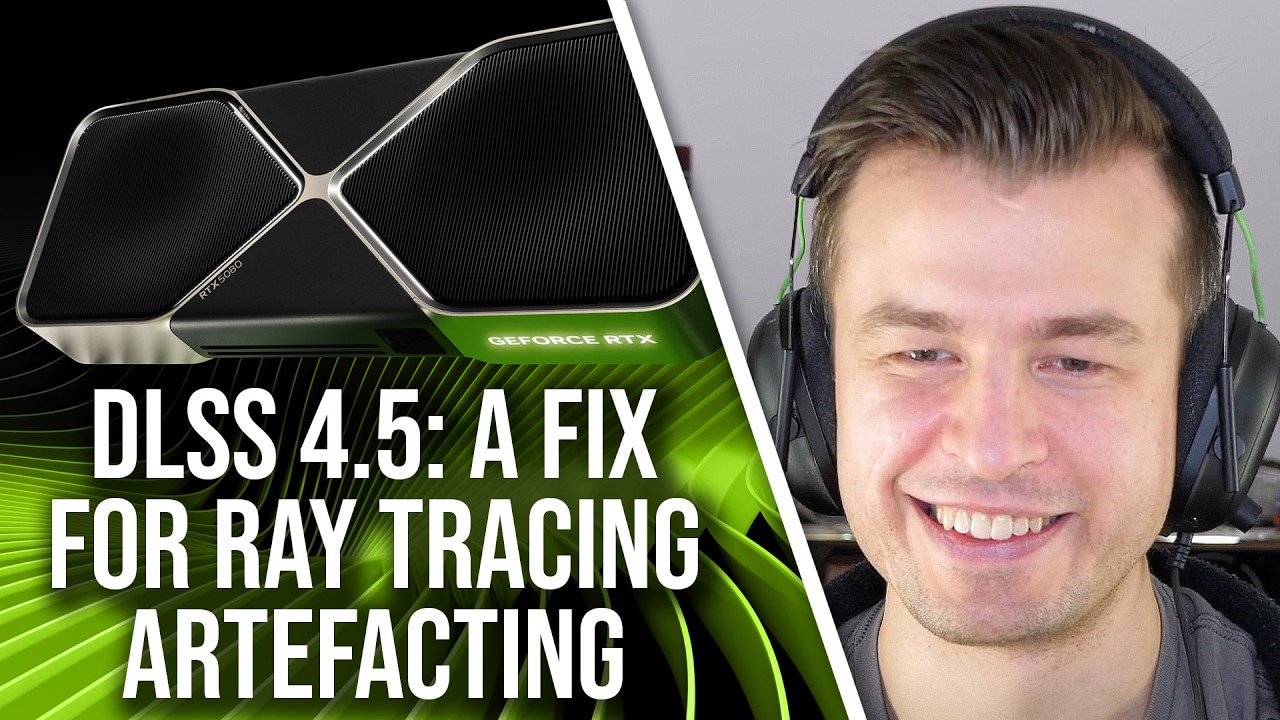
The video reveals that DLSS presets M and L can sometimes increase ray tracing noise due to conflicts with in-game denoisers, but disabling the in-game denoiser often results in clearer reflections and better visual quality. It highlights the need for DLSS to better integrate with existing game denoising methods to avoid visual degradation and ensure consistent performance without requiring game modifications.
In the video, the presenter investigates the impact of different DLSS presets, specifically presets M and L, on ray tracing resolve and noise levels in games. They note that preset M often increases noise and ray traced reflections compared to the previous preset K, and preset L behaves similarly at the same internal and output resolutions. This means that preset M does not significantly improve ray tracing noise issues, a problem that persists across the tested titles.
An interesting discovery is made when the in-game denoiser is turned off. In games like Crisis 3, disabling the in-game denoiser results in better visual quality with presets M and L, showing less noise and more stable ray traced reflections. The presenter highlights that the active “boiling” noise in reflections is reduced without the denoiser, suggesting that DLSS’s own processing may be more effective at denoising in these scenarios.
Further testing in Silent Hill 2 reveals even more pronounced effects. Preset M, which previously increased noise in reflections, now delivers clearer, mirror-like reflections and better surface normal resolution when the in-game denoiser is disabled. This indicates that the interplay between DLSS presets M and L and the game’s built-in denoising can sometimes degrade visual quality rather than improve it.
The presenter consulted a third-party developer who explained that presets L and M perform denoising at a lower resolution before DLSS upscales the image, which can clash with the game’s own denoising processes. This can lead to worse results when both denoisers are active. The takeaway is that DLSS, in some cases, can outperform traditional in-game denoisers, but the current interaction between DLSS presets and game denoisers is problematic and not ideal for plug-and-play image reconstruction.
In conclusion, the presenter finds that preset L is largely similar to preset M but handles noise and aliasing better on vegetation. All tests were conducted at 4K resolution and in performance mode to compare the presets fairly. The video emphasizes the need for DLSS presets to work seamlessly with existing game denoising methods without requiring developers to modify their games post-release, ensuring better legacy support and consistent visual quality across titles.