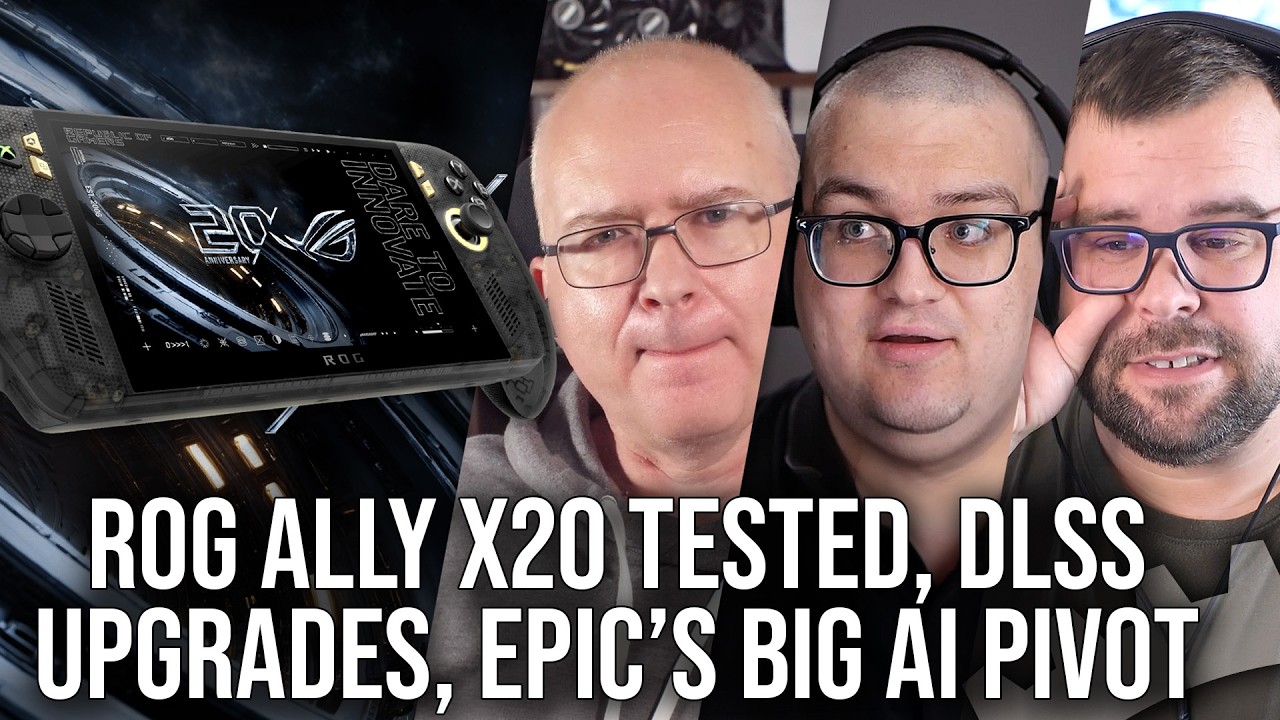
In the latest edition of the DF Direct Weekly podcast, the team dives into several key topics in gaming hardware and technology. They begin by discussing recent updates to Nvidia’s DLSS frame generation technology, highlighting the introduction of a new preset C that offers a performance-oriented alternative to preset B. While preset C improves frame rates and reduces latency, it comes with a noticeable quality trade-off, especially in challenging visual scenarios like particle effects and 2D elements. The conversation emphasizes that although the performance gains are promising, the choice between presets depends on users’ tolerance for latency and image quality, with preset B generally delivering better visual fidelity.
The hosts then turn their attention to the Asus ROG Xbox Ally X20 handheld PC gaming device, which features a significant hardware upgrade with a 7.4-inch OLED HDR screen offering up to 1400 nits brightness and a 30-120 Hz refresh rate. Despite these improvements, the device remains a Windows PC handheld rather than a dedicated Xbox console, leading to some usability quirks like lengthy Windows updates and occasional crashes in demanding games like Cyberpunk 2077. While the X20 offers refinements such as TMR joysticks and a redesigned D-pad, its high price point of around $1,300 places it in a challenging market position compared to its predecessor and competitors, although the OLED display notably elevates the gaming experience.
The podcast also covers Epic Games’ controversial pivot towards AI-driven workflows, including the release of a new, faster Epic Games Store launcher described as “vibecoded.” The discussion highlights skepticism about the launcher’s quality and Epic’s approach to integrating AI in game development and tooling, with concerns about trust, product stability, and the broader implications for software quality. The panelists explain that while AI-assisted coding is becoming a mainstream tool in programming, the term “vibecoding” can be misleading and may imply carelessness, though Epic aims to showcase AI’s potential despite facing backlash and confusion from the community.
Further, the hosts review The Crew Motorfest’s port to the Nintendo Switch 2, praising its generally solid performance at 30 fps in docked mode with minimal frame drops but noting frustrating frame pacing issues in handheld mode that detract from the experience. The game’s graphical fidelity is described as modest, with lowered draw distances and shadow quality to maintain performance. The team hopes for a patch to address the handheld mode’s inconsistencies, reflecting on the broader trend of Switch 2 titles that often balance performance and visual quality differently between docked and portable play.
Finally, the discussion turns to Castlevania: Belmont’s Curse, a Metroidvania-style game with modern Dark Souls-inspired mechanics and an orthographic 3D visual presentation. The PC version is recommended for the best experience, offering higher resolution options and smoother gameplay, while console versions show compromises: the Switch 2 version runs at 60 fps but with low internal resolution, and the PS5 version disappointingly uses a 1080p upscale with noticeable input latency and less responsiveness. Despite these issues, the game receives praise for its movement and design, though the soundtrack is critiqued for lacking the traditional Castlevania feel. The episode concludes with the team encouraging support for Digital Foundry’s content and community.