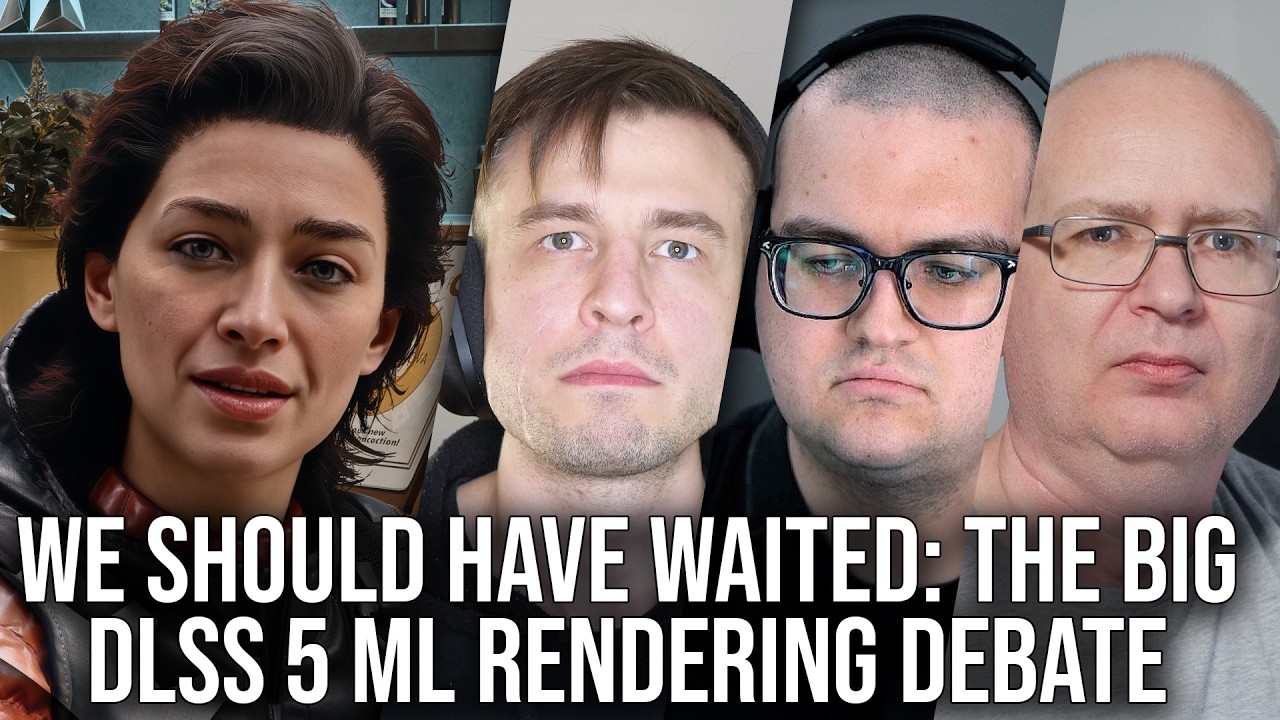
In this Digital Foundry Direct Q&A session, the team reflects on their initial coverage of Nvidia’s DLSS5 technology, acknowledging that they rushed their first video and should have taken more time to analyze the material and gather broader feedback from both audiences and developers. DLSS5 represents a significant evolution in game rendering, employing advanced machine learning to enhance graphics, but its debut has sparked a divided reaction. Some viewers and developers appreciate the technological advancements, while others express concern over the visual changes, especially regarding character faces, which sometimes appear altered in ways that challenge artistic integrity.
A major point of contention discussed is the impact of DLSS5 on artistic vision and fidelity. The technology, which works primarily on 2D color and motion vector data, can produce results that diverge notably from original character models, as seen in the Resident Evil 9 demo where the protagonist Grace’s appearance was dramatically changed. This raises ethical questions about altering an actor’s likeness and the potential undermining of artists’ creative efforts. While studios have reportedly signed off on these integrations, the panelists emphasize that this does not necessarily reflect the views of all involved in the game’s creation, and the technology’s current limitations mean it cannot fully respect the original artistic intent.
Technically, DLSS5 impresses with its temporal consistency and ability to enhance environmental lighting, shadows, and reflections across various games. However, its reliance on screen-space data leads to artifacts and inconsistencies, particularly with character faces and smaller on-screen details. The technology currently requires very high-end hardware—specifically dual RTX 5090 GPUs—and is not yet optimized for broader accessibility. The panelists note that while DLSS5 shows promise as a post-processing tool to elevate graphics, it may not yet be the right solution for all rendering challenges and could create challenges in maintaining a consistent visual style across platforms.
The discussion also touches on the broader industry implications, including concerns about job security for artists and developers. DLSS5’s ability to enhance or replace certain graphical elements could lead to reduced demand for some traditional roles, especially if studios opt to rely more heavily on AI-driven enhancements. However, the panelists caution that the technology is still in its early stages, limited to high-end PC hardware, and requires significant developer integration. As such, it is unlikely to replace traditional game development workflows imminently but signals a shift toward more AI-assisted rendering in the future.
Finally, the team reflects on Nvidia’s decision to reveal DLSS5 at GTC, a primarily enterprise-focused event, and to brand it under the established DLSS name, which traditionally referred to super-resolution techniques. This branding choice has been provocative, as DLSS5 represents a distinct and more transformative technology. The panelists agree that more developer input, artist controls, and refinement are necessary before DLSS5 can be widely adopted. They anticipate ongoing debate and evolution around this technology, emphasizing the importance of preserving artistic choice and ensuring multiple paths exist for achieving high-quality game visuals in the coming years.