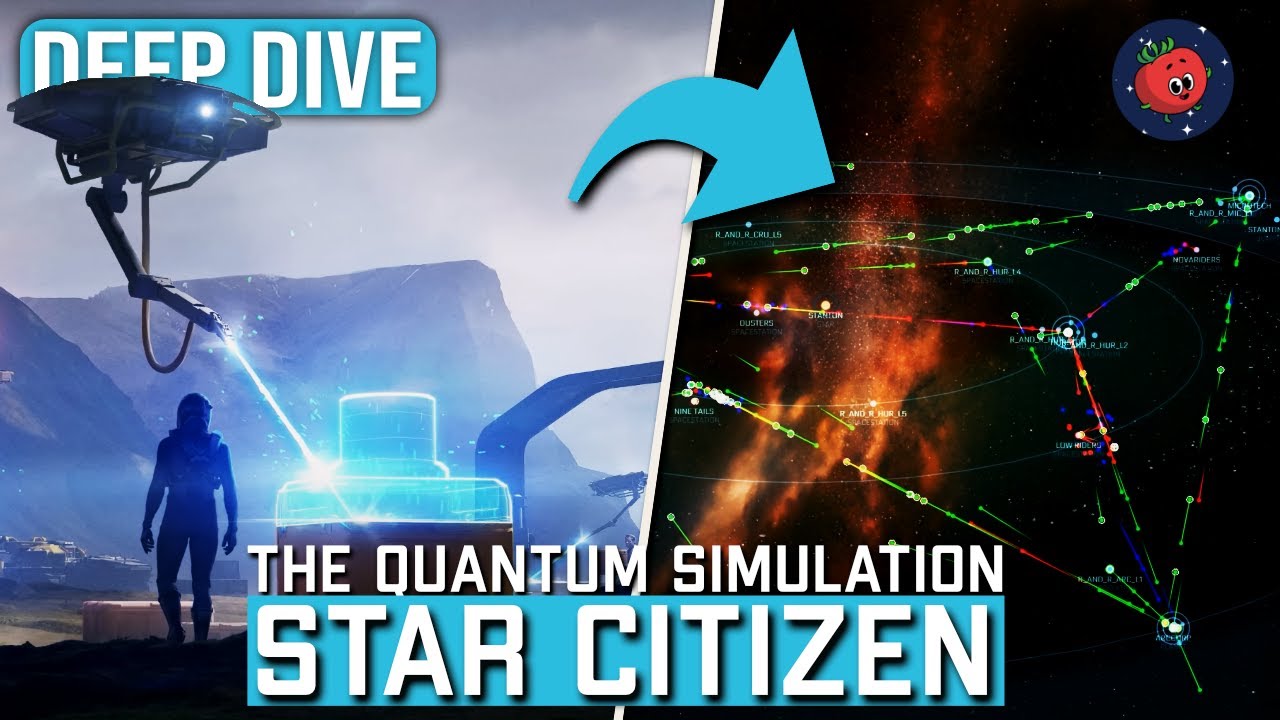
The discussion revolves around the development and future implementation of Star Citizen’s dynamic economy system, known as Quantum. Quantum aims to simulate a realistic and constantly evolving economy within the game by using hundreds of thousands of lightweight NPCs called “quanta.” These NPCs make decisions based on a set of attributes, affecting the in-game economy similarly to players but without the high computational costs of rendering them when not in proximity to players. This system intends to create a universe that feels alive and responsive, with NPC actions like trading, mining, and piracy dynamically influencing the economy.
The Quantum system uses economic nodes, which are essential to the in-game economy. These nodes represent locations like distribution centers, derelict settlements, and space stations that buy, sell, and produce goods. The system uses algorithms to determine prices based on supply and demand, with nodes adjusting prices based on their inventory levels and resupply rates. The introduction of more economic nodes is crucial for scaling the economy to match the player base and server capacity.
Virtual AI is another significant aspect of the Quantum economy, acting as a middle tier between fully rendered NPCs and the Quantum simulation. Virtual AI allows NPCs, referred to as virtual NPCs (vmc’s), to exist in a lightweight state when not observed by players, yet still interact with the game’s systems. This technology is key to making NPCs behave realistically, even when not directly interacted with by players, and is fundamental for features like bounty hunting, where NPCs can commit crimes, accumulate bounties, and be tracked across the game universe.
The discussion also touches on the importance of cargo gameplay and how it integrates with the Quantum economy. Cargo missions, commodity trading, and the handling of various types of cargo (perishable, hazardous, etc.) will influence gameplay decisions. The economy team at Star Citizen is actively working on rebalancing cargo and commodity prices to improve the gameplay experience for haulers and traders. This includes planning for cargo missions, adjusting vehicle and armor prices algorithmically, and providing support for gameplay features like the vehicle tractor beam and salvage contracts.
Finally, the text highlights the progress made by Star Citizen’s development teams in implementing and refining the Quantum economy. The newly formed economy team is focused on making real-time changes to the game to improve the player experience. This includes rebalancing commodity trading, adjusting the prices of vehicles and armor, and developing tools to extract live game data for balancing gameplay loops. The team is also involved in supporting various in-game events and features, indicating a shift towards integrating Quantum’s systemic changes into the current state of the game.