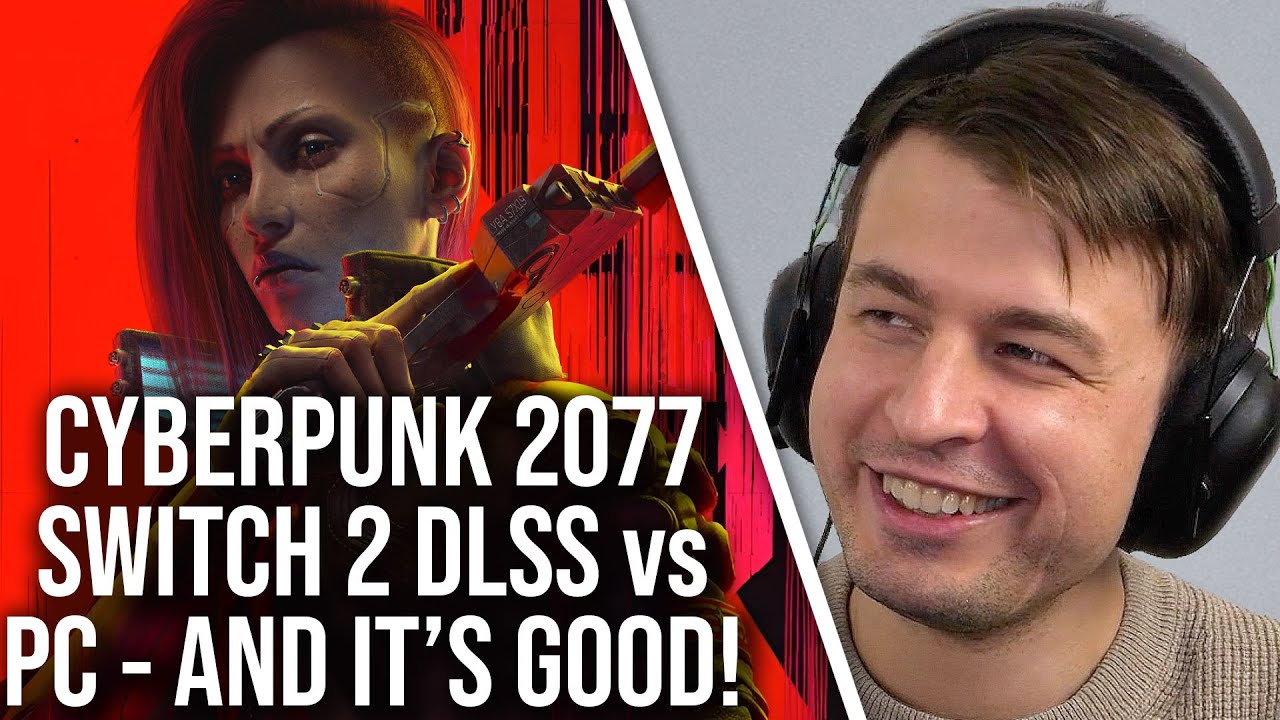
Cyberpunk 2077 on Switch 2 utilizes a DLSS CNN model with dynamic 1080p resolution and adaptive post-processing sharpening similar to AMD’s CAS, resulting in a sharper and more stable image compared to the PC version’s softer DLSS output. This carefully optimized integration balances image quality and performance, making it one of the best DLSS implementations on the platform.
The video provides an in-depth analysis of Cyberpunk 2077’s DLSS implementation on the upcoming Switch 2, highlighting it as one of the best DLSS integrations on the platform. The comparison is made against the PC version running at 4K with largely matched settings targeting 1080p, revealing noticeable differences in image sharpness and resolution handling. While the Switch 2 uses dynamic resolution scaling up to 1080p, often hitting native 1080p, the PC version runs at a static 1080p. Despite the PC’s resolution advantage at times, the PC’s DLSS output appears significantly softer and blurrier compared to the Switch 2’s image.
This difference in sharpness is attributed not to DLSS itself but to the post-processing sharpening applied after DLSS execution. The Switch 2 applies a form of adaptive sharpening similar to AMD’s Contrast Adaptive Sharpening (CAS), which enhances local contrast at 1080p resolution while preserving the pixel grid and edge structure. In contrast, PC versions use Nvidia’s NIS filter or AMD’s FSR1, which create gradients on edges to simulate higher resolution but can introduce temporal instability and lack true 4K quality. When the PC version is supplemented with CAS post-processing, the visual quality closely resembles the Switch 2 output, including some similar aliasing and posterization artifacts.
The video further explores the type of DLSS model employed by the Switch 2. It compares the newer Transformer model and the older CNN model used on PC, finding that the Switch 2’s DLSS implementation aligns more closely with the CNN model. This conclusion is drawn from observations of image quality in various scenarios, such as gradients on distant geometry and the clarity of moving objects like text on the back of a car. The Transformer model produces cleaner gradients and sharper moving objects, which the Switch 2 version does not replicate, indicating it uses the CNN model instead.
Additionally, the Switch 2 avoids some of the image quality regressions seen in the Transformer model, such as unnatural blurring around moving objects. With motion blur disabled for clarity, the CNN model on PC and the Switch 2 both maintain stable and clear edges without the problematic artifacts seen in the Transformer model. This reinforces the idea that the Switch 2’s DLSS implementation is optimized for image stability and clarity, focusing on the strengths of the CNN approach rather than adopting the newer Transformer model’s improvements that come with some drawbacks.
In summary, Cyberpunk 2077 on Switch 2 uses a DLSS CNN model very similar to that on PC, outputting at a dynamic 1080p resolution with post-process sharpening akin to CAS. This combination results in a visually sharp and stable image that competes well with PC versions despite hardware differences. The thoughtful integration of DLSS and adaptive sharpening enhances detail and contrast, making the Switch 2’s DLSS implementation arguably one of the best for the platform, providing a solid balance between image quality and performance.