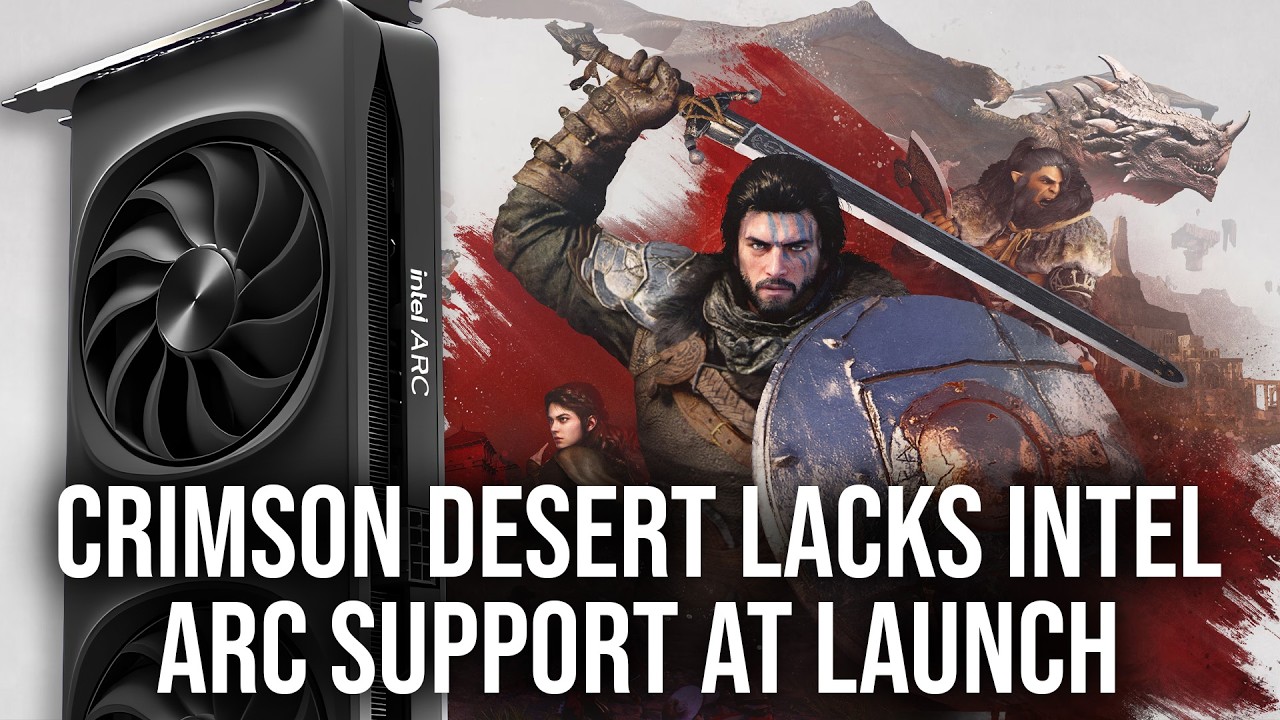
The discussion centers on the surprising lack of Intel Arc GPU support in the upcoming game Crimson Desert, set to launch in 2026. Despite Intel reaching out to the developers, Pearl Abyss, the game does not support Intel Arc graphics cards at launch, which has caused confusion and frustration among the community. The speakers highlight that many games released before Intel Arc’s debut have been compatible with these GPUs, making the omission puzzling, especially given that the game utilizes DirectX 12, which should theoretically support a wide range of hardware.
John expresses his disbelief at the situation, comparing it to outdated practices from the 1990s where games would outright refuse to run without specific graphics cards. He notes that Crimson Desert not only blocks Intel Arc GPUs completely but also initially presented similar issues on the Steam Deck. While there is some hope that compatibility might improve with updates, the current state leaves Intel Arc users unable to play the game, forcing them to seek refunds, which is a poor experience for customers.
The conversation delves into potential reasons behind Pearl Abyss’s decision, with speculation that the developers might have mistakenly equated Intel solely with integrated graphics, leading to the exclusion. Despite Intel’s dedicated teams working with game developers to ensure compatibility, the lack of support appears arbitrary and undermines the inclusive spirit of PC gaming. This stance is particularly surprising given Pearl Abyss’s commitment to supporting Apple Silicon on Mac, which demonstrates their capability to handle diverse hardware platforms.
Oliver suggests that the omission could be due to prioritization issues, with Intel Arc support falling low on the list due to its smaller desktop market share. However, he points out that Intel’s integrated GPUs, especially newer models like the Arc Panther Lake 12XC, are quite capable and increasingly prevalent, including in upcoming gaming handhelds. Ignoring this segment risks alienating a significant and growing user base, making the decision a notable misstep for a major game release.
Overall, the speakers agree that while Pearl Abyss has indicated they are working on Intel Arc compatibility, the lack of support at launch is a significant problem and a baffling oversight. The absence of any pre-launch communication about this limitation worsens the situation, leaving customers disappointed and confused. They hope future updates will rectify the issue, but for now, this decision is seen as a major own goal that contradicts the inclusive and broad hardware support expected in modern PC gaming.