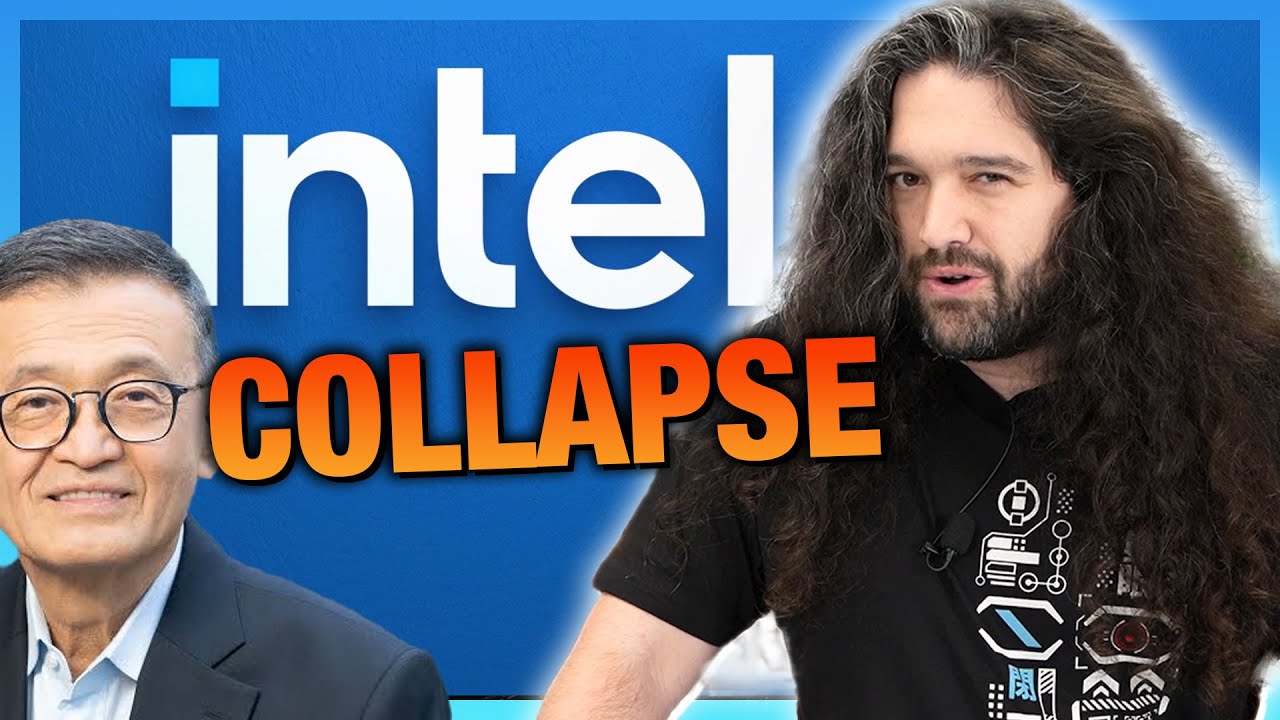
The video discusses the severe challenges Intel is currently facing, describing the company as being in a “death spiral.” Recently, Intel has halted advancements in its 14A process node, paused or stopped construction on several fab projects despite receiving substantial government funding, and is selling off business units. The company has also announced significant layoffs, cutting around 10% of its US workforce on top of thousands who left previously. These actions reflect a drastic shift from Intel’s previous strategy under former CEO Pat Gelsinger, who invested heavily in fabs and technology to try to regain competitiveness.
Intel’s new CEO, Lip Bhutan, has implemented a cost-cutting approach, focusing on investments only when backed by confirmed customer commitments. This marks a departure from the earlier “build it and they will come” philosophy, leading to the suspension of the advanced 14A node development and slowing or halting fab construction outside of Arizona. While this may reduce short-term spending, it risks Intel losing its position in leading-edge semiconductor manufacturing, potentially ceding dominance to TSMC and other competitors. The company acknowledges the significant risks involved, including loss of talent, government funding repercussions, and damage to its foundry business reputation.
On the product front, Intel continues to struggle, particularly in the desktop CPU market where AMD dominates with over 90% market share in some regions. Intel’s recent CPU launches have been poorly received, and ongoing issues with manufacturing defects have further damaged its reputation. Although Intel holds a significant share in the laptop CPU market, this is unlikely to offset losses elsewhere. The company’s GPU efforts show some promise in price competitiveness but have yet to make a substantial financial impact. Overall, Intel’s product division has not provided the relief or growth needed to stabilize the company.
Intel’s workforce reductions have been extensive, with tens of thousands laid off or voluntarily leaving over the past year. The layoffs have hit key engineering and manufacturing roles, including those critical to fab operations, which raises concerns about Intel’s ability to maintain its manufacturing commitments, especially those tied to government subsidies. The company is also divesting non-core businesses and outsourcing departments to generate cash and streamline operations, signaling a focus on short-term financial health rather than long-term growth.
In conclusion, Intel is at a critical crossroads, balancing cost-cutting measures with the risk of losing its competitive edge in semiconductor manufacturing and product innovation. While the company hopes for a comeback that could be studied in business schools, the current trajectory appears precarious. The video highlights the importance of Intel not only as a corporate entity but as a strategic asset for the US government, underscoring the broader implications of its potential decline. Despite the grim outlook, there remains a faint hope that Intel can reinvent itself, much like AMD did after its near-bankruptcy, but the path forward is uncertain and fraught with challenges.