The CitizenCon Direct presentation on October 11, 2025, showcased major advancements in Star Citizen, including the implementation of server meshing for large-scale multiplayer, the introduction of the Nyx star system with new locations and factions, and the groundbreaking Genesis planetary generation system for more immersive environments. Additionally, it revealed new gameplay features such as interstellar hauling missions, a crafting system, instanced content for scalable experiences, new ships tied to Nyx factions, and the upcoming Tactical Strike Groups mode, all underscoring the ongoing commitment to expanding and refining the game ahead of its 1.0 release.
The CitizenCon Direct presentation for October 11, 2025, opened with a lively introduction, highlighting the significant technological advancements made in Star Citizen, particularly the successful implementation of server meshing. This breakthrough has allowed seamless large-scale multiplayer experiences with up to 700 players interacting in the same space, enhancing server performance and player engagement. The event also unveiled the imminent arrival of the Nyx star system, set to launch in the upcoming alpha 4.4 patch, which introduces new locations like the Levki landing zone and the Glacian Belt asteroid field. Nyx is portrayed as a rugged frontier system with its own unique factions, including the People’s Alliance, and presents fresh narrative and gameplay opportunities distinct from the previously lawless Pyro system.
A substantial portion of the presentation was dedicated to showcasing the technological leap called Genesis, a new planetary generation system that allows for more natural, detailed, and scalable environments. Genesis leverages physical data sets such as geology, humidity, and erosion to spawn biomes and assets dynamically, resulting in highly realistic and immersive planets. This technology not only enhances new planets like those in Nyx but will also be retroactively applied to existing systems like Stanton and Pyro, promising a richer exploration experience with diverse biomes including forests, wetlands, grasslands, and swamps. The improved planetary visuals and terrain complexity mark a significant evolution in the game’s environmental fidelity.
Gameplay advancements were another major focus, with the introduction of interstellar hauling missions connecting multiple star systems, allowing players to transport cargo over vast distances with new challenges such as pirate ambushes and timed deliveries. The presentation also revealed new mission content tied to the lore of Nyx, involving investigations into abandoned stations under attack by the violent Vanduul faction, introducing players to new combat scenarios and faction conflicts. Additionally, the upcoming crafting system was detailed, emphasizing its role as a core progression mechanic that enables players to gather resources, refine materials, and craft superior weapons and armor with variable quality attributes, thus personalizing gameplay and enhancing player agency.
Instancing technology was introduced as a key development for 2026, enabling curated, scalable content experiences tailored to different group sizes while preserving seamless transitions from the open world. This system will support both PvE and PvP content, allowing for private or shared instances that reduce interference and improve gameplay balance. Early examples include the return of the Siege of Orison event in a more refined instanced format and a new mission arc called Municipal Works, which offers repeatable, layered objectives involving combat, mining, and salvage near the Levki landing zone. Instancing is positioned as a complementary pillar to the open-world experience, facilitating dynamic and personalized gameplay without sacrificing the persistent universe’s seamless nature.
The presentation concluded with a spotlight on new ships and combat content, including three new ships linked to Nyx’s factions: the Anvil Paladin gunship, the Vanduul Stinger heavy fighter, and the eclectic Shiv ship from Gray Market. The highlight was the unveiling of “Tactical Strike Groups,” a new spaceship-focused gameplay mode launching mid-2026, featuring cooperative multi-ship operations against fortified enemy stations with integrated ship refueling and rearming mechanics. This marks a significant expansion of spaceship gameplay beyond dogfighting, incorporating strategic objectives and combined arms combat. Senior game director Rich Tyrer reaffirmed the commitment to the roadmap toward Star Citizen 1.0, emphasizing ongoing improvements to stability, content, and player experience, and CEO Chris Roberts closed the event with gratitude to the community and a promise of an exciting year ahead.
salt-e-mike reacts:
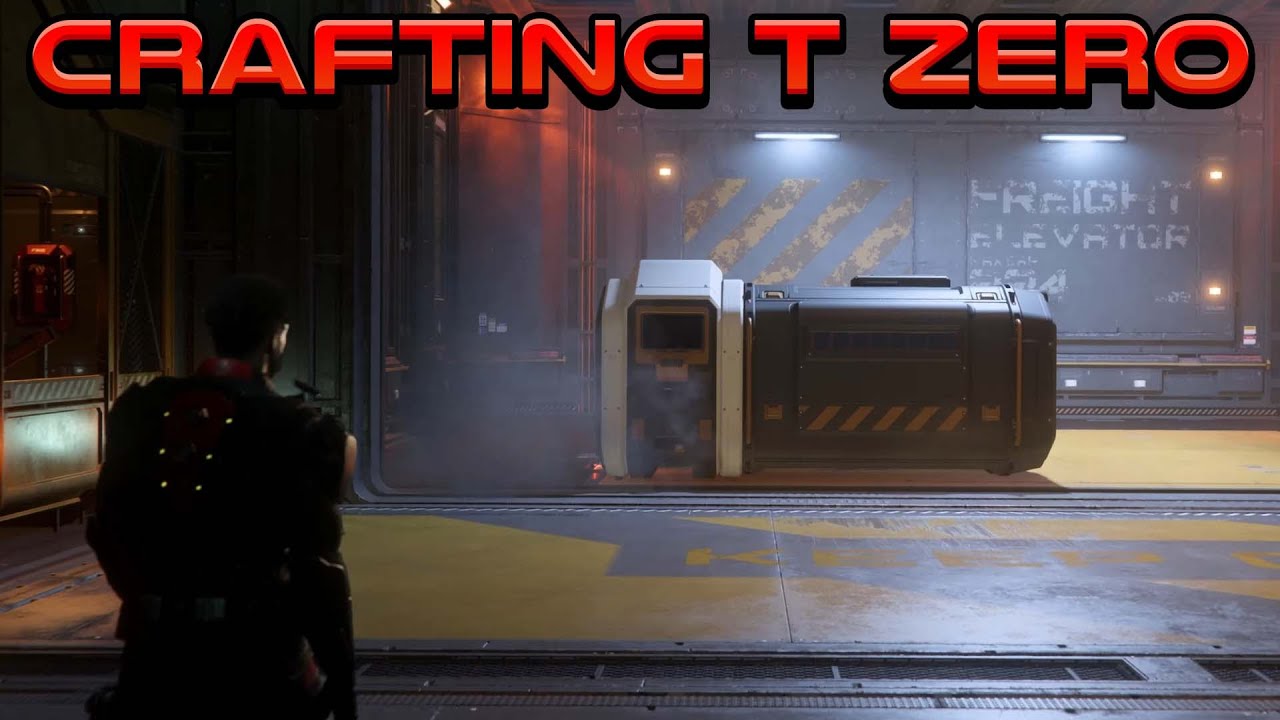
The upcoming crafting system in Star Citizen, revealed at CitizenCon Direct, will initially focus on FPS items with a complex process involving resource quality affecting item stats, aiming to add depth and personalization to gameplay and the economy. While promising significant impact on player progression and customization, the system currently faces challenges with inventory management and interface integration, with the upcoming test phase crucial for refining these aspects.
The video discusses the upcoming crafting system in Star Citizen, revealed during CitizenCon Direct, focusing on its initial implementation and potential impact on gameplay. Crafting in Star Citizen is positioned as a core progression mechanic, distinct from traditional MMO leveling systems, where players advance by creating, perfecting, and improving ships, weapons, and armor. The first iteration of crafting will be relatively small in scope, primarily involving FPS items like weapons and armor, with plans to introduce it as a tech preview by the end of the year. The crafting process will incorporate resource gathering, refining, and quality factors, where the quality of materials affects the stats and effectiveness of crafted items, adding depth and variability to the gameplay.
A significant concern raised in the video is the current state of the inventory system, which appears inadequate for handling the complexity and volume of items that crafting will introduce. The lack of efficient stacking and organization could lead to cumbersome inventory management, especially given the uniqueness of each crafted item due to variable quality attributes. The presenter highlights the challenge of balancing a system where items cannot easily stack because each one may have different stats, contrasting this with games like EVE Online where items of the same type are identical and stackable. This complexity raises questions about how players will manage large inventories and whether the current UI and filtering tools will be sufficient.
The crafting interface itself, as shown, is still in development and appears clunky, with the crafting machine being a physical object that can be moved around but is not yet integrated seamlessly with the player’s inventory. This separation is seen as a potential drawback, as it complicates the crafting workflow. However, the mobile nature of the crafting bench might allow for crafting in various locations, which could be beneficial in a sandbox universe. The system is designed to allow players to assign different quality materials to different parts of an item before crafting, with the final product reflecting these choices, though the exact impact on gameplay remains to be fully demonstrated.
The video also touches on the broader implications of crafting for the Star Citizen universe, suggesting that while not all players will engage directly in crafting, everyone will interact with crafted items in some way. Crafting is expected to influence the economy and gameplay dynamics significantly, with crafted items potentially outperforming shop-bought gear. This introduces exciting possibilities for player-driven markets and customization but also raises concerns about balance and progression, especially in relation to the game’s insurance and item destruction mechanics, which remain unclear. The crafting system’s test phase is seen as a crucial step for developers to gather feedback and refine the experience.
In conclusion, the crafting feature represents an important developmental milestone for Star Citizen, aiming to add depth and personalization to the game’s sandbox experience. While the initial implementation is limited and somewhat rough around the edges, it lays the groundwork for more expansive crafting related to base building and larger-scale item creation in the future. The presenter expresses cautious optimism, recognizing the system’s potential while acknowledging current frustrations and uncertainties. Ultimately, the crafting test is expected to provide valuable data to improve the system, shaping how players will progress and interact within the evolving universe of Star Citizen.
salt-e-mike reacts:
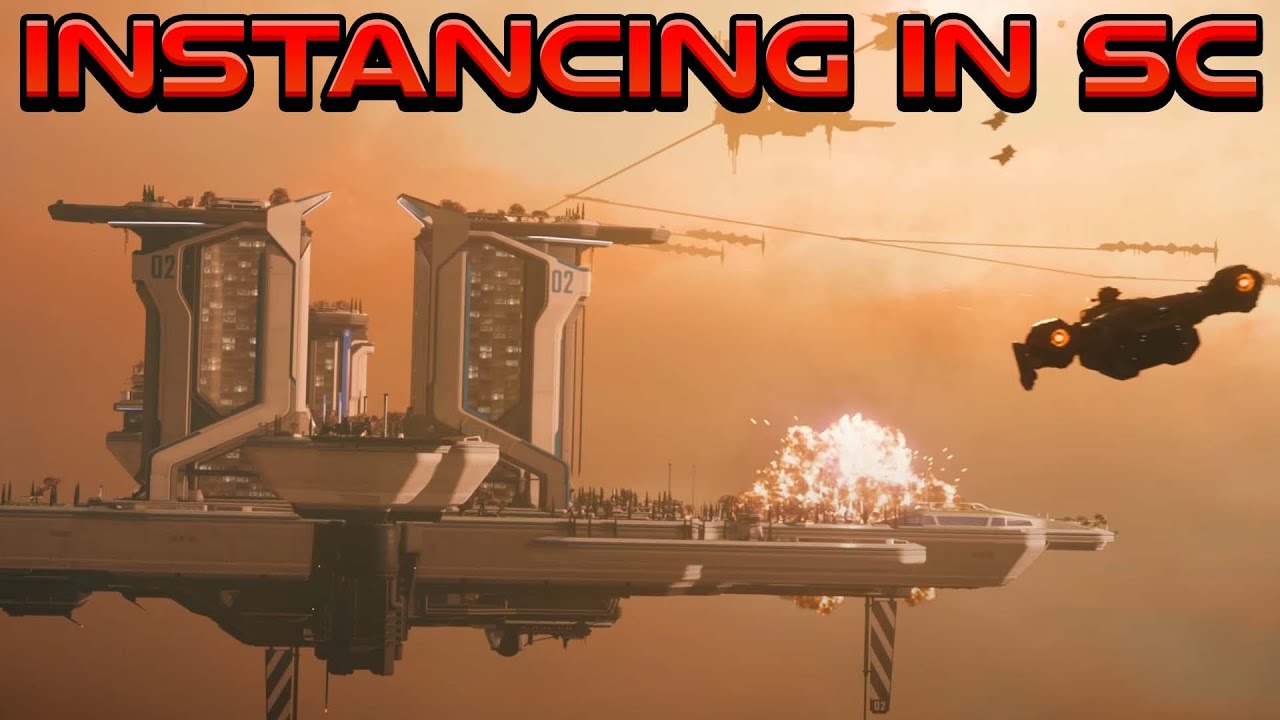
The video introduces instancing in Star Citizen as a means to deliver tailored, repeatable gameplay experiences like Siege of Orison and the Municipal Works facility, enhancing player engagement while preserving open-world PvP. While acknowledging community concerns and the game’s ongoing development challenges, the developers emphasize instancing’s role in improving mission delivery, narrative integration, and overall game stability as part of the roadmap toward a more dynamic and immersive universe.
The video discusses the introduction of instancing in Star Citizen, a feature designed to create tailored gameplay experiences for individual or small groups, protected from outside interference. Instancing allows developers to craft specific content tuned to group sizes, such as dungeon-like scenarios or curated PvP events, while maintaining the open-world PvP experience outside these instances. Examples like Siege of Orison and ASD highlight how instancing can improve gameplay by preventing issues like overcrowding and mission completion before players arrive. The technology aims to seamlessly integrate instances into the universe, using dynamic mesh transitions and server meshing to enable both closed and open instances that enrich the game’s content variety.
Siege of Orison is presented as a key early example of instancing, designed for about 15-20 players working in dedicated roles to reclaim contested areas. The event is being revamped to be more approachable and repeatable, allowing players to join solo or in groups and progress through multiple chapters with persistent states. Another significant instanced content previewed is the Municipal Works facility on the planet Leir, a multi-layered mission environment focused on repairing critical infrastructure. This mission-driven, repeatable sandbox will combine mining, salvage, combat, and investigation roles, providing a deeper, narrative-rich experience close to landing zones and enhancing player engagement in established systems like Stanton and Pyro.
The video also addresses the controversy and community concerns surrounding instancing, particularly from the PvP community. Star Citizen’s developers emphasize that instancing is not intended to replace open-world PvP but to complement it by enabling curated experiences that are difficult to achieve in a fully open environment. PvP remains a vital part of the game’s ecosystem, balancing the economy and longevity. The discussion compares Star Citizen to other MMOs like WoW and Eve Online, noting that curated, limited experiences within larger open worlds are common and necessary for balanced gameplay. The developers acknowledge the risk of over-curation turning the game into a theme park but stress that well-implemented instancing can enhance PvP by creating choke points and new tactical opportunities.
Further insights from senior game director Rich Tyer reinforce that the roadmap to Star Citizen 1.0 remains unchanged, with instancing as a key tool to improve mission delivery and player experience stability. He highlights the challenges of delivering large-scale events like Siege of Orison without impacting the entire server and praises instancing as a solution that leverages server meshing technology. The conversation touches on the importance of narrative and story integration, noting recent improvements like fully voiced NPCs and facial animations, while acknowledging the game still lacks interactive mission givers and true two-way player conversations. The developers aim to blend sandbox freedom with curated content to create a living, breathing universe.
The video concludes with reflections on the current state and future of Star Citizen, recognizing 2025 as the most stable and engaging year so far but criticizing the game’s lack of true sandbox depth and meaningful player impact on the universe. While instancing and upcoming features like engineering and crafting are promising, the core gameplay systems remain fragmented and underdeveloped. The discussion stresses the need for cohesive gameplay loops where player actions have lasting consequences and create a dynamic, interconnected world. Instancing is seen as a positive evolution if done well, but skepticism remains about the implementation quality based on past experiences. Overall, the video balances cautious optimism about new content with frustration over ongoing design and development challenges.
salt-e-mike reacts:
John Crew, Vehicle Director at CIG, reviews recent and upcoming Star Citizen ship releases, highlighting the Anvil Paladin gunship, Esperia Vandal Stinger heavy fighter, and the eclectic Gray Market Shiv, while discussing their design, gameplay strengths, and current balancing challenges. The video also introduces new weapons and tools, including a rocket launcher, LMG, Space AK, and binoculars, alongside hints at future mining and refining content aimed at enhancing gameplay depth.
The video features John Crew, Vehicle Director at CIG, discussing the recent and upcoming ship releases in Star Citizen’s Persistent Universe. He reflects on a hectic year of vehicle deliveries, highlighting the introduction of various ships ranging from small snubs to capital ships, including the popular Polaris, IDS, Wolf, and Golem. Crew expresses a particular fondness for the Wolf, praising its fresh aesthetic and the revival of the Krueger manufacturer, while he voices some reservations about the Golem, mainly due to its bespoke laser weapon. Looking ahead, he hints at more exciting ships from less represented manufacturers and suggests the possibility of another larger Krueger ship following the Wolf’s success.
Three new ships are introduced, each connected to the major factions involved in the game’s evolving storyline. The Anvil Paladin, a military gunship designed for sustained firefights and ground support, is detailed extensively. Crew discusses its design, armament, and turret mechanics, noting its heavy armor and firepower but also its slower maneuverability compared to ships like the Redeemer. Despite its powerful appearance and multi-crew setup, the Paladin’s turret gameplay is critiqued for being less effective due to current game mechanics, making solo play more viable than full crew operation. The ship’s interior design emphasizes crew collaboration with shared spaces, though practical gameplay considerations suggest most players might prefer to pilot it with fewer crew.
Next, the Esperia Vandal Stinger is examined, described as a heavy fighter with a distinctive alien aesthetic. While visually impressive, Crew and others acknowledge its underwhelming performance compared to other heavy fighters, citing its slower speed and less effective armament. The Stinger has moved away from bespoke alien weapons to more customizable human weaponry, which some see as a loss of its unique identity. Despite its shortcomings in combat, the ship’s design and cockpit interface receive praise for their quality and immersion. The discussion also touches on the ship’s role and balancing challenges within the game, with expectations that it will be buffed in future updates.
The third ship covered is the Gray Market Shiv, a unique and eclectic vessel pieced together from parts of various other ships, embodying a rugged and unconventional style. This ship is tied to a mysterious faction and is noted for its strong firepower and cargo capabilities despite lacking traditional component doors. Crew highlights its distinct aesthetic and the narrative surrounding its origin, emphasizing its appeal to players seeking something different from the standard lineup. However, like other heavy fighters and gunships, the Shiv faces gameplay challenges due to current turret and combat mechanics, limiting its effectiveness in PvP and making it more of a niche or statement ship.
The video concludes with a brief segment on new weapons, including a rocket launcher, an LMG, and the Space AK, all characterized by a scrappy, improvised design fitting the gray market theme. The LMG’s alternating energy and ballistic firing modes and the rocket launcher’s unique aiming mechanics are discussed, with mixed impressions on their usability and balance. Additionally, the introduction of binoculars as a new spotting tool is highlighted, promising improved long-range reconnaissance without the drawbacks of sniper scopes. Finally, Crew touches on upcoming mining content and ship refining mechanics, expressing cautious optimism about future updates improving resource gathering and crafting gameplay, while acknowledging the need for further development and balancing in both ships and weapons.
space-tomato reacts:
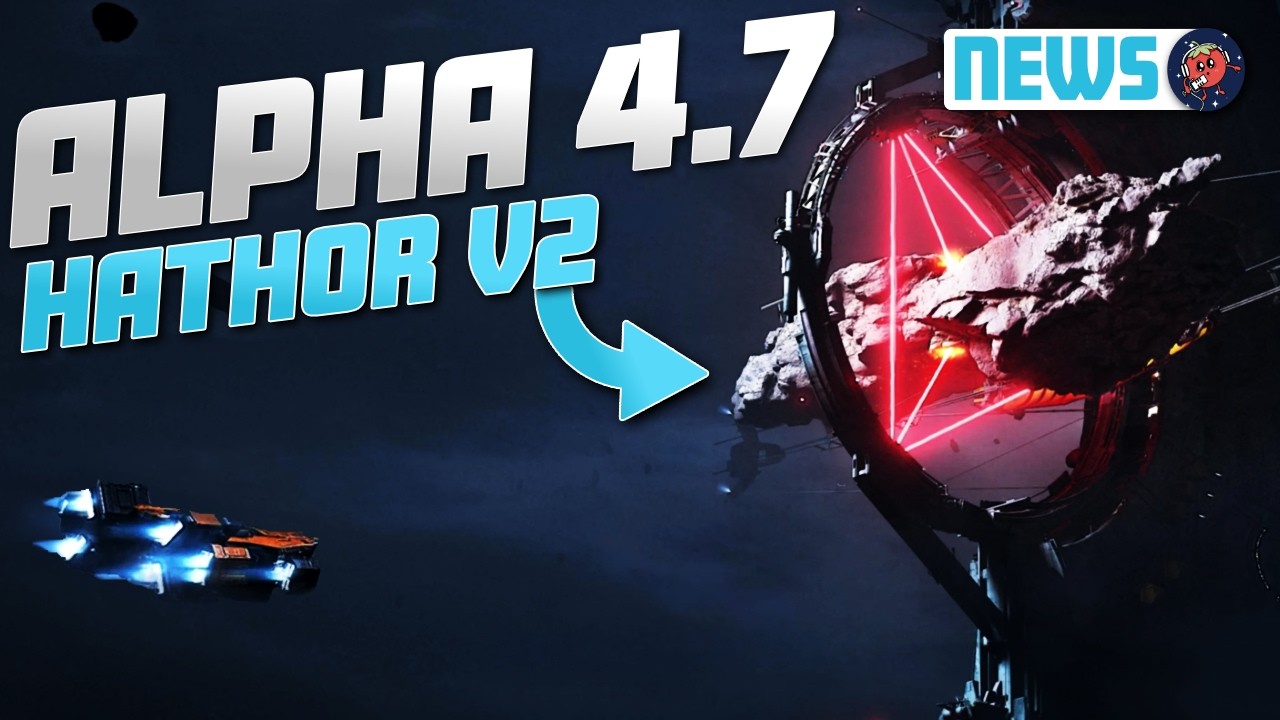
The video showcases Star Citizen’s upcoming 4.7 update featuring Rockcracker, a new sandbox location in the Nyx system where players can explore abandoned mining stations, solve puzzles, manage resources, and engage in light FPS combat to reactivate a powerful laser for cracking asteroids and mining valuable resources. Emphasizing teamwork and open-ended gameplay, Rockcracker offers a dynamic, immersive experience that blends exploration, resource management, and combat, with future content and mechanics hinted at for ongoing development.
The video provides an in-depth look at an upcoming major feature for Star Citizen’s 4.7 update, focusing on a new location called Rockcracker. This area is set in the Nyx system, specifically in the distant Keeer Belt, featuring abandoned QV breaker stations originally used for industrial asteroid mining. The developers aim to bring these old facilities back to life, introducing a fresh gameplay experience that blends exploration, resource management, and combat. Players will be tasked with cracking a massive rock using a powerful laser system housed within these stations.
Rockcracker is designed as a sandbox activity, allowing players to approach it at their own pace. The gameplay revolves around navigating the facility’s various sections, including old engine rooms and tunnels, to restore power and reactivate the laser. This process involves solving puzzles, managing resources such as batteries, and potentially moving components with tractor beams. The environment within the station is diverse, featuring different biomes and frozen-over segments, adding to the immersive exploration experience.
FPS combat is integrated as a secondary gameplay element, with the possibility of encountering hostile squatters and outlaws inside the stations. However, combat is intended to be a minor aspect, ensuring that players who prefer exploration and mining can focus on those activities. The developers emphasize teamwork, suggesting that groups with varied player interests—such as mining, investigation, and FPS—will find Rockcracker engaging and rewarding.
Once players successfully reactivate the laser and crack open the asteroid, they can fly their ships inside to mine valuable resources. This mechanic is expected to be lucrative, providing a significant source of minerals for crafting and other in-game needs. The activity is not tied to specific missions or contracts but is rather a dynamic, open-ended opportunity for players to discover and exploit. The video also hints at future content, such as mercenary missions around these locations and potential resource regeneration mechanics.
Overall, Rockcracker represents a significant step forward in Star Citizen’s gameplay evolution, combining sandbox exploration, resource management, and light combat in a unique setting. It promises to offer a fresh, engaging experience for players who enjoy mining and cooperative gameplay, while also expanding the game’s lore and universe with new, visually striking locations. More detailed information is expected to be released in the coming weeks as development progresses.