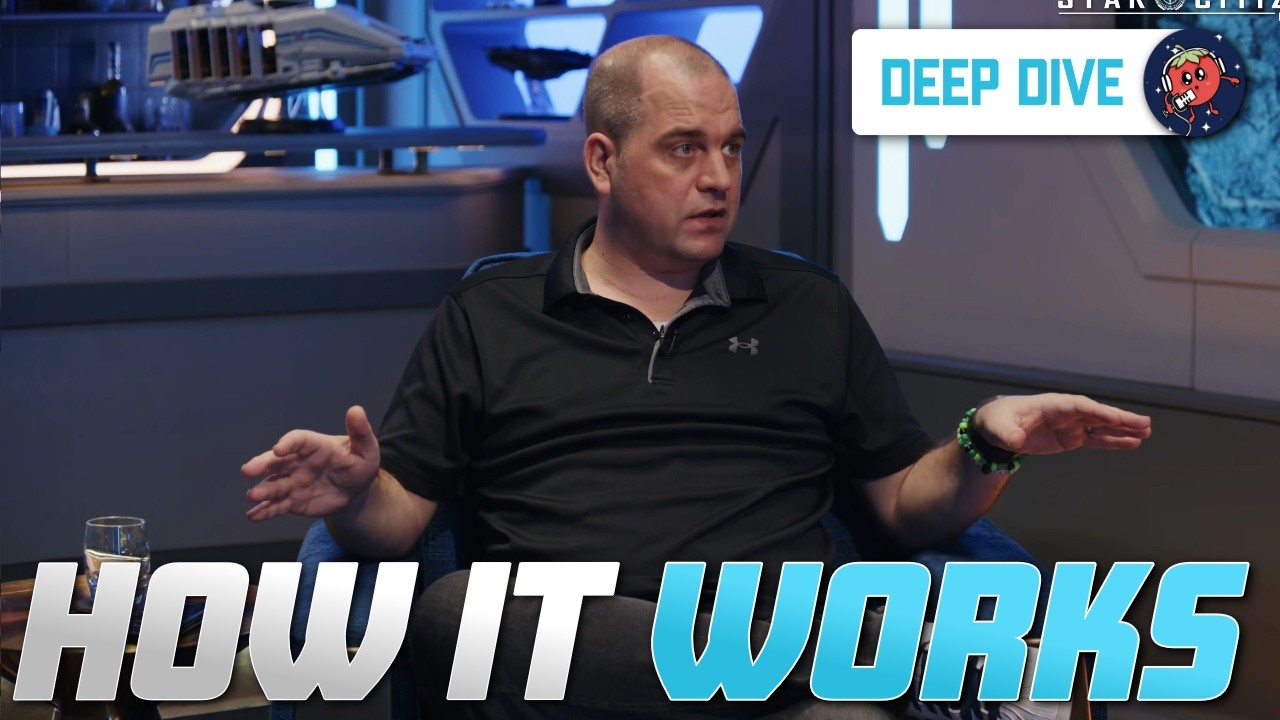
The recent “Tech Talk with Sean Tracy,” Managing Director of Technical Operations at Cloud Imperium Games, provided an insightful deep dive into the technical aspects of Star Citizen’s ongoing development, focusing on engine improvements, character technology, and tooling. Sean Tracy, a veteran developer originally from Crytek, shared his enthusiasm for staying hands-on with development rather than moving into executive roles, emphasizing his role in supporting developers through tools and technology. The discussion highlighted the complexity and scale of the technical pillar at CIG, which is split among several leads to manage its vast scope effectively.
A significant portion of the discussion centered on character customization advancements. Tracy confirmed that features like scars, sweat, tears (collectively called “blood, sweat, and tears”), and cybernetics are in development, with scars being one of the nearer-term implementations. He explained the challenges involved in introducing customizable body types beyond simple height adjustments, aiming to use a DNA-based system similar to the one used for facial customization. This approach would allow for a wide range of body shapes and sizes but requires extensive work due to the thousands of unique body assets and attachments in the game. Cybernetics integration was described as more straightforward technologically, though gameplay implications like removing limbs remain design questions.
The conversation also touched on the Starwear system, which allows players to wear multiple layers of clothing and armor with associated stats. Tracy revealed that Starwear had faced delays due to a lack of engineering and design support but is now back on track with a dedicated team and a clear schedule aiming for release within the year. He emphasized the importance of delivering a complete and polished system rather than a partial or buggy implementation, noting community demand played a role in its prioritization. Additionally, improvements to Starcloth technology for more realistic clothing physics were discussed, including new tools that allow designers to simulate cloth behavior directly within Maya, enhancing outfit quality.
On the tooling front, Tracy outlined the massive ecosystem of tools developed to accelerate and support the game’s production, ranging from the editor and character tools to build distribution systems like Copy Build and data management tools such as Data Forge. He highlighted ongoing efforts to improve level design with tools like Staritect and smart asset systems like Tiny Machine, which provide contextual awareness to environmental objects, streamlining the creation process. The complexity of maintaining and evolving these tools was underscored, with Tracy noting that many of the tools are invisible to players but crucial for efficient development.
Finally, the discussion covered future technologies and features, including destructible environments powered by the Maelstrom system, which enables realistic fracturing and damage to objects, and VR support with physics-based interactions. While VR is part of the long-term vision, it remains in early stages, with current efforts focused on basic headset support and future plans for full controller and hand interaction. Tracy emphasized the ongoing nature of Star Citizen’s development, likening it to a long-term MMO project that will evolve well beyond its initial release, with continuous improvements and new features planned for years to come.