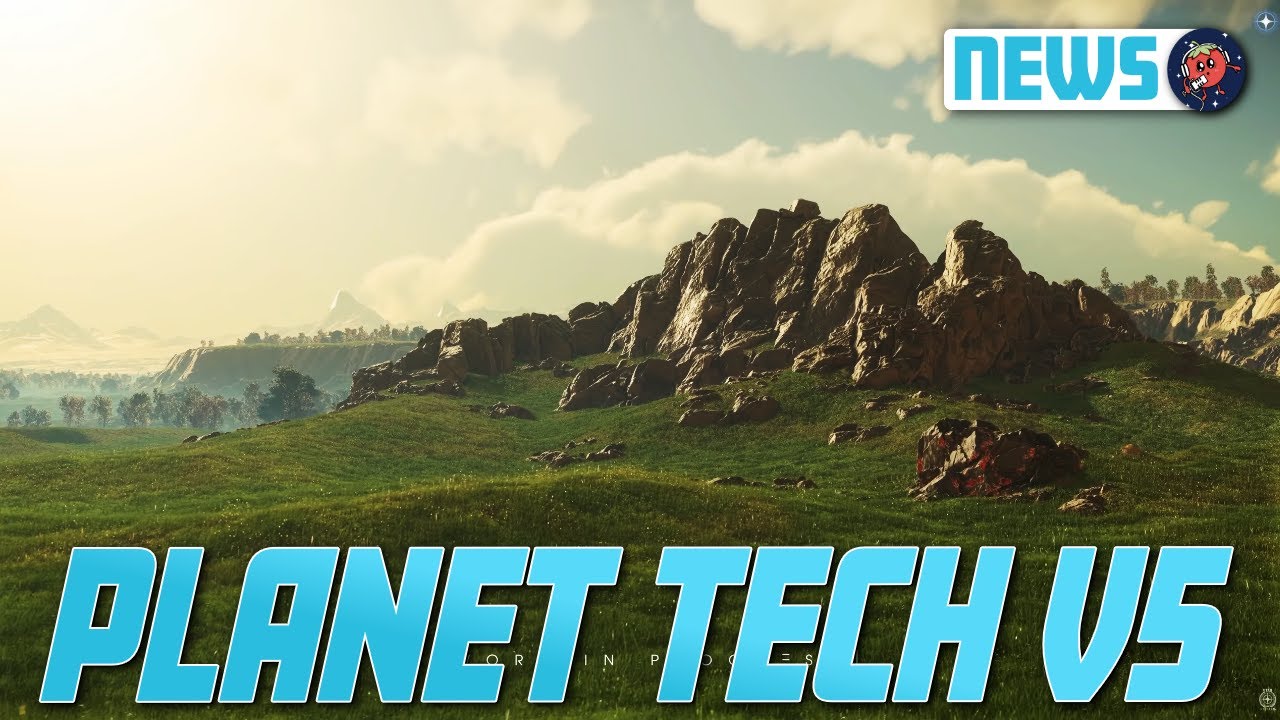
The video provides an update on the development of the next planet update in Star Citizen, focusing on insights shared by Alli Brown, the graphics director working on the Genesis Planet and overall rendering engine. Brown addressed several community questions on Spectrum, shedding light on the progress and challenges of the new planet tech. He emphasized the goal of creating immersive planets where players can find a corner of the universe to settle down and build their homes, highlighting the solid advancements made in planet rendering and ecosystem development.
One key topic discussed was the lore and visual design of the planet Nyx. While Nyx is described in the game’s lore as difficult to terraform and lacking long-term value, the showcased version of Nyx One appeared visually impressive. Brown clarified that the planet is still undergoing development and testing, so its final appearance and ecosystems might change. He also touched on the ongoing work on Delmar, another planet, explaining that while they aim to make it less perfectly spherical, technical limitations prevent it from having extreme irregular shapes like a “potato.”
Regarding the applicability of the Genesis planet tech to other locations like ArcCorp, Brown was candid that the current system is primarily designed for natural environments such as grasslands and forests, making it less suitable for urban areas without significant additional work. He also noted that while roads and farmlands are not currently part of the development focus, future updates might prioritize varied weather effects over infrastructure like roads. When asked about the impact of crashing ships on terrain, Brown expressed a desire for future dynamic terrain deformation that could remove trees and alter the landscape, although this feature is not yet implemented due to performance and network challenges.
Brown provided a detailed explanation of how Genesis models planetary ecosystems using natural rules and geological data. Artists have significant control over the design, including continent placement and climate settings, while procedural tools simulate soil quality, temperature, humidity, and other factors to determine vegetation and rock distribution. This sophisticated approach allows each planet to have unique combinations of flora and geology, enhancing immersion and realism. The runtime algorithm scatters rocks and plants based on combined data sets, including erosion and weathering simulations, making planetary surfaces highly detailed and dynamic.
Overall, the video highlights the ambitious scope of the Genesis planet tech and the ongoing iterative process behind its development. While some features like urban environments and dynamic terrain deformation remain future goals, the current progress on planets like Nyx One and Delmar demonstrates significant advancements in visual fidelity and ecosystem complexity. The update also reflects the challenges of balancing lore consistency, technical feasibility, and player expectations. Fans can look forward to seeing these innovations in action once the new planets are integrated into the game.