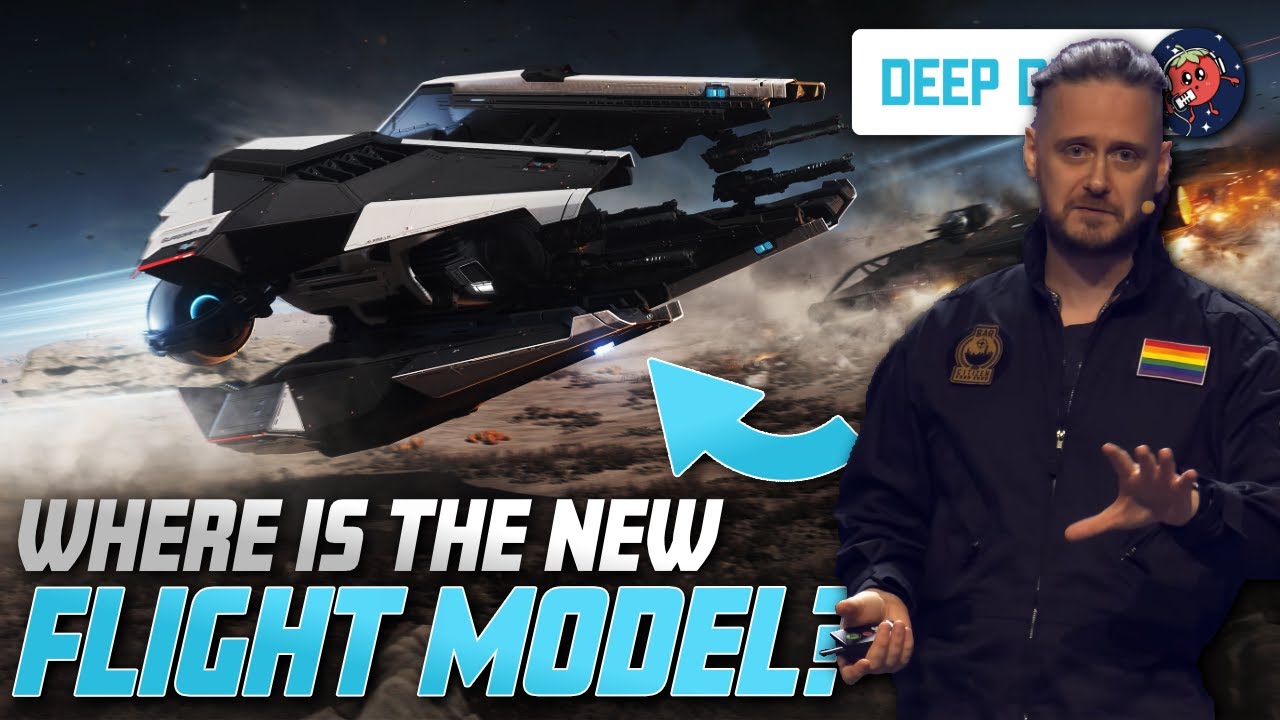
The video provides an in-depth update on Star Citizen’s new flight model, focusing on insights shared by developer Yogi Clatt and the evolution of flight mechanics in the game. The new flight model work for Squadron 42 is reportedly complete, including key features like IFCS, control surfaces, and quantum carrier operations. However, for the Persistent Universe (PU), which has a much larger roster of ships, the new flight model requires extensive tuning and individual ship balancing, a process still ongoing with no public testing yet. This new system also supports parallel flight models, allowing gradual implementation without disrupting the existing gameplay.
A significant part of the flight model update involves changes to quantum travel, including the introduction of quantum boost, which allows players to travel in any direction at high speeds without waiting, adding a tactical escape option. The update also addresses the long-standing challenge of balancing combat speed and maneuverability. Historically, Star Citizen developers have aimed to slow down combat speeds to encourage more strategic engagements rather than fast, twitch-based dogfighting, leading to the introduction of master modes. Master modes separated combat and quantum travel into distinct speed modes, but this approach is now being reconsidered in favor of a more unified system.
Control surfaces and atmospheric flight are another major focus. The developers are moving away from thruster-dominated flight in atmosphere towards aerodynamics-driven maneuvering, where control surfaces simulate airflow, making ships behave more like real aircraft. This change introduces new gameplay dynamics, such as stalls and the importance of maintaining speed to retain control. Ships with VTOL capabilities will have advantages in atmospheric flight, and the heat system will penalize ships that rely heavily on thrusters at low speeds, encouraging more realistic and varied flight styles depending on the ship design.
The video traces the historical development of the flight model from early attempts to balance speed and combat, through various leadership changes in the development team, to the current efforts led by Yogi. It highlights the challenges faced in creating a flight model that satisfies both cinematic and simulation aspects of space combat while accommodating a vast array of ship types. The shift from master modes back to operator modes aims to create a more integrated and flexible system where combat, quantum travel, and other ship functions coexist more naturally, supported by new tech like crafting and engineering upgrades.
Finally, the update touches on future expectations and community sentiments. While the new flight model promises significant improvements and deeper gameplay, the rollout is cautious and gradual, with no firm release date for full public access, likely post-2026. The developers aim to balance complexity and accessibility, making the game easier to play but still rich in depth. Quantum boost and improved travel mechanics are expected to enhance exploration and mission flow, addressing past issues with travel times and engagement pacing. Overall, the flight model overhaul represents a major step towards the game’s long-term vision but remains a work in progress with much still to be refined.