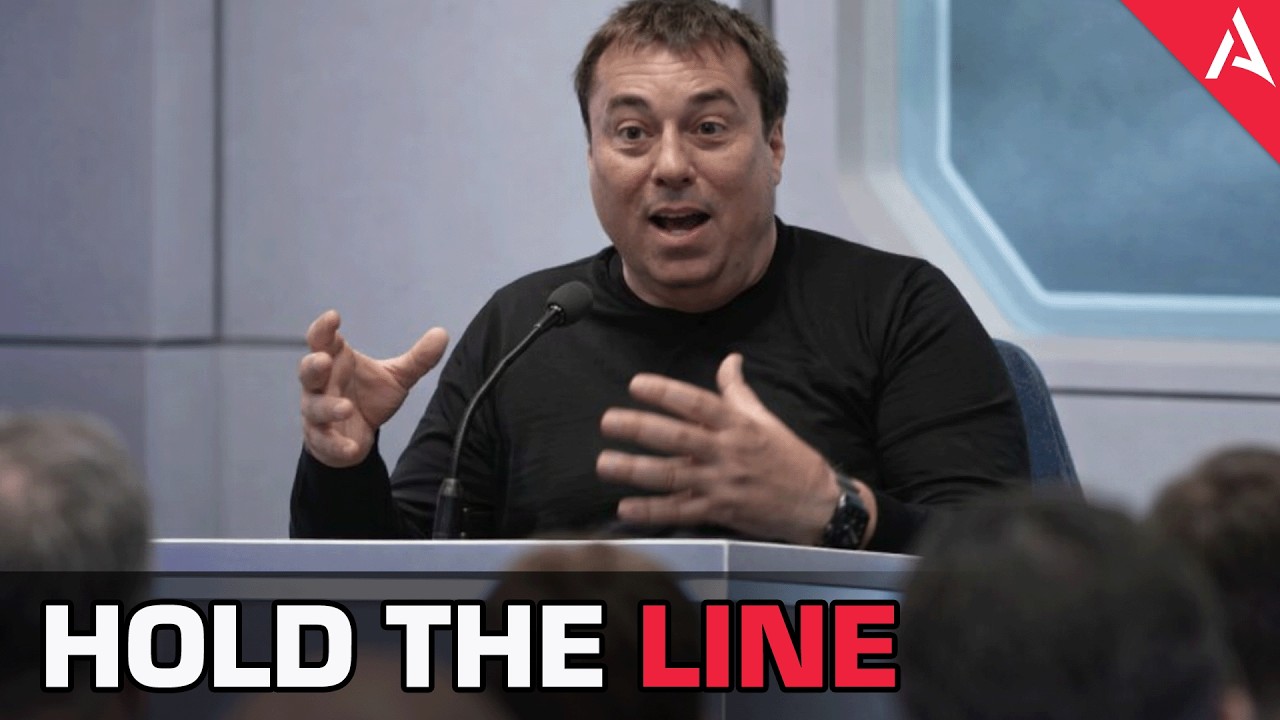
In this recent interview from the Atmo Esports event, Chris Roberts, the creator of Star Citizen, addresses the long-standing criticisms and skepticism surrounding the game’s development. He reflects on how the internet landscape has changed since the game’s crowdfunding launch in 2012, noting that the early internet was more hopeful and optimistic, whereas today’s environment is more cynical. Roberts emphasizes that the openness and transparency his team has maintained by sharing updates and roadmaps with the community set a new standard in game development, but also exposed them to ongoing scrutiny and impatience from some backers who remember the project from its early days.
Roberts explains how the unexpected level of crowdfunding allowed the team to expand Star Citizen’s scope far beyond the original smaller game concept. Instead of a limited experience, the game evolved into a massive, ambitious project with features like procedural planets and a living universe. This expansion, while exciting, also exponentially increased complexity and development time. He acknowledges the challenges of managing such a large-scale project and the pressure that comes with the visibility of a billion-dollar budget, but remains committed to delivering the dream game envisioned by himself and the community.
The interview dives into the technical challenges faced by the development team, particularly the need to build a custom game engine from scratch. Roberts highlights that no existing engine could handle the seamless, high-fidelity, and persistent universe Star Citizen aims to create. This necessity to develop proprietary technology has significantly contributed to the lengthy development timeline but is crucial for enabling features like a persistent world where every object’s state is remembered over time. He also shares ambitious goals such as supporting up to 10,000 players in a single game instance, which would be groundbreaking for the industry.
Roberts also talks about Squadron 42, the single-player campaign tied to Star Citizen, describing it as a love letter to classic space combat games and movies. He expresses excitement about its near completion and the immersive, seamless experience it offers, with handcrafted set pieces and epic action sequences. The interviewee and the commentator both express strong enthusiasm for Squadron 42’s upcoming release, viewing it as a significant milestone that will showcase the potential and quality of the overall Star Citizen project.
Throughout the interview, Roberts conveys a genuine passion for his vision and the game’s community, despite the criticism and challenges. He stresses that Star Citizen is a live, evolving product that will never truly be “finished” but will continue to grow with new content and features. The commentator resonates with Roberts’ optimistic and heartfelt approach, appreciating the perspective that building such a complex game is akin to fixing a car engine while it’s racing. Overall, the interview provides valuable insight into the project’s scope, technical hurdles, and Roberts’ unwavering dedication to creating a revolutionary space simulation game.