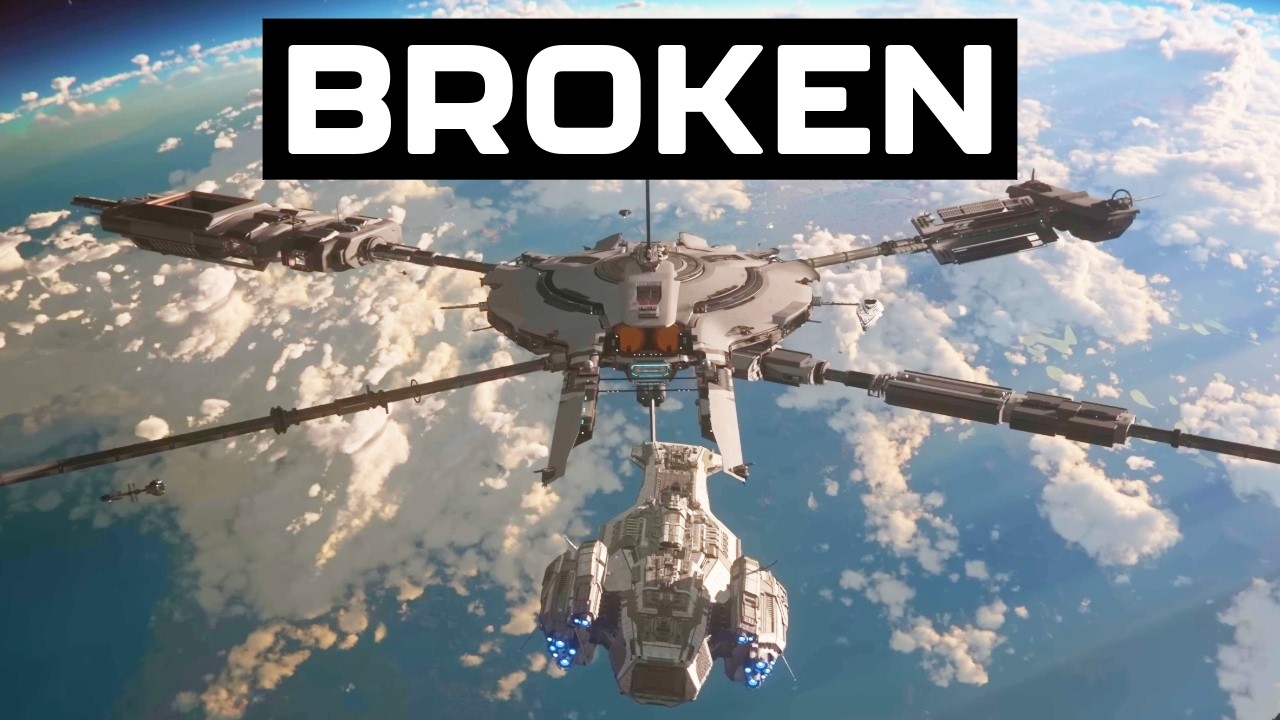
The video highlights Star Citizen’s significant challenges with underdeveloped and compromised progression systems—such as ship advancement, reputation, and economy—that threaten player retention ahead of its 1.0 launch. While some elements like mission content and blueprint upgrades show promise, the game requires substantial improvements to its core progression mechanics to maintain long-term player engagement and ensure a successful launch.
The video discusses the significant challenges Star Citizen faces with player progression and retention as it approaches its 1.0 launch. It emphasizes that modern games struggle to maintain a critical mass of players over time, with many players dropping off after an initial surge. The key to long-term success lies in providing meaningful progression systems and meta layers that give players reasons to keep playing beyond just basic gameplay loops. Drawing comparisons to other games like Arc Raiders, World of Warcraft, and Eve Online, the video highlights the importance of having diverse and engaging progression tracks that sustain player interest for years.
Several progression systems in Star Citizen are currently compromised or underdeveloped. For example, the ship progression track is weakened by the fact that many players already own multiple ships before 1.0 launches, reducing the sense of earning and advancement. The reputation system is described as underwhelming and nearly non-existent, lacking meaningful rewards or faction relationships. The game’s economy is also criticized for being broken or non-existent, with money being too easy to earn and lacking meaningful sinks, which diminishes its role as a progression mechanic.
On the other hand, some progression elements show promise. Mission and story progression content is well-received by players and could serve as a strong retention tool if continually expanded. Blueprint acquisition and upgrades are highlighted as a key potential long-term progression system, offering players goals to improve and customize gear and ships. Base and org progression, including building space stations and engaging in large-scale PvP, hold significant potential but remain largely theoretical and unproven for 1.0. The video expresses concern about whether these features will be deep and varied enough to maintain player engagement over time.
The video also touches on player skill progression, which is somewhat separate from traditional progression systems. While improving actual gameplay skills, such as flight combat or mining, can motivate players to keep playing, current mechanics like the flight model are seen as insufficiently deep or rewarding. The concept of skill upgrades tied to character actions exists but is not yet implemented or fully developed. Esports and server-wide events are noted as niche but effective retention tools, often driven more by the community than the developers themselves.
In conclusion, the video argues that Star Citizen has a “ginormous” amount of work to do to fix its progression systems before a successful 1.0 launch can happen. Many systems are either broken, incomplete, or compromised by pre-launch conditions like the sale of ships and gear. Without fixing these core progression tracks—especially reputation, economy, and meaningful long-term goals—1.0 risks damaging the game’s reputation and failing to retain players. The video leaves open the question of whether Cloud Imperium Games can solve these issues but stresses the importance of doing so for the game’s future.