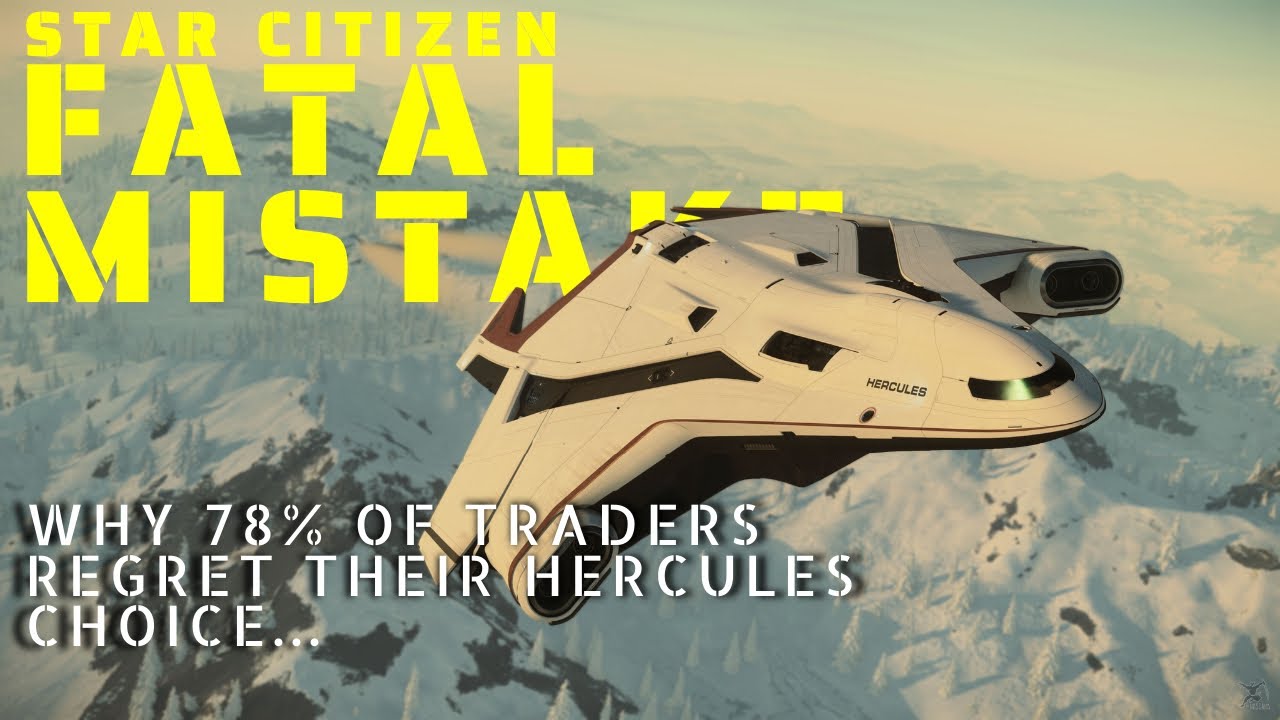
The video argues that while the C2 Hercules offers more cargo space and theoretical profit, the M2’s superior durability and firepower make it a safer and more versatile choice for real-world Star Citizen gameplay, especially when facing threats like pirates. It highlights that the M2 encourages smarter trading strategies and better supports complex missions, ultimately proving that practical resilience often outweighs maximum theoretical gains in the unpredictable game environment.
The video challenges the conventional wisdom promoted by Crusader Industries that paying an extra 10.5 million credits for the M2 Hercules over the cheaper C2 is illogical due to the M2’s smaller cargo capacity. At face value, the C2 offers 696 SCU of cargo space compared to the M2’s 522 SCU, making the C2 seem like the better deal. However, this apparent contradiction highlights a deeper truth about Star Citizen’s gameplay: the balance between maximum theoretical profit and actual profit that survives the dangers of the verse. While spreadsheets favor the C2, real-world encounters with pirates and other threats often push pilots to upgrade to the more combat-capable M2.
The key difference lies in the M2’s enhanced durability and offensive capabilities. Although the M2 sacrifices some cargo space and shield strength, it boasts significantly higher hull integrity and allows the pilot solo control over powerful nose guns and turrets. This firepower transforms the M2 from a defenseless hauler into a vessel capable of deterring or fighting off attackers. The psychological impact on pirates is substantial; many attackers disengage when faced with a Hercules that can fight back, allowing M2 pilots to complete runs with less harassment compared to C2 pilots who often rely on escorts or server hopping for safety.
The M2’s cargo limitation also encourages smarter trading strategies. With less space to fill, pilots focus on hauling high-value commodities rather than simply maximizing volume with marginally profitable goods. This discipline often results in higher overall profits despite carrying less cargo. Additionally, the M2’s smaller hold reduces loading times, decreasing exposure to threats on vulnerable landing pads. These design constraints foster a more efficient and safer approach to trading, which is often overlooked in purely theoretical ship comparisons.
Beyond individual runs, the M2’s versatility shines in complex, multi-phase missions that have become more common in Star Citizen. While the C2 excels at straightforward transport, the M2 supports entire operation sequences autonomously, including securing airspace, deploying ground vehicles, and extracting under fire. This adaptability aligns with Cloud Imperium’s evolving game design philosophy, which favors ships capable of handling dynamic, interconnected mission objectives rather than single-function specialization.
Ultimately, the debate between the C2 and M2 Hercules variants symbolizes a broader philosophical divide in Star Citizen gameplay: whether to prioritize maximum theoretical gains under ideal conditions or to embrace practical resilience and adaptability in the face of inevitable chaos. Players should honestly assess their play style—whether they often fly solo or with reliable escorts—and choose the Hercules that fits their operational reality. The M2’s value extends beyond current capabilities, positioning pilots for the increasingly complex and hazardous gameplay that lies ahead, proving that a ship’s worth is measured not by specs alone but by how often it delivers cargo safely through the unpredictable verse.