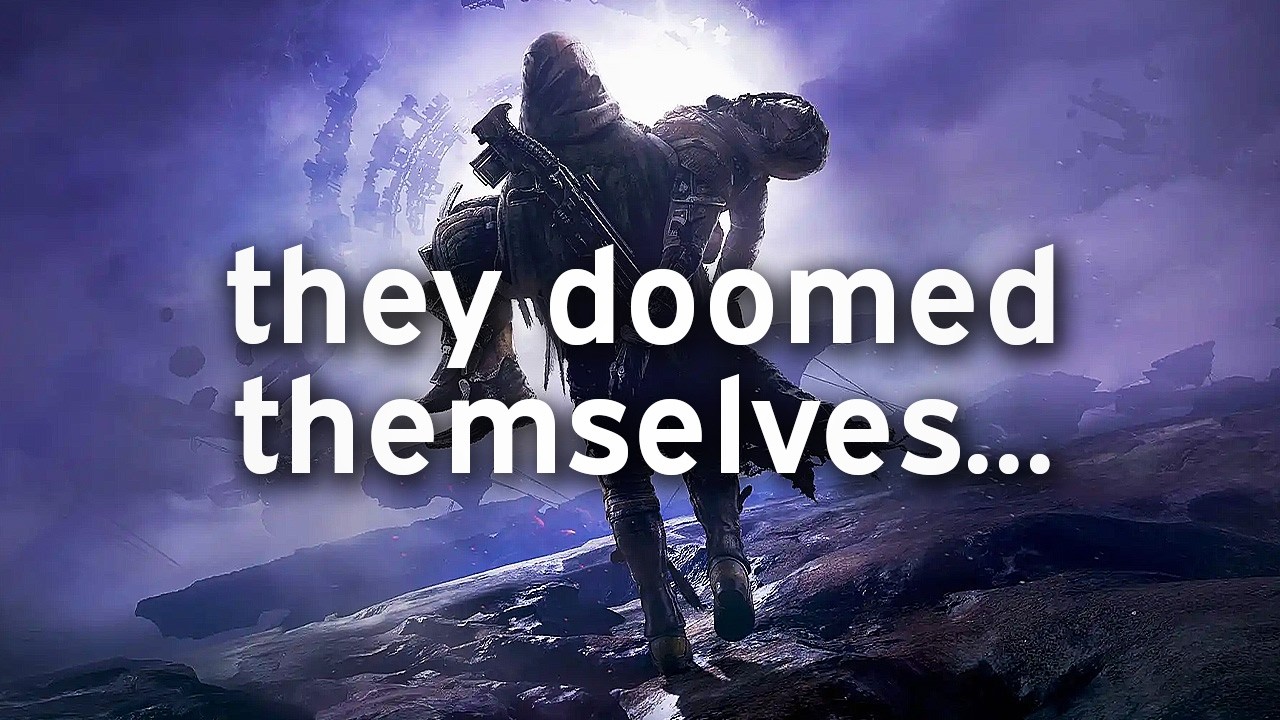
About a month ago, Bungie announced they were ending Destiny 2’s live service, prompting the creator of this video to share raw, unfiltered initial thoughts. Now, with more time and perspective, the video offers a more deliberate and objective analysis of Bungie’s situation, aiming to clarify misconceptions and emotional narratives. The story begins with Bungie under Activision’s ownership during Destiny’s launch in 2014, where the studio had around 500 employees plus support from Activision-owned studios. By the time Destiny 2 launched in 2017, the workforce had grown significantly, but Bungie’s decision to go independent in 2019 led to losing external support and a reduction in staff, which they later tried to rebuild.
Bungie’s shift to making Destiny a live service free-to-play game marked a turning point that, in the creator’s opinion, doomed the studio. The demands of live service games—requiring constant content updates, bug fixes, and balancing—forced Bungie to balloon its staff to about 1,600 employees, more than double the size during Destiny 1. This rapid growth was unsustainable, especially as the community’s expectations for frequent content releases became impossible to meet without incurring huge costs. The constant pressure to “over-deliver” content led to problems like confusing onboarding, content vaulting, and a buggy game experience, all while Bungie struggled to maintain profitability.
Financially, Destiny 2’s revenue barely covered its high operational costs, and Bungie’s attempts to diversify with other projects like Marathon failed to generate enough profit to ease the burden. The studio’s expensive headquarters and mismanagement of funds further worsened the situation. Microsoft had considered re-acquiring Bungie but backed off due to the unsustainable burn rate. Eventually, Sony bought Bungie for $3.6 billion, a sum that went to buy out shareholders and fund employee retention bonuses, not directly into Destiny’s development. Sony’s investment was a bet on Bungie’s future potential, including new projects and consulting on live service games, but these ventures largely failed to meet expectations.
The video emphasizes that Bungie’s plan to expand beyond Destiny was not inherently flawed, but poor execution and the high costs of maintaining multiple live service games led to financial crisis and layoffs. The ongoing rivalry between Destiny and Marathon communities is criticized as petty and counterproductive, as both games needed each other to survive. Looking ahead, the creator believes Destiny 3 is unlikely due to the enormous financial risks and Sony’s preference to invest in multiple lower-risk projects rather than one high-cost live service game. Bungie may be absorbed into Sony’s first-party studios, possibly focusing on tech and support roles, with remasters of older titles like Destiny 1 as a more realistic future.
In conclusion, the video suggests that Bungie might have been better off staying with Activision’s original model, which planned for a new Destiny game every two years instead of an endless live service treadmill. This approach would have provided more upfront revenue, less technical debt, and a healthier development cycle. While not perfect, the Activision structure kept the studio’s growth and expectations more manageable. Now, with Destiny 2’s live service ending and Bungie’s future uncertain, the video calls for reflection on what could have been and invites viewers to share their thoughts on this complex and evolving situation.