The video provides a detailed update on Star Citizen’s crafting and base building systems, explaining the functionality of portable fabricators, blueprint persistence, and the integration of crafting with the game economy and base mechanics. It also discusses the shard-based land claim system for homesteading and raiding, highlighting potential concerns about exploits and the need for further clarification on managing base invulnerability.
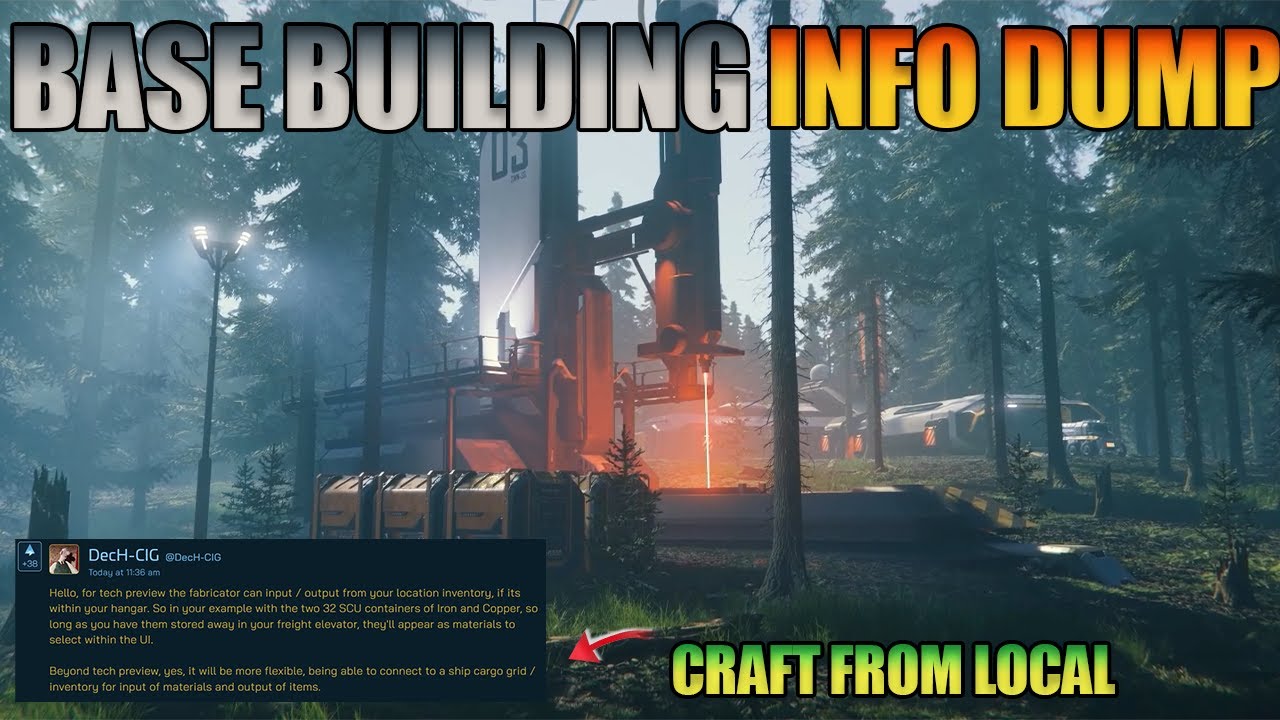
The video provides an in-depth update on the crafting and base building mechanics in Star Citizen, focusing primarily on insights shared by Declan, the developer responsible for these systems. The initial discussion revolves around the functionality of the crafting fabricator, a portable workbench that allows players to craft small items like guns and armor. Declan clarifies that during the tech preview, the fabricator can access and use materials directly from the local inventory if it is placed within the player’s hangar or base, eliminating the need to manually load materials box by box. This feature is expected to expand in the future, allowing fabricators to connect to ship cargo grids for both input and output of resources.
A significant portion of the update covers crafting blueprints and resource persistence. Declan confirms that blueprints will persist through patches but are not permanently bound to the player’s account like event rewards, meaning they could be lost during a full wipe. Cosmetic blueprints, however, are an exception and will remain permanently account-bound. The developers plan to convert cosmetics and paints into blueprints rather than physical items, allowing players to craft and apply these cosmetic elements on demand. This change aims to simplify customization and reduce the hassle of managing physical cosmetic items across different locations.
The video also touches on the broader crafting system, including the use of refined materials and quality resources that players gather and process before crafting their items. Declan mentions that blueprints will mostly be earned through gameplay missions, providing players with incentives to explore various in-game activities. Although the current tech preview focuses on small-scale crafting, the long-term vision includes more complex crafting involving larger items and integration with the broader game economy and base building features.
One of the more complex topics addressed is the handling of homesteading and land claims within the game’s server architecture. Declan explains that within a given region, every land claim or base exists as a copy on all shards, preventing multiple players from claiming the same base. Players can access public bases and their facilities across shards, but raiding a base can only occur on a single shard. The shard where the raid happens is dynamic, typically determined by the base owner’s location. If attackers or defenders are on different shards, they receive prompts to transfer to the correct shard to participate in the raid, ensuring synchronized gameplay during base assaults.
The video concludes with concerns about potential exploits related to the shard-based raiding system. The presenter questions what happens if an organization maintains a maximum population on a shard to make a base effectively unraidable or if a base owner account never logs in, potentially making the base invulnerable. While Declan did not provide specific answers to these concerns, the video highlights the need for further clarification on how the system will handle such scenarios to prevent abuse. Overall, the update offers valuable insights into the evolving crafting and base building systems, emphasizing both the current capabilities and future development goals.