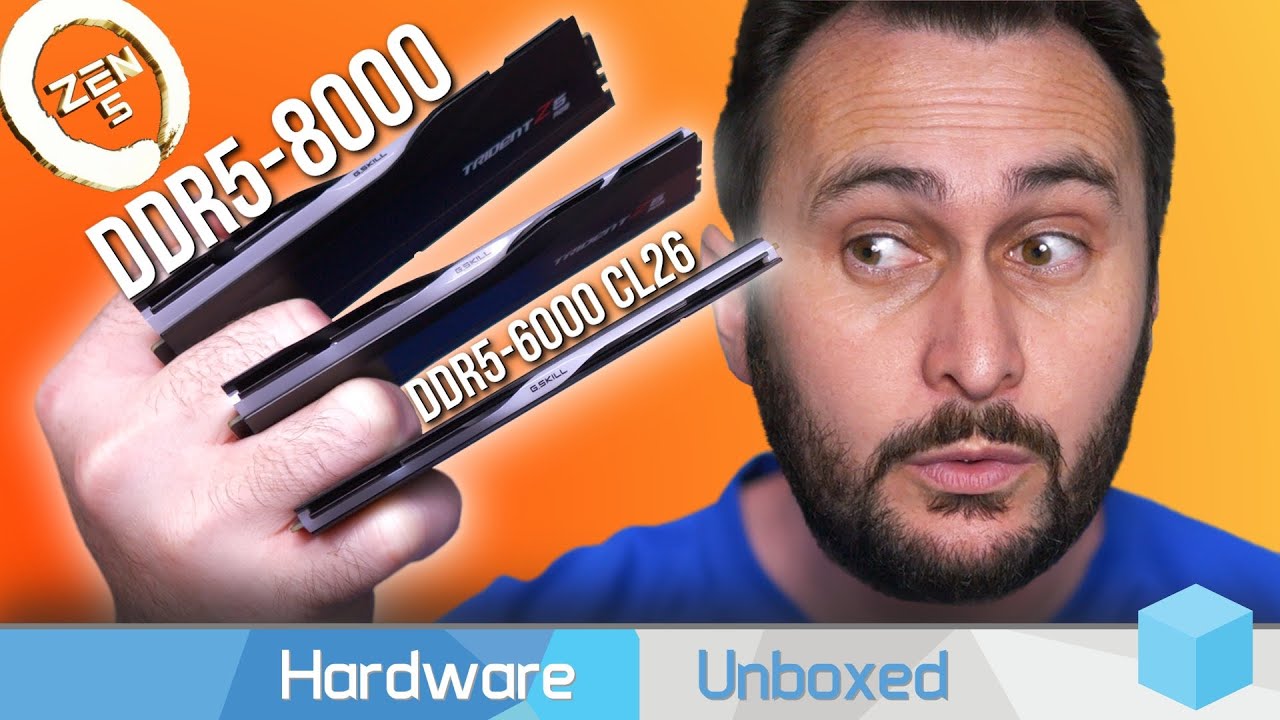
In the video, the host discusses the performance of AMD’s AM5 platform, particularly focusing on memory configurations with DDR5. They introduce GSkill’s new low latency CL26 memory and compare it to DDR5-8000 and DDR5-6000 CL30 memory kits. The host mentions that while DDR5-6000 was initially deemed the sweet spot for AMD’s Zen 4 processors, the situation has become more complex with the introduction of Zen 5 and the refreshed 800 series motherboards, which claim to support DDR5-8000. However, the actual stability and performance of DDR5-8000 can vary significantly depending on the motherboard used.
The host explains that DDR5-8000 memory offers a theoretical bandwidth increase of 33% over DDR5-6000, but this doesn’t always translate to better performance due to the limitations of the integrated memory controller within the CPU. When using DDR5-8000, the memory controller operates at a lower frequency, which can negate some of the benefits of the higher bandwidth. The video highlights that while higher memory speeds can yield performance gains, the actual improvements may not be substantial, especially in GPU-heavy scenarios.
Benchmark results are shared from various games, including Cyberpunk 2077 and Horizon Zero Dawn Remastered, illustrating the performance differences between different memory configurations. In Cyberpunk 2077 at 1080p, the DDR5-6000 CL30 memory performed better than the DDR5-8000 configuration, despite the latter’s higher bandwidth. The host notes that the performance differences narrow significantly when resolutions are increased to 4K, indicating that the GPU becomes the limiting factor rather than the memory speed.
In competitive multiplayer games, the impact of memory performance becomes more pronounced, with notable improvements in frame rates when using faster memory configurations. However, the host emphasizes that for most gaming scenarios, especially in single-player titles, the differences in performance between the various memory kits are minimal. They suggest that DDR5-6000 CL30 remains the optimal choice for gamers looking to balance performance and cost.
Finally, the host discusses pricing and availability of different memory kits, suggesting that while the new CL26 memory offers some performance benefits, its current price point is not justified compared to the more cost-effective CL30 options. They conclude by expressing their intent to test additional motherboard configurations and memory support in the future, inviting viewers to engage with their content through likes, subscriptions, and potential membership options for exclusive benefits.