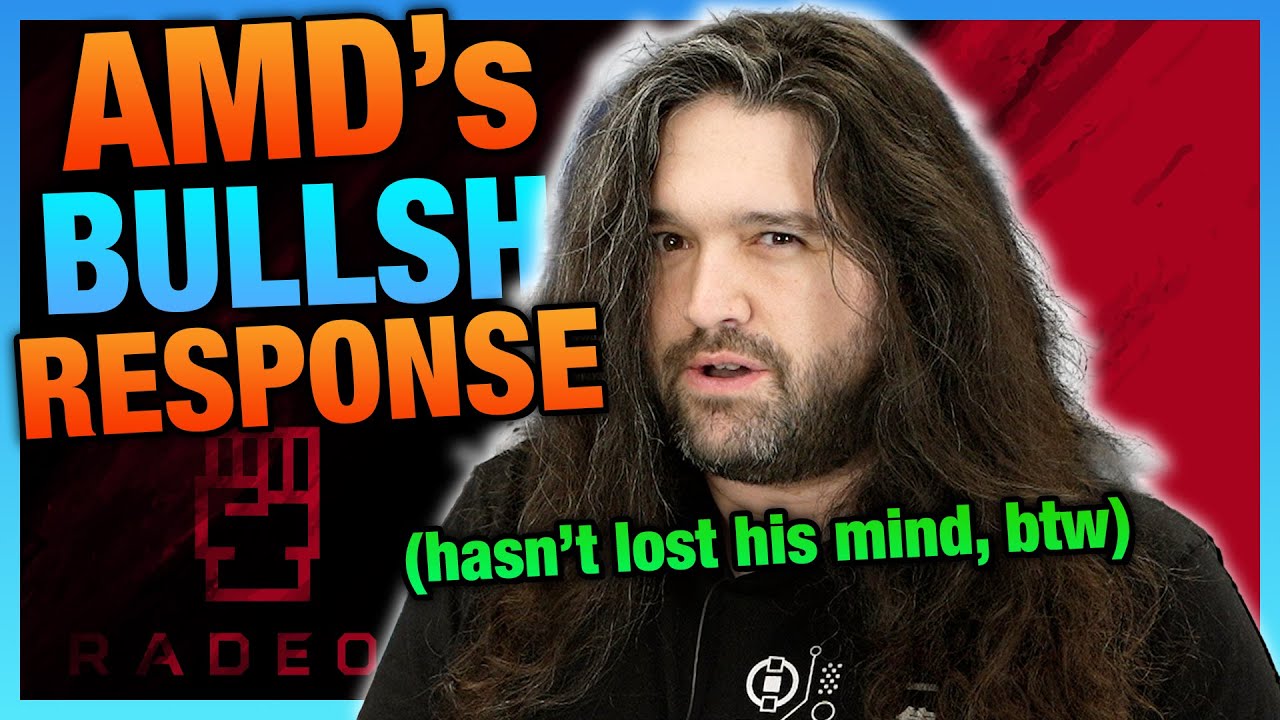
The video criticizes AMD for confusing and inconsistent communication regarding reduced driver support for RDNA 1 and 2 GPUs, accusing the company of deflecting blame onto consumers and undermining trust through corporate gaslighting. It urges AMD to improve transparency and recommit to supporting actively sold products with clear, consistent updates to maintain competitiveness against Nvidia and Intel.
The video criticizes AMD for its recent mishandling of communication regarding its GPU driver support, particularly for RDNA 1 and 2 architectures. AMD released confusing statements in a short span of time, including contradictory announcements about discontinuing new game support and disabling USB-C power charging on certain GPUs, which they later retracted and attributed to “confusion.” Instead of straightforwardly admitting mistakes, AMD resorted to passive language and deflected blame onto consumers for being confused, a move the video describes as corporate gaslighting and unacceptable in professional communication.
The core issue revolves around AMD placing RDNA 1 and 2 GPUs—which are still actively sold and widely used—into a “maintenance branch” for driver updates. This means these GPUs will receive only critical security patches and bug fixes, while new features and optimizations will prioritize RDNA 3 and 4 architectures. The video argues this bifurcation effectively reduces support for still-relevant products, despite AMD’s claims of maintaining commitment to all Radeon gamers. This approach is seen as disingenuous spin that undermines consumer trust and fails to clearly define what constitutes “market needs.”
AMD’s communication strategy is heavily criticized for its lack of clarity and multiple rounds of clarification that only compounded confusion. The company issued statements to different publications with varying messages, which the video mocks as a poor way to handle public relations. The video contrasts AMD’s approach with Nvidia’s, highlighting Nvidia’s longer and more transparent driver support history—even amid its own controversies—emphasizing that clear, consistent communication is crucial in maintaining customer confidence.
The video also touches on the broader competitive context, noting that despite Nvidia’s issues with privacy and AI integration, its driver support remains superior to AMD’s. Intel is mentioned as making strides in driver quality and consistency, putting further pressure on AMD. The video suggests that AMD’s repeated missteps and gaslighting tactics damage its credibility and brand, especially as it struggles to keep pace with competitors in a market where clear communication and sustained product support are key.
In conclusion, the video calls on AMD to improve its communication and recommit to supporting actively sold products with the latest features and optimizations. It warns that continued poor handling of driver updates and public relations could drive consumers away. While acknowledging AMD’s potential, the video expresses frustration with the company’s inability to maintain professionalism and clarity, urging it to learn from competitors and better meet consumer expectations to remain competitive in the GPU market.