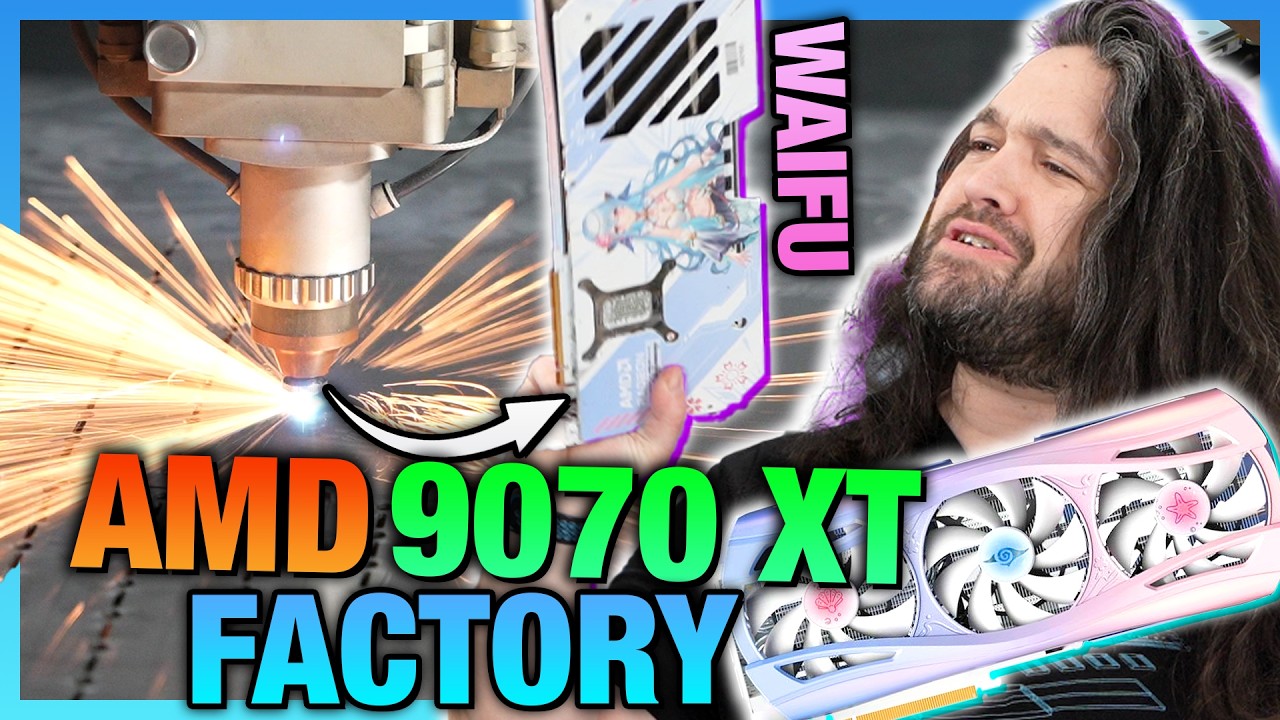
The video provides an in-depth look at the manufacturing process of AMD RX 9070 XT “Waifu” graphics cards by Yeston, a company known for its anime-themed GPU designs. The journey begins at the SMT (Surface Mount Technology) line in Shenzhen, China, where the bare PCBs are loaded and undergo solder paste application, automatic optical inspection, and component placement using pick and place machines. These machines meticulously place hundreds to over a thousand electronic components, including the GPU, which is installed last to protect its sensitive and expensive nature. The boards then pass through a reflow oven where the solder is melted and solidified, ensuring all components are firmly attached.
Parallel to the PCB assembly, the video explores the creation of the distinctive waifu backplates. These metal backplates are initially cut using either laser cutting machines for high precision or stamping and bending machines for faster production. After shaping, they receive threaded inserts for screws and are sent to a painting factory. Here, workers manually clean, prime, and spray paint the plates before baking them in ovens to cure the paint. A separate UV printing process then applies the vibrant anime designs onto the backplates, offering higher color vibrancy and quality without the need for further baking.
Once the PCBs and backplates are ready, they converge at the assembly factory. The assembly process remains largely manual due to the frequent changes in product lines and designs. Workers apply thermal paste, attach PCIe brackets, and mount the cooler and shroud units onto the PCB. Automated screwdriver robots assist in securing screws, but much of the assembly and quality control, including visual inspections for proper mounting, is done by hand. The factory can produce around 230 units per hour per line, with multiple lines operating simultaneously to meet demand.
Testing is a critical stage before packaging. Each card undergoes rigorous stress testing using software like FurMark and 3DMark to ensure the GPU and VRM components perform reliably under heavy loads. Functional tests also verify the integrity of ports and core operations. After passing tests, the cards are cleaned, inspected, and carefully packaged with protective materials and anti-static bags. The packaging line includes automated boxing, taping, and strapping to prepare the cards for shipment. The entire process from SMT to packaging typically takes about a week, with batching used to improve efficiency.
Throughout the video, Joe, Yeston’s creative director, shares insights into the brand’s unique approach to GPU design, emphasizing their desire to break away from the typical black and red color schemes prevalent in the market. He explains the lengthy design process that can take up to a year and a half from concept to product, highlighting the challenges of incorporating LED elements and complex shapes. The video closes with a candid conversation with Joe about the future of Yeston’s designs and a reminder that the production tours were self-funded and independent, aimed at providing an educational look into the creation of these distinctive “waifu” graphics cards.