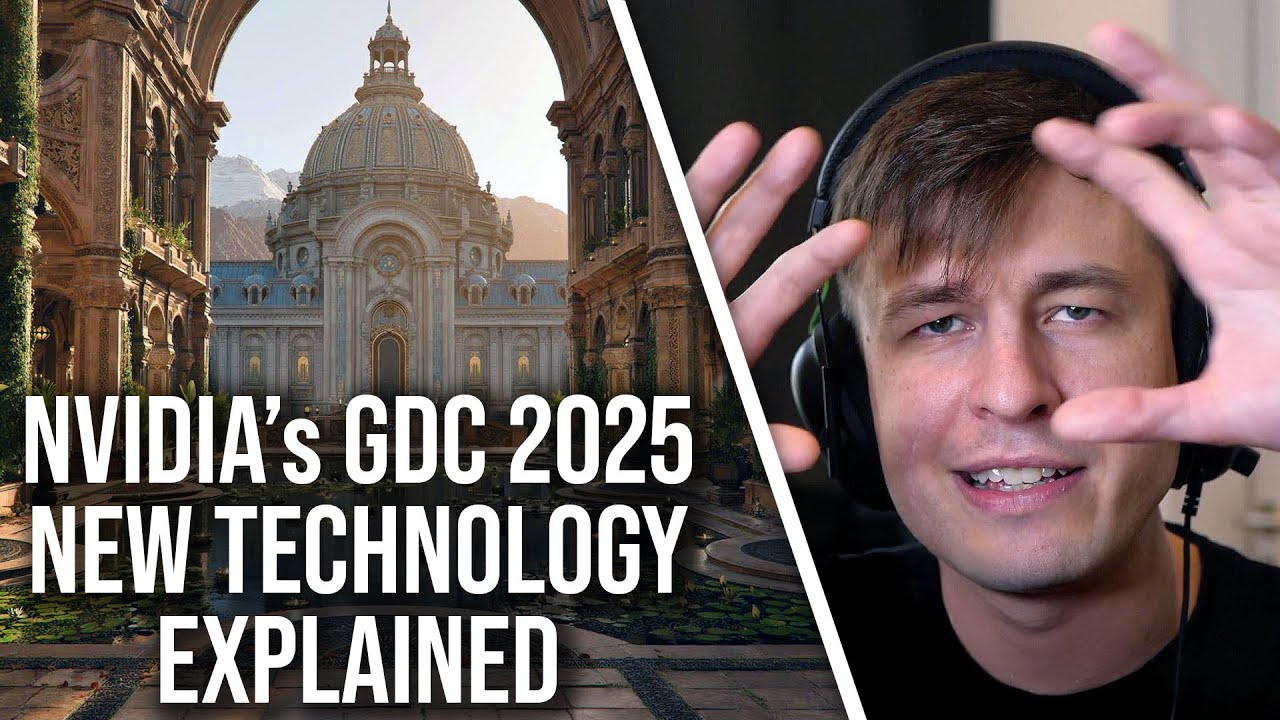
At GDC 2025, Nvidia showcased advancements in path tracing, ray tracing, and neural shading, highlighting the Nvidia Zora demo and its integration with Unreal Engine, as well as the implementation of RTX Mega Geometry in games like “Alan Wake 2.” The presentations emphasized new techniques for improving visual fidelity and performance, particularly through RTXDI and neural texture compression, aimed at enhancing the gaming experience for developers and players alike.
In the recent GDC 2025 presentations, Nvidia showcased several advancements in their technology, particularly focusing on path tracing, ray tracing, and neural shading. One of the standout presentations discussed the Nvidia Zora demo, which involves path tracing and mega geometry. While the demo isn’t available as a downloadable executable, users can access the source assets and compile them themselves, enabling insights into how these technologies integrate with Unreal Engine. Nvidia aims to enhance the workflow without disrupting existing systems, particularly by retaining useful features from UE5, such as surface caching.
Another presentation titled “Scaling Up Ray Tracing in Games with RTX Mega Geometry” delved deeper into the technical aspects of mega geometry, detailing APIs and functions that developers can utilize. This presentation also featured a case study on how these technologies were implemented in “Alan Wake 2,” highlighting memory savings and performance improvements. The information presented is geared more towards developers and those familiar with the technical workings of game engines.
The presentation on “The Magic Behind Lighting in Star Wars Outlaws” explored the integration of RTXDI (Ray Traced Direct Illumination) in a game that already utilizes ray tracing. The challenges of adding RTXDI were discussed, emphasizing the complexities involved in integrating advanced lighting techniques. The presentation showcased comparisons of visual quality before and after the implementation of RTXDI, illustrating the significant differences in lighting detail achieved through more accurate geometric representations.
Additionally, the “RTX Neural Shading: Practical Techniques and Applications” presentation focused on the training process for neural shaders and their application in texture compression. Nvidia introduced new techniques for neural texture compression that significantly improve performance and reduce VRAM usage. This includes methods like “inference on load,” which allows for real-time decompression of textures on the GPU, and “inference on sample,” which provides benefits in terms of disk space while maintaining quality.
Overall, the Nvidia presentations at GDC 2025 highlighted significant advancements in graphics technology, particularly in ray tracing and neural shading. These innovations aim to improve visual fidelity in games while optimizing performance and memory usage. The insights shared in these presentations are expected to influence the development of future games, providing developers with tools to create richer and more immersive gaming experiences.