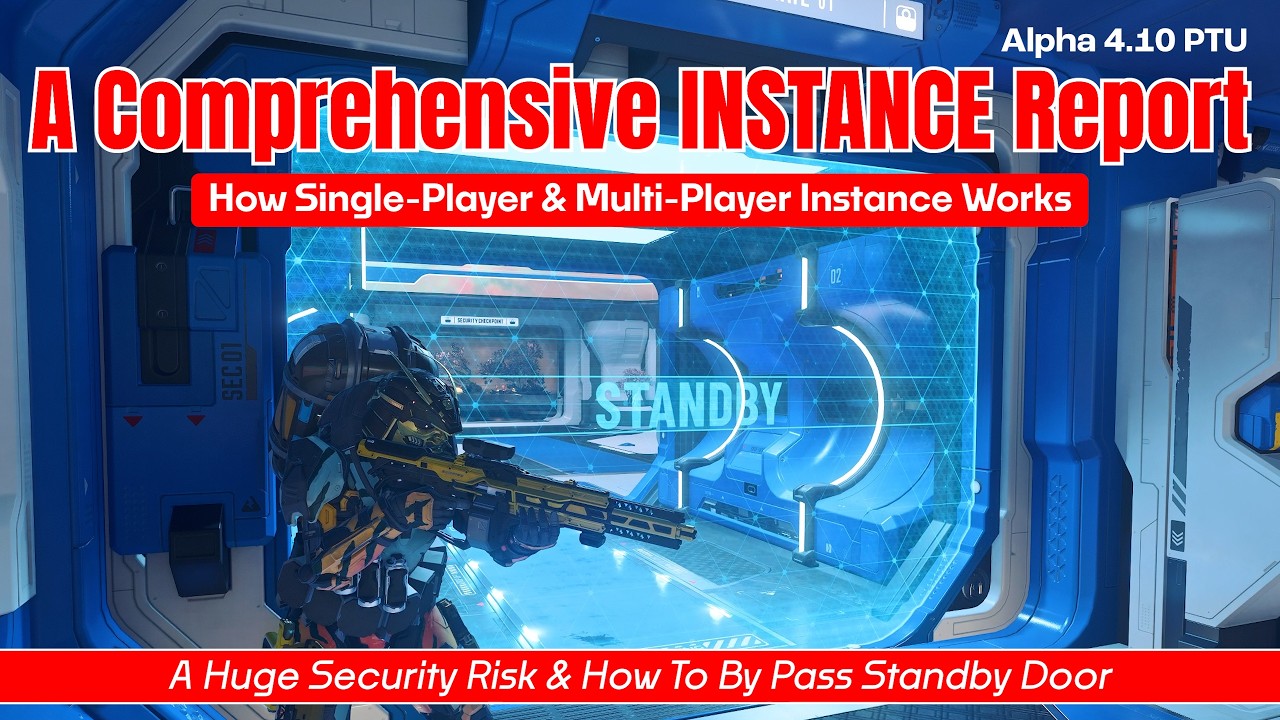
The video provides an in-depth report on the new instanced siege feature introduced in Star Citizen Alpha 4.10 PTU. The presenter shares personal experiences from testing both solo and group siege instances. To access a personal instance, players must navigate through the Crusader showroom to the Inspiration Station and then to a specific platform with elevators that lead to instanced sieges. Players can identify their own instance by markers such as toy guns placed on a desk, which help confirm they are in the same instance after respawning or logging back in. However, a recurring issue is the “standby” door that sometimes blocks access to the mission area, which the presenter explains is a door bug rather than an instance loading problem.
Performance within the instances is generally good compared to previous versions, offering a playable and enjoyable FPS combat experience, though it is not flawless. Desynchronization issues persist, with enemies sometimes exhibiting erratic movements, especially when sniping. Another critical problem is inconsistent respawning: while medbays are available within the instance for revival, many players, including the presenter, often have to run long distances back to the mission area after dying, which can be time-consuming and frustrating. Server errors and crashes (CTDs) do not terminate the instance, and relogging preserves the instance, although some bugs like weapon usage issues can temporarily occur after server errors.
A notable security concern is that players can camp in the elevator lobby and kill others as they arrive, exploiting the ability to draw weapons before entering the instance. The presenter demonstrates a glitch method to bypass the problematic standby door by using environmental objects to clip through walls, allowing players to start and complete the mission despite the bug. This workaround is essential for progressing when the door is stuck, highlighting ongoing stability issues with the instancing system.
Regarding multiplayer instances, the video explains that party members can join the same instance, but there can be delays (10-30 seconds) before the standby door opens for new entrants. Although the official party size limit is four, the presenter and friends managed to get up to seven players in one instance, with reports of even eight players elsewhere. Joining a party before entering the instance is crucial to ensure all members are in the same instance; otherwise, players may appear as invisible ghosts in different instances. The instance persists as long as one party member remains inside, even after deaths, crashes, or relogs.
Finally, the group discusses the challenges of starting new instances after completing a mission. Simply re-entering the elevator often leads back to the old instance, requiring players to disband and reform the party or switch shards to get a fresh instance. This process is cumbersome and prone to errors, with standby door issues recurring. The video concludes with a lighthearted acknowledgment of the glitches and bugs players must work around, emphasizing that while the instancing system is a significant step forward, it still requires refinement and fixes from the developers.