The video begins with a live broadcast discussing Star Citizen Live Tech Talk featuring Benois Bour, the Chief Technology Officer at Cloud Imperium Games (CIG). Benois provides an in-depth update on the state of Star Citizen’s server meshing technology, reflecting on its one-year anniversary since going live. Server meshing has proven surprisingly stable, enabling features like server recovery and crash isolation, which help maintain player progress and improve overall game stability. The technology has also allowed for larger player counts per server, with successful events hosting hundreds of players simultaneously, and has facilitated the expansion of the game universe with new star systems such as Pyro and Nyx.
The conversation shifts to the challenges and improvements made in the transit and transport systems within the game. The original transit system, responsible for elevators and trains, has been problematic due to its lack of server meshing compatibility. A new transport system is being developed to replace it, designed with server meshing in mind, improving reliability and scalability. The team is preparing a tech preview focusing on the New Babbage transit link to gather player feedback and ensure stability before scaling it across other locations. Freight elevators, a critical part of the cargo and inventory system, are highlighted as an area with ongoing issues, including item loss and physics bugs, which the developers are actively working to resolve.
Item recovery and long-term persistence are also key topics discussed. The current item recovery system (Tier 0) allows players to respawn with their items after death, but the upcoming Tier 1 system aims to persist entitlements such as ships and inventory across patches, reducing the risk of item loss. This involves complex backend work to manage serialized variables, nested inventories, and forward compatibility as game assets evolve. The developers emphasize the importance of players never losing their items due to system errors, which is a major quality-of-life focus. They also touch on the need for mechanisms to manage and remove unwanted ships or items from player inventories.
Social features within Star Citizen are another focus area, with the formation of a dedicated social strike team tasked with overhauling in-game communication and organization systems. Plans include replacing the outdated comlink app, improving chat functionality, introducing party finder mechanics to help players form groups more easily, and integrating organization management directly into the game. These upgrades aim to enhance player interaction and community-building, addressing long-standing requests from the player base for better social tools after nearly a decade of organizational features existing only on external websites.
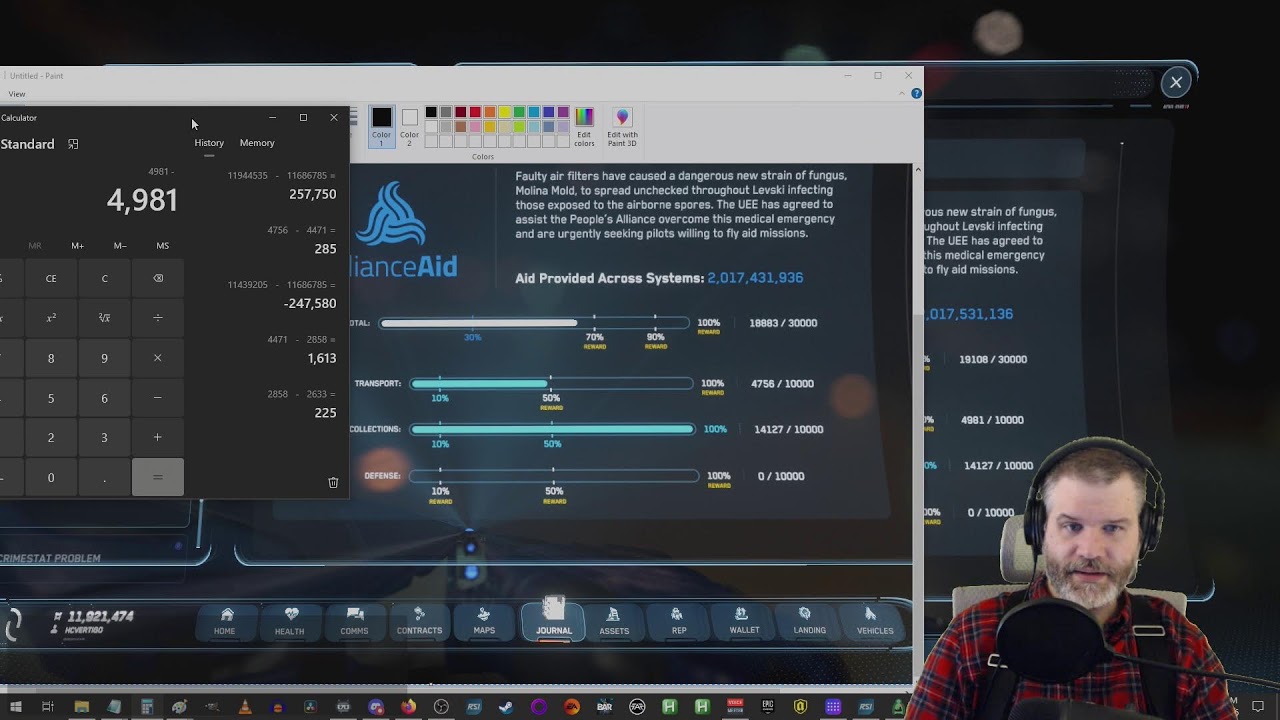
The latter part of the video transitions into gameplay where the host engages in cargo hauling missions and explores various gameplay loops such as mining, salvaging, and participating in ongoing in-game events like the medical supply runs to combat a mold outbreak in the Nyx system. The gameplay segment showcases the current state of cargo mechanics, including the frustrations with loading/unloading cargo, tractor beam behavior, and mission management. Throughout, the host provides commentary on game mechanics, player strategies (like zigzagging to avoid interdiction), and personal anecdotes, while also reflecting on the broader development progress and community sentiment surrounding Star Citizen’s evolving but still complex and sometimes buggy universe.