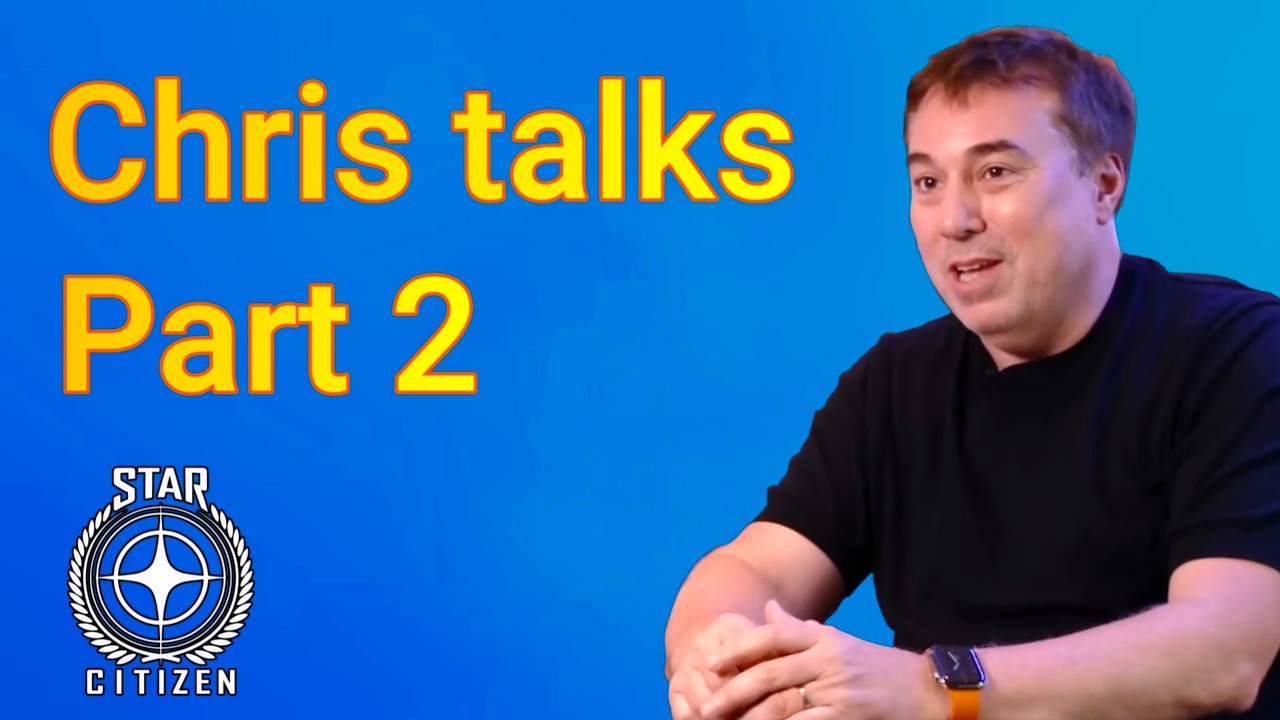
The video features part two of an interview with Chris Roberts, the creator of Star Citizen, conducted by a channel called Back Pocket. Chris discusses the evolution of the game’s scope, explaining that initially, he envisioned a smaller-scale game similar to Freelancer, with limited interaction areas on planets and cutscenes. However, with additional early funding, the project expanded significantly, allowing him to pursue his dream game with ambitious features like procedural planets. He claims that the community voted for these expanded features, although the video’s narrator questions the validity and clarity of those polls, noting that only a small number of people participated and the timing of the votes did not align with the introduction of procedural planets.
Chris also talks about Squadron 42, describing it as the ultimate version of how he would remake Wing Commander, and mentions that it is currently in the process of being finished. The narrator expresses skepticism about this claim, noting that although the game was reportedly feature-complete in 2023, there is no clear timeline for its full release. Furthermore, Chris discusses the technical aspects of Star Citizen’s server infrastructure, highlighting goals like hosting thousands of players in a single shard through dynamic server meshing. However, the narrator points out that the current player experience with 800-player servers is plagued by performance issues, casting doubt on the feasibility of scaling up to 2,000 or more players smoothly.
A major focus of the interview is the game’s persistence system, where Chris enthusiastically describes the ability to drop objects, such as a Coke can, in the game world and have them remain there indefinitely, even over long periods. This persistence is enabled through a system called “persistent entity streaming” and an “eye cache” that saves the state and position of items. The narrator criticizes this feature as overly ambitious and questions why no other games implement such deep persistence, suggesting it may be impractical due to heavy server strain and technical challenges. Chris envisions a fully persistent universe where players can interact with and affect the environment in a lasting way.
Chris also touches on Star Citizen’s development status, stating that the game will never truly be finished as it is a live product that will continuously receive new content and features. He mentions a version 1.0 that would represent a baseline experience, but the narrator warns that this initial release will likely be very barebones, lacking many promised features such as alien worlds and NPC crews. The ongoing development depends heavily on continued funding, and the narrator remains skeptical about the timeline and scope of the game’s eventual completion, implying that it may take many more years before a polished, fully-featured version is available.
In conclusion, the video provides a critical overview of Chris Roberts’ ambitious vision for Star Citizen, highlighting both the impressive technical goals and the significant challenges involved. The narrator appreciates the interview for its insights but remains doubtful about many of Chris’s optimistic claims regarding community involvement, server technology, game persistence, and development progress. The video ends on a light note, thanking the interviewers and inviting viewers to follow on social media, while underscoring the ongoing debate surrounding the future of Star Citizen.